

Vinegar is the ingredient most kitchens take completely for granted — until the first taste of the real thing. Red Truck Vinegar, made by Red Truck Orchards, is a small-batch producer of artisan fruit vinegars: apple cider vinegar and fruit-infused varieties fermented from orchard fruit rather than blended from industrial stock. The farm-to-bottle story is the literal production method here — fruit grown in the orchard becomes the vinegar in the bottle — and the audience is foodies, home cooks and gift-givers who suspect, correctly, that the gap between commodity vinegar and craft vinegar is as wide as the gap between boxed wine and the good stuff.
For this review we looked at the range, the production approach, typical pricing for artisan vinegar and the general pattern of customer feedback around small orchard producers. We will cover the flagship apple cider vinegar, the fruit-infused line-up, how the value compares with supermarket bottles and big natural brands, and who should genuinely spend money here. As always on PrimeVouch, this is an independent editorial review: we flag the weak spots alongside the strengths, and we hedge wherever a small producer’s details can shift with the seasons.
PrimeVouch Score: 8.4/10 — a charming, genuinely craft producer whose vinegars taste like the fruit they came from, with a farm story that is substance rather than marketing. It loses points only for small-producer realities: limited volumes, seasonal availability and prices that commodity vinegar will always undercut.
Best for: home cooks who go through vinegar by the tablespoon and want it to taste of something; foodies building a condiment shelf worth talking about; gift-buyers after a consumable present with a real story; and anyone curious what apple cider vinegar tastes like before industry gets hold of it.
What we loved:
- True farm-to-bottle production — orchard fruit fermented on-site, not flavourings added to bulk vinegar.
- Small-batch fermentation that preserves real fruit character, aroma and complexity in the finished bottle.
- A fruit-infused range that reads like the orchard’s calendar, giving cooks genuinely different flavours to work with.
- Gift-ready bottles and sets — consumable, distinctive and priced within impulse range.
- A producer you can actually trace: one orchard, one maker, one story from tree to shelf.
What could be better:
- Small batches mean limited stock; favourite varieties can sell out until the next batch or harvest.
- Artisan pricing per bottle is a real step up from supermarket vinegar, even if the per-use cost stays modest.
- The range shifts with the seasons, so a flavour you loved may not be available year-round.
- Shipping glass bottles adds cost, which nudges the economics toward multi-bottle orders.
What makes Red Truck Vinegar different
Most vinegar on shelves is an industrial product: fast-fermented, filtered to neutrality, and — in the case of many “fruit” vinegars — flavoured after the fact. Red Truck works the old way. Fruit from the orchard is fermented into vinegar in small batches, a slower process that keeps the aromatics, acidity balance and character of the source fruit in the bottle. The difference is immediate on the tongue: real apple cider vinegar tastes of apples, not just of sour, and a fruit-infused vinegar built on that base carries flavour a splash of flavouring never will.
The other differentiator is provenance. This is not a brand that bought a farm photo for the label; the orchard is the supply chain. That matters practically as well as romantically — a producer who grows the fruit controls quality from tree to bottle, and small-batch scale means someone tastes what ships. It also means the range breathes with the seasons, which is either a charm or an inconvenience depending on how you shop. For the food-gift market it is close to ideal: a bottle with a genuine story is a better present than a bottle with a barcode.
The star product
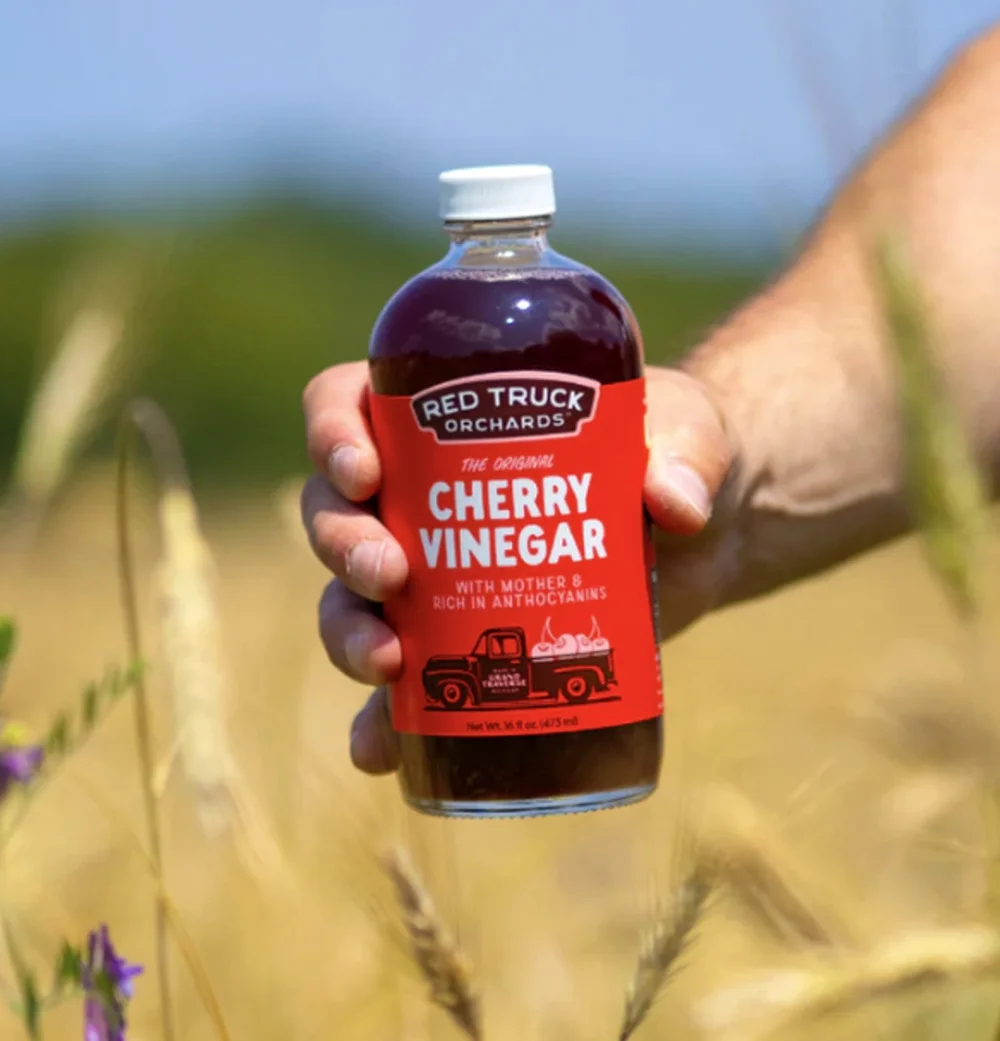
The heart of the range is the orchard apple cider vinegar — the foundation everything else builds on. Fermented from the orchard’s own apples rather than concentrate, it pours with the depth commodity versions filter away: rounded apple fruit up front, clean bright acidity behind it, and enough complexity to sip in a glass of water without wincing. In cooking it behaves like a seasoning rather than a solvent — a spoonful lifts a pan sauce, a braise or a pot of beans in a way that makes the supermarket bottle taste one-dimensional afterwards.
What impressed us most is the versatility per dollar. A single well-made cider vinegar covers vinaigrettes, marinades, quick pickles, pan deglazing, drinks and finishing splashes, so the upgrade touches half your cooking at once. It is also the honest entry point to the brand: if the base vinegar convinces you — and for most cooks it will — the infused range becomes an easy next step rather than a leap of faith. Start here, use it for two weeks, and let your taste buds run the review.
The rest of the range
Fruit-infused vinegars
The infused line is where the orchard shows off: berry, stone-fruit and orchard-fruit vinegars built on the house base, with the fruit fermented or steeped in rather than dripped in as flavouring. These are the bottles that transform salads, glazes and drinks — a berry vinegar over roasted beets or in a shrub does work no plain vinegar can. Varieties rotate with the harvest, so treat the current list as a snapshot and buy the one that excites you when you see it.
Gift sets & samplers
Multi-bottle samplers and gift sets bundle the range into its most persuasive format. For gifting, artisan vinegar hits a rare sweet spot — consumable, unusual, story-rich and safely under the price of a forgettable bottle of wine. For your own kitchen, a sampler is the rational first order: smaller bottles across several varieties teach you which flavours earn a full-size spot on your shelf.
Seasonal & small-batch releases
Because production follows the orchard, expect limited seasonal releases and occasional experiments alongside the core line-up. These small batches reward shoppers who check back — and they sell through, since a limited run of a good vinegar is genuinely limited. If a seasonal variety catches your eye, the safe assumption is that it will not be there next month; buy it, or make peace with waiting a year.
Price & value
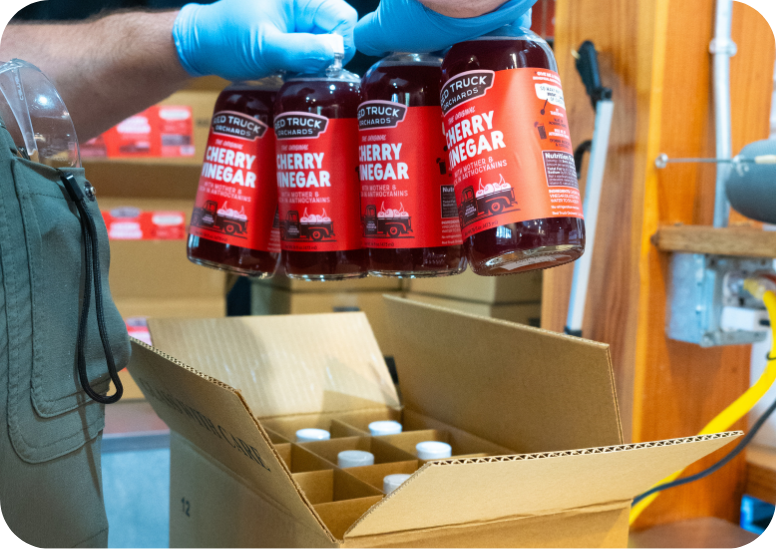
Artisan vinegar occupies a predictable band: several times the price of commodity bottles, comparable with craft olive oils and specialty condiments. Red Truck sits comfortably in that craft tier. Exact prices move with varieties, bottle sizes and seasons, so treat the figures below as typical ranges rather than quotes, and check current pricing on the site before you order.
| Product | Typical price range | Notes |
|---|---|---|
| Orchard apple cider vinegar | ~$12–$20 | The flagship and the best first bottle |
| Fruit-infused vinegars | ~$14–$25 | Rotating varieties built on the house base |
| Samplers & small sets | ~$25–$45 | Smartest way to explore the range |
| Gift sets | ~$30–$60 | Bundled bottles, gift-ready presentation |
| Seasonal releases | varies | Limited runs priced by batch |
Measured per bottle, the premium over supermarket vinegar looks steep; measured per use, it is pennies. A tablespoon at a time, one bottle seasons months of cooking, and the flavour payoff per spoonful is where craft vinegar quietly beats most gourmet purchases. The value case only collapses if you use vinegar exclusively for cleaning windows — in which case, please buy the cheap stuff.
How to choose your first bottles
- Start with the flagship apple cider vinegar — it benchmarks the house style and upgrades the most dishes per dollar.
- Add one infused variety that matches how you actually cook: berry for salads and drinks, orchard fruit for glazes and pork.
- If you are gifting or undecided, choose a sampler over a single large bottle — variety teaches you more than volume.
- Check seasonal availability before setting your heart on a specific flavour, and buy limited releases when you see them.
- Order multiple bottles per shipment where you can; glass shipping costs favour consolidated orders.
One extra tip: taste any new vinegar neat — a few drops on a spoon — before cooking with it. Thirty seconds of tasting tells you whether it wants to lead a vinaigrette, brighten a sauce or sit in a glass of sparkling water, and it is the fastest way to learn the difference craft fermentation makes.
Common buying mistakes to avoid
The classic mistake is buying artisan vinegar and then using it exactly like the cheap stuff — dumped invisibly into a heavy marinade or, worse, saved so preciously it evaporates in the cupboard; good vinegar is for using, generously and often. Almost as common is ordering one flavoured bottle on a whim, deciding it did not suit your cooking, and writing off the category — when the flagship cider vinegar was the correct first purchase all along. Shoppers also assume every variety is always available, then feel burned when a seasonal favourite disappears; that is how orchards work. And gift-buyers who wait until the week before the holidays discover that small-batch stock and shipping cut-offs wait for no one.
Watch: Cooking with artisan vinegar
Red Truck Vinegar vs alternatives
The reference point most shoppers know is Bragg, the giant of natural apple cider vinegar: raw, unfiltered, with-the-mother ACV available in every health store at friendly prices, and a fine daily workhorse — but it is a standardised industrial-scale product with one flavour profile, aimed more at the wellness aisle than the kitchen. Supermarket own-brand vinegars are cheaper still and taste like it: sharp, flat and interchangeable. At the other end, imported specialty vinegars — aged balsamics, French fruit vinegars — can be spectacular but cost dramatically more and often arrive with more label than provenance. Farmers-market producers are the closest cousins to Red Truck, with the same seasonal charm but hit-and-miss consistency and no easy reordering. Red Truck’s lane is the sweet spot between them: genuinely orchard-made with traceable provenance and real fruit character, more interesting than Bragg in the kitchen, far cheaper than imported prestige bottles, and reorderable in a way market stalls are not. Buy Bragg for daily wellness shots; buy this for cooking that tastes of somewhere.
Quality, shipping & support
Quality control at a small orchard producer is direct: the people who grew the fruit ferment, bottle and taste the product. Slow small-batch fermentation is itself a quality mechanism — faults have nowhere to hide in a vinegar that is not filtered into anonymity. Expect the honest quirks of craft fermentation: slight batch-to-batch variation, possible sediment or haze in less-processed bottles, and flavour that evolves subtly over a bottle’s life. These are signatures of the method, not defects.
Shipping means glass, and glass means careful packing and real postage costs. Orders typically dispatch within a few days and arrive domestically inside a week or so, though harvest season and holidays can stretch both. Because postage is a proportionally large cost on a single bottle, samplers and multi-bottle orders are the rational way to buy; check the site for current rates and any free-shipping thresholds, as these change. Vinegar itself is about as stable a foodstuff as exists, so a well-packed bottle arrives ready for a long shelf life.
Support runs on the small-producer model: email a question and it tends to reach someone who actually made the product, which makes usage and pairing questions worth asking. Returns on food items are restrictive industry-wide for safety reasons, so problems are usually resolved through replacement or credit for damaged or faulty bottles — raise them promptly, with photos, and small producers in our experience handle it graciously.
What real customers say
Aggregated feedback for small artisan vinegar makers follows a consistent pattern, and Red Truck appears to fit it: the happiest customers describe a conversion moment — tasting real orchard vinegar and quietly retiring the supermarket bottle to cleaning duty. The fruit-infused varieties draw the most vocal enthusiasm, gift recipients reportedly come back as customers themselves, and the farm story earns the kind of loyalty big brands buy advertising to imitate.
Criticisms, where they appear, are the expected ones: sticker shock next to commodity vinegar, seasonal favourites selling out, and shipping costs on small orders. As with any small producer, review volume is modest compared with national brands, so treat the overall picture as encouraging rather than statistically bulletproof — and weight recent feedback most heavily, since harvests, recipes and line-ups all evolve year to year.
Who should buy — and who should not
Buy from Red Truck if you cook enough to notice ingredients — if vinaigrettes, pan sauces, pickles or shrubs feature in your kitchen, a bottle of real orchard vinegar upgrades all of them at once. It is equally right for the gift-buyer: few presents under thirty dollars combine usefulness, novelty and a genuine story this well. And if you drink apple cider vinegar for the ritual of it, tasting a craft version may permanently raise your standards.
Skip it if vinegar is a cleaning product in your house, if you need gallon jugs for bulk pickling on a budget, or if you want one identical flavour available every week of the year — industrial consistency is the one thing a seasonal orchard cannot and should not offer. Health-claim shoppers should also calibrate: vinegar is a fine food with a long folk history, not medicine, and no craft producer changes that.
Honest limits
Let us be plain about the boundaries. This is a small orchard producer: volumes are limited, varieties rotate with harvests, and the exact line-up, prices and shipping terms change without notice — verify current details on the site rather than relying on any review, including this one. Craft vinegar is a flavour upgrade, not a wellness cure, and we make no health claims for it beyond tasting excellent. And if your cooking genuinely never calls for vinegar beyond a splash in poaching water, the honest advice is that this upgrade will be wasted on you.

Red Truck Vinegar discount codes & deals
Small food producers promote in seasonal pulses — harvest releases, holiday gift pushes and occasional first-order codes — rather than constant discounting, and the picture changes month to month. Before you order, it is worth thirty seconds to check our deals hub, where we list current verified Red Truck Vinegar codes alongside offers from other gourmet food brands. Pairing a working code with a sampler or multi-bottle order is reliably the cheapest way in, since it spreads glass-shipping costs too.
Frequently asked questions
Is Red Truck vinegar really made from the orchard’s own fruit? Yes — the farm-to-bottle model is the premise: fruit grown at Red Truck Orchards is fermented into vinegar in small batches on the producer’s side, not flavoured into bulk stock.
How is it different from supermarket apple cider vinegar? Slow small-batch fermentation of real orchard fruit preserves aroma and depth that industrial fast fermentation strips out. The practical difference is taste — it reads as an ingredient, not just acidity.
How long does a bottle last? Vinegar is naturally shelf-stable; store it cool and dark with the cap tight and it keeps for a very long time. Slight haze or sediment in craft bottles is normal and harmless — give it a gentle shake.
Do I need to refrigerate it? No — a pantry cupboard away from heat and light is fine. Refrigeration does no harm but is unnecessary for vinegar.
Are the fruit vinegars sweet? They are fruit-forward rather than sugary — expect real fruit aroma over a clean acidic backbone, which is what makes them useful in dressings, glazes and drinks alike.
Do they ship as gifts? Gift sets and samplers are a core part of the range, and vinegar travels well when packed properly. Order early around holidays, as small-batch stock and shipping cut-offs both bite in December.
Are there discount codes for Red Truck Vinegar? Periodically, yes — seasonal and holiday offers appear through the year. We track the working ones on our PrimeVouch deals hub, so check there before you buy.
Everyday uses for good vinegar beyond salad dressing: a practical guide
A serious vinegar earns its shelf space long after the salad is dressed. Deglaze a pan with a splash after searing meat and you have the start of a sauce that tastes professionally made. Add a spoonful to braises, stews, beans or lentils in the last minutes of cooking — acidity wakes up rich, heavy dishes the way salt wakes up bland ones. Quick-pickle anything: onions, cucumbers, radishes or leftover vegetables submerged in seasoned vinegar become tomorrow’s taco topping and sandwich upgrade. Whisk fruit vinegar into sparkling water for a shrub — the old-fashioned drinking vinegar that makes the best non-alcoholic aperitif going — or use it in cocktails where citrus would be too obvious. Brush a vinegar glaze over roasting vegetables or pork in the final minutes for lacquered, bright-edged results. A few drops finish soups the way good olive oil does, cutting through purées and creamy bases. Balance over-sweet sauces, perk up tired leftovers, brighten a gravy, marinate cheaply and tenderly, or simply set a small bowl beside bread and oil. The habit to build is simple: when a dish tastes flat and salt does not fix it, reach for the vinegar — with a bottle that actually tastes of fruit, that reflex improves almost everything you cook.