


Building a home gym in Australia used to mean two bad options: pay eye-watering freight to import serious equipment, or settle for the wobbly department-store racks that end up on Gumtree within a year. Gym Plus exists to close that gap — an Australian retailer specialising in home gym and gymnastics equipment, with a catalogue built around power racks, strength machines, weights and bars, and free metro shipping on orders over roughly $250 AUD. We spent time working through the range, comparing specifications and pricing against the big names, and reading what buyers around the country actually report after the flat-pack boxes arrive.
This review covers what Gym Plus does well, where it genuinely competes with the premium imports, and where you should slow down before clicking buy — plus how to pay less for it once you decide.
PrimeVouch Score: 8.4/10
Best for: Australian lifters and families building a garage or shed gym who want serious steel — racks, machines, plates — without paying import freight, plus anyone shopping for proper gymnastics equipment at home.
What we loved:
- A genuinely deep home gym range — power racks, strength machines, barbells, plates and accessories — from one Australian storefront.
- Free metro shipping over roughly $250 AUD takes the sting out of buying heavy equipment, which is where freight usually kills the deal.
- The gymnastics equipment line is a rare find; most strength retailers ignore rings, bars and mats for younger or bodyweight-focused athletes.
- Pricing generally undercuts the premium imported brands while the steel remains sensible for home use.
- The catalogue is organised for staged buying — you can start with a rack and bar and add machines and plates as budget allows.
What could be better:
- Heavy freight to regional and remote addresses can still add real cost — the free-shipping threshold is a metro perk, so quote your postcode first.
- Popular rack and machine configurations appear to sell through in waves, so the exact model you researched may show a wait.
- Flat-pack assembly of a full rack or machine is a two-person, two-hour job — budget for that or a helpful mate.
- It is a specialist, not a marketplace: cardio equipment and boutique accessories are thinner than the strength core.
What makes Gym Plus different
Most Australian fitness retail sits at two extremes. At one end are the marketplace listings and department-store specials — light-gauge steel, vague load ratings, no support when a weld fails. At the other are the premium imports, superb but priced like furniture once freight lands. Gym Plus stakes out the sensible middle: a specialist catalogue of home-duty strength equipment — power racks, half racks, strength machines, benches, bars and plates — sold by an Australian business at prices a household budget can survive, with free metro delivery over roughly $250 AUD removing the classic hidden cost of heavy gear.
The second differentiator is breadth in an unusual direction: gymnastics equipment. Rings, chin-up bars, mats and training gear for bodyweight athletes and kids sit alongside the racks, which makes Gym Plus one of the few places an Australian family can outfit both a lifter and a young gymnast in one order. That combination — strength plus gymnastics, staged-purchase-friendly, freight handled — is the pitch, and it is a coherent one.
The star product: power racks & strength machines
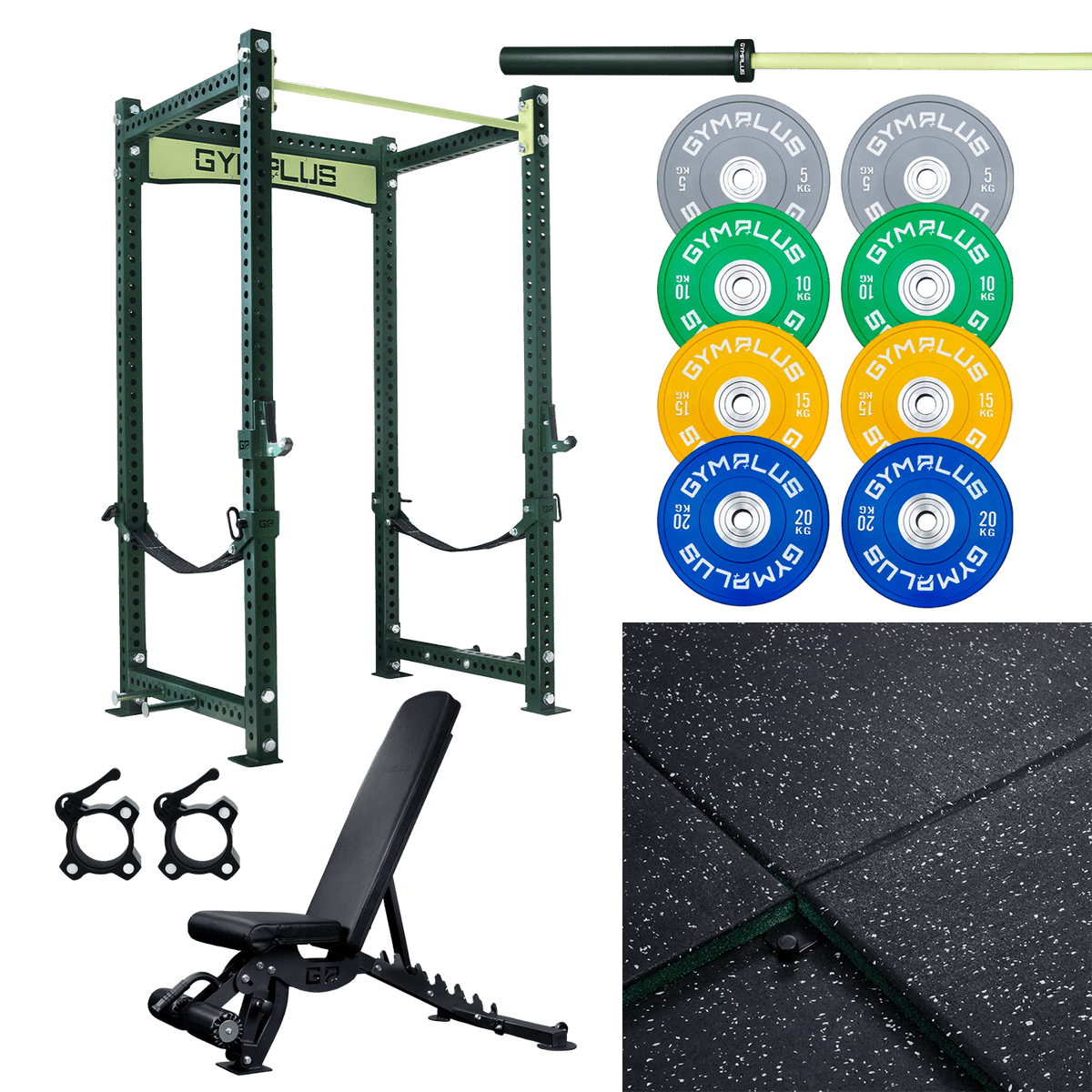
The heart of the catalogue is the rack and machine range, and it is where Gym Plus earns its score. A power rack is the single most consequential purchase in any home gym — it determines what you can train safely alone, what attachments you can add later, and whether the whole setup still feels solid in five years. The racks here follow the sensible home-gym formula: full and half-rack formats, safety bars or straps for solo lifting, standard hole spacing for attachments, and steel that is heavy enough to trust without being commercial-gym overkill you pay to ship.
Strength machines — cable stacks, functional trainers, leg machines and multi-station units — extend that core for buyers who want gym-floor variety at home. Machines are where cheap equipment fails fastest, because pulleys, cables and guide rods punish corner-cutting; buying them from a strength specialist rather than a marketplace listing is exactly the situation where the retailer matters. Our practical advice: anchor the purchase on the rack, confirm ceiling height and footprint against the published dimensions, and treat a machine as the stage-two upgrade once the rack, bar and plates are earning their keep.
The rest of the range
Weights & bars
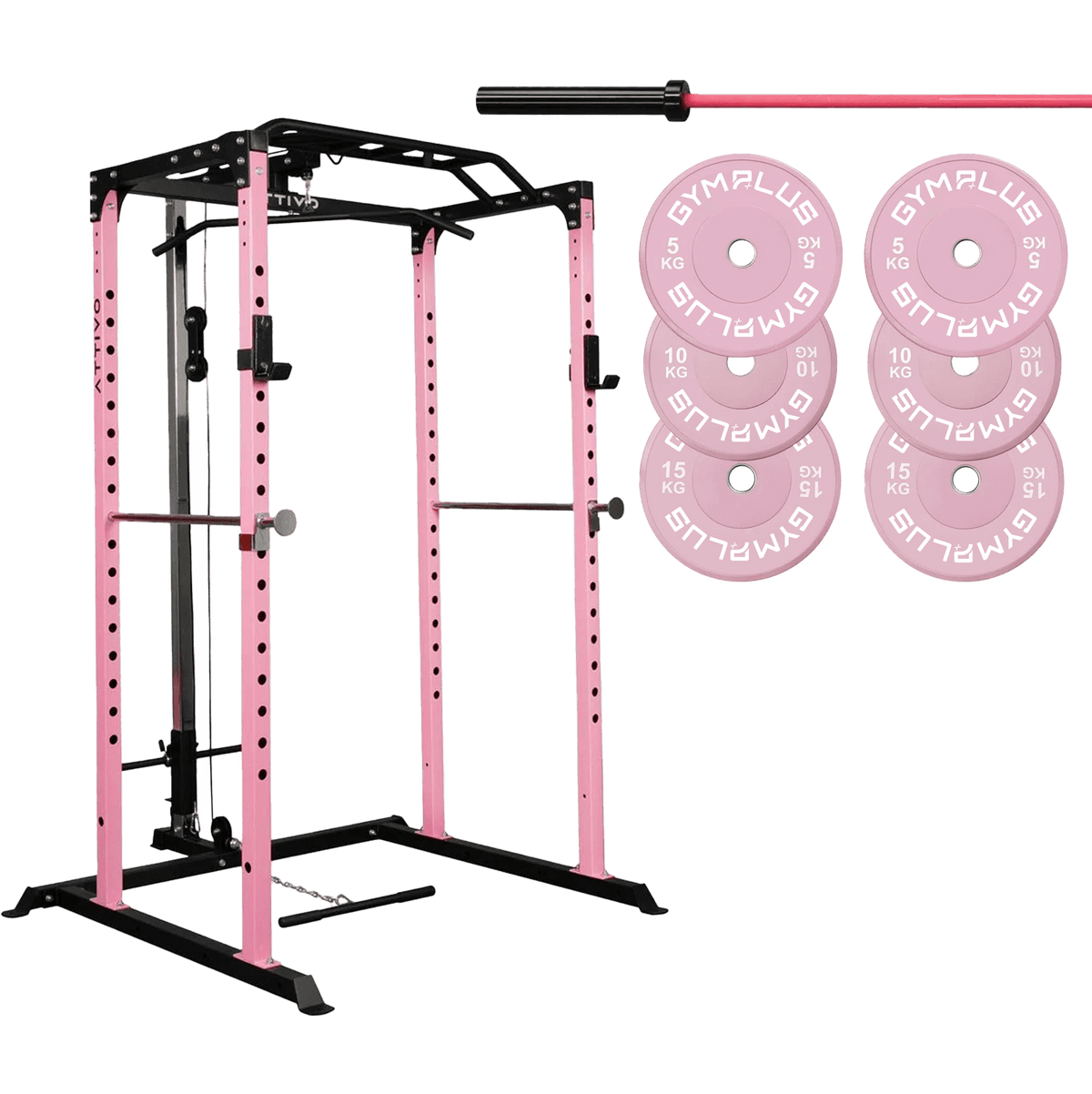
Plates, barbells, dumbbells and kettlebells round out the strength core. The usual home-gym choices apply — rubber or bumper plates protect a garage slab and the neighbours’ ears, and a decent multi-purpose barbell will outlast three racks. Buying plates from the same order as the rack is also the easiest way to clear the free metro shipping threshold, since weight is exactly what makes freight painful elsewhere.
Gymnastics equipment
The line that sets Gym Plus apart from pure strength shops: rings, training bars, mats and related gear for gymnastics and bodyweight training. For families with kids in gymnastics programs, home equipment turns practice time from a weekly class into a daily habit — and for adult calisthenics athletes, rings remain the cheapest serious training tool ever invented. Check age and weight guidance on each item, and put mats under everything.
Benches, attachments & accessories
Adjustable benches, dip bars, landmine attachments, storage and the small stuff that makes a gym usable — collars, bands, flooring. Accessories are low-drama purchases individually, but they are where a staged budget quietly leaks; our suggestion is to buy the bench with the rack, then add attachments only when a specific lift demands them.
Price & value
Pricing moves with stock, promotions and freight costs, so treat everything below as an indicative snapshot rather than a quote — check the live product pages before budgeting. Broadly, Gym Plus sits under the premium imported brands and well above the disposable end of the market, which is exactly where a home buyer wants to shop: enough margin for real steel and support, without paying a brand tax designed for commercial gyms.
| Category | Typical range (AUD, approx.) | Notes |
|---|---|---|
| Power racks & half racks | ~$400–$1,500+ | Format, gauge and attachments drive price |
| Strength machines | ~$800–$3,000+ | Cable trainers and multi-stations at the top end |
| Barbells | ~$150–$450 | A mid-range bar suits most home lifters |
| Weight plate packages | ~$200–$900 | Bumper sets cost more, protect floors |
| Gymnastics rings, bars & mats | ~$50–$600 | Varies widely by item and size |
Value verdict: strong, with one caveat. A complete starter setup — rack, bar, bench and a plate package — lands in the territory of a single year of a mid-tier gym membership for two people, and the free metro shipping over roughly $250 AUD means the advertised price is close to the landed price for most city buyers. The caveat is regional freight: if you live outside the metro zones, get a shipping quote before you fall in love with a specific machine, because heavy-goods delivery to the regions can meaningfully change the maths.
How to choose your setup & get the best results
- Measure first: ceiling height, floor space and door access decide your rack format before any spec sheet does — a full rack under a low garage ceiling is a returned rack.
- Anchor on the rack: buy the best rack your space and budget allow, since every future attachment and upgrade hangs off it, literally.
- Stage the plates: start with enough weight for six months of progress, not your dream total — plates are the easiest thing to add later.
- Match the bar to the training: one quality multi-purpose barbell beats two cheap specialty bars for almost every home lifter.
- Batch the order: combining rack, bench and plates in one purchase clears the free metro shipping threshold and saves a second freight bill.
One more habit worth keeping: read the published dimensions and load ratings line by line, and check the assembly requirements before ordering. The buyers who end up delighted are almost always the ones who planned the space on paper first; the disappointed ones usually bought the biggest thing that fit the budget rather than the room.
Common buying mistakes to avoid
The same handful of errors accounts for most home-gym regret. Buying a machine before a rack — machines train muscles, racks train lifts, and the rack is the foundation. Ignoring ceiling height — the most common reason a rack goes back in the box. Under-buying the bench — a wobbly bench sabotages every pressing movement done on it. Skipping flooring — a couple of hundred dollars of rubber protects a concrete slab worth far more, and your plates too. And paying two freight bills by ordering in dribs and drabs when one planned order would have shipped free to a metro address. None of these are Gym Plus problems specifically; all of them are avoidable with ten minutes of planning.
Watch: Planning a home gym that lasts
Gym Plus vs alternatives
Against the premium imports — Rogue Fitness being the reference point most lifters quote — the honest comparison is that Rogue’s commercial-grade steel, finish and resale value remain the benchmark, and you pay accordingly, particularly once Australian freight enters the picture; for a home gym trained by one household, that last increment of over-engineering is usually money that would have bought more plates. Against other Australian strength specialists and the direct-to-consumer barbell brands, Gym Plus competes on range breadth and the gymnastics line rather than on any single hero product, and pricing lands in the same competitive band. Against marketplace listings and department-store packages, it is not close: vague load ratings and no meaningful support make the cheapest tier a false economy for anything holding a loaded barbell above your body. The sensible shortlist for most Australian buyers is a specialist like Gym Plus for the core build, with the premium imports reserved for the one or two items where you genuinely want lifetime-grade gear.
Quality, shipping & support
Quality sits where the price suggests: solid home-duty equipment, sensibly specified, without pretending to be commercial-gym hardware. For racks and machines the details that matter — steel gauge, weld quality, load ratings, hole spacing — are the things to read on each product page, and the range generally publishes them, which is itself a good sign; the disposable end of the market tends to go quiet exactly there. Gymnastics gear carries its own duty ratings, and the family-oriented items are specified accordingly.
Shipping is the practical headline. Free metro delivery over roughly $250 AUD is a genuine saving on freight-heavy goods — plates and racks are the worst category in retail for surprise delivery costs — and most strength purchases clear that threshold without trying. Regional and remote buyers should quote their postcode before committing, as heavy-goods freight beyond the metro zones is quoted rather than free and can be significant. Delivery of large items is typically to the ground floor or kerbside, so plan the final metres yourself: a 300-kilogram pallet does not walk itself into a backyard shed.
Support follows the standard pattern for Australian specialist retail: email and contact-form based, with Australian Consumer Law guarantees underneath everything — a meaningful advantage over grey-import buying, where warranty claims cross oceans. Keep your order confirmation, photograph any freight damage on arrival before signing, and raise issues promptly; buyers who do report reasonable outcomes, which is about as much as any honest reviewer can promise for any retailer.
What real customers say
Reading buyer feedback across reviews and community threads, the positive pattern is consistent: value for money on the racks and weights, relief at the shipping cost compared with quotes elsewhere, and pleasant surprise at the gymnastics range — several buyers describe outfitting a child’s training corner and a parent’s lifting corner from the same order. The recurring phrase is some version of “better than expected for the price,” which is the exact sentiment a mid-market specialist should be earning.
The critical minority clusters around logistics rather than the steel itself: freight timing on bulky items, occasional stock waits on popular configurations, and the reality of flat-pack assembly. That pattern matches heavy-goods retail generally — the product survives contact with the customer better than the delivery schedule does. Read recent reviews for the specific item you are buying rather than the store average.
Who should buy — and who should not
Buy from Gym Plus if you are building a home gym in an Australian metro area and want the core done properly on a household budget: a rack you can trust under a loaded bar, a machine or two down the track, plates that will not shatter on concrete, and one freight bill instead of three. It is an equally strong fit for families with gymnasts or calisthenics-minded teenagers, because almost nobody else serves that overlap, and for anyone who has priced the premium imports and flinched.
Look elsewhere if you want commercial-grade equipment for a business — that is a different duty class and a different budget — or if you are chasing a specific premium brand for resale value and lifetime finish, in which case pay the import premium with open eyes. Cardio-first buyers will also find the range thin by design: this is a strength and gymnastics shop, and it does not pretend otherwise.
Honest limits
The limits worth naming: the free-shipping headline is a metro story, and regional buyers must quote freight before budgeting; stock on popular racks and machines moves in waves, so flexibility on timing or model helps; assembly is real work; and the catalogue’s depth is in strength and gymnastics, not in cardio, recovery gadgets or boutique accessories. None of these are dealbreakers — they are the ordinary trade-offs of mid-market heavy-goods retail — but a review that skipped them would not be worth your time.

Gym Plus discount codes & deals
Home gym equipment is a category where promotions genuinely move the needle — a modest percentage off a rack-and-plates order is real money, and seasonal sales around the big retail events tend to be the deepest. Before you check out, visit our deals hub to see the current verified Gym Plus codes and offers; we test codes and clear out the dead ones so you are not pasting expired coupons at the payment screen. Stacking a live code with a planned single order that clears the free metro shipping threshold is the cheapest way to buy a home gym in Australia short of waiting for someone else’s divorce sale.
Frequently asked questions
Is Gym Plus an Australian company? It operates as an Australian retailer serving Australian buyers, which matters for shipping costs, support and consumer-law coverage compared with importing directly.
What does shipping cost? Metro orders over roughly $250 AUD ship free; regional and remote addresses are quoted, and heavy items can carry meaningful freight — check your postcode at checkout before budgeting.
Do I need a full power rack or is a half rack enough? A half rack suits tighter spaces and lighter budgets; a full rack offers more safety for heavy solo lifting and more attachment options. Ceiling height and floor space usually decide it for you.
Is the equipment hard to assemble? Racks and machines arrive flat-packed. Expect a couple of hours with two people and basic tools for a rack; machines with cables take longer. It is tedious rather than difficult.
Is the gymnastics equipment suitable for kids? The range includes family-oriented items, but always check the age and weight guidance on each product and use mats — home gymnastics gear supplements coached training, it does not replace supervision.
How does it compare with buying from Rogue? Rogue remains the premium benchmark for finish and resale value at a premium price, especially with freight. For a single-household home gym, Gym Plus-tier equipment typically does the job with money left for plates.
Are there discount codes for Gym Plus? Promotions run periodically, and the current verified offers are listed on the PrimeVouch deals hub — check before checkout, since codes change often.
Building a home gym in stages without wasting money
The best home gyms in the country were almost all built the same way: in stages, in the right order, with each purchase earning the next. Stage one is the foundation — flooring, a rack with safeties, one good multi-purpose barbell, an adjustable bench and enough plates for six months of progress; that setup trains the squat, press, deadlift and their variations, which is 80 percent of results for most people, and in Australia it lands around the cost of a year’s gym membership. Stage two arrives only when the log book demands it: more plates as your lifts climb, a chin-up or dip attachment, maybe rings — still cheap, still bolted to the rack you already own, which is why the rack decision mattered most. Stage three is the luxury tier, and it is where money gets wasted when stages are skipped: cable machines, specialty bars, leg machines and cardio gear all earn their floor space only after the basics are being used four days a week, because a machine bought before the habit exists becomes the most expensive coat hanger in the house. The discipline that makes staging work is simple: never buy for the lifter you plan to become, buy for the training you are actually doing plus one small stretch; batch orders so freight is paid once and thresholds like free metro shipping are cleared; and let sales and codes set your timing for the big-ticket stage-three items. Do it in that order and the gym pays for itself against membership fees within a couple of years.