
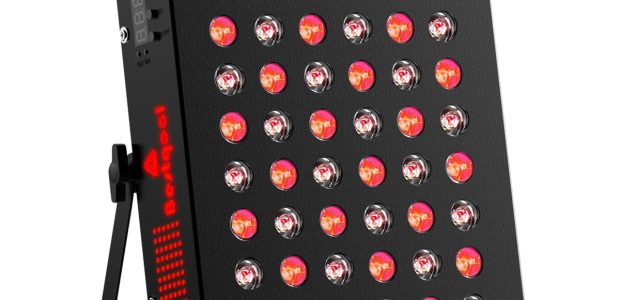

Red light therapy went mainstream on celebrity endorsements; it stays around because the photobiomodulation research keeps maturing. BestQool's claim to the category is regulatory seriousness: FDA Class II medical device certification across its panels, FDA-registered manufacturing, and published third-party irradiance testing from LightLab — the credentials that separate therapy devices from red lamps in wellness costumes.
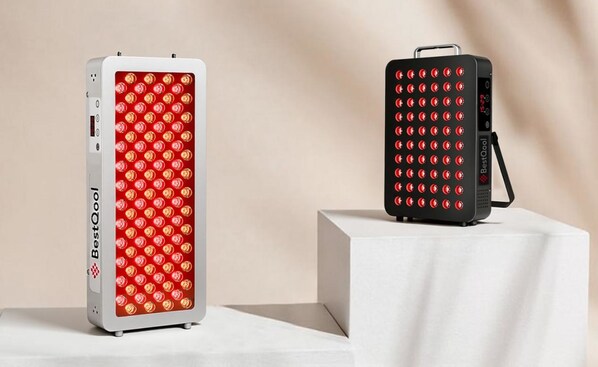
The lineup spans three logical series: BQ for beginners and targeted treatment (the portable BQ40, the desktop BQ60), Pro for higher irradiance and bigger coverage (Pro100 through the four-wavelength full-body Pro300), and Redot wearables for joints on the go. Use cases follow the research map: skin health, pain relief, recovery and sleep support.
Our verdict: BestQool is one of the most credibility-dense value picks in home red light — real certifications, published testing, sensible tiers — best bought one size larger than you think you need. Score: 8.3 / 10.
→ Shop BestQool — see today’s best offer
What makes BestQool different
Certification depth, stated plainly: Class II medical device status means design, safety and intended-use review — a bar most Amazon panels never approach — while LightLab testing publishes the irradiance numbers marketing usually invents. The engineering follows the research consensus: red (~660nm) plus near-infrared (~850nm) wavelengths, no UV, low heat, flicker-managed drivers. The Pro300 adds four wavelengths for the optimisation crowd.
The range, mapped to use
BQ40 portable: travel and targeted joints. BQ60: the face-and-torso desktop starter most buyers should meet first. Pro100/Pro300: standing-panel territory — higher irradiance shortens sessions, larger area covers backs and full bodies; the Pro300 is the family-station pick. Redot wearables: strap-on relief for knees and elbows between real sessions.
Price & value
BestQool undercuts the premium names (Joovv-tier) substantially while out-crediting the bargain bin — the mid-market sweet spot where certifications survive the discount. Panels are buy-once durables; the per-session cost across years rounds to zero, which is the honest frame against clinic pricing at $50+ per visit.
| Series | Best for |
|---|---|
| BQ | Starters, targeted areas |
| Pro | Serious sessions, full body |
| Redot | Wearable joint relief |
→ Get the latest BestQool deal
How to choose and use
Buy by target area honestly — face-only justifies BQ60; back pain wants Pro-size; whole-household use wants Pro300 on a stand. Distance and duration follow the manual (typically 6–18 inches, 10–20 minutes per area, most days); consistency across 8–12 weeks is where skin and pain outcomes report in both research and reviews. Eyes closed or shielded near the face; no sunscreen needed — no UV exists here.
Common mistakes
Session-skipping then verdict-rushing (photobiomodulation compounds slowly); buying undersized to save $80 and standing there re-aiming forever; treating wearables as replacements for panel sessions rather than supplements; and comparing spec-sheet irradiance across brands that never published third-party numbers — unverified watts are marketing, not medicine.
BestQool vs alternatives
Against Joovv/PlatinumLED premium: comparable wavelengths and honest output at a fraction of price, minus the modular ecosystems. Against no-name panels: the certification chasm is the entire purchase. The lane: verified mid-market — where most buyers should actually shop.
Quality, shipping & support
Build reviews run solid — housings, stands and timers surviving daily use; Trustpilot presence trends positive on product with the usual logistics minority. US support handles warranty terms per listing; devices carry the durability profile of buy-once equipment.
Who should buy — and who should not
Buy BestQool if you want research-aligned home therapy with verifiable credentials at mid-market pricing — skin, recovery and pain users with 10 consistent minutes a day.
Skip if you expect single-session miracles, or your budget stretches to premium ecosystems with app-controlled modularity.
Honest limits
Photobiomodulation's evidence is promising and dose-dependent, not miraculous: modest, cumulative effects with individual variance. Panels demand routine to pay; the device on the wall treats nobody. And Class II clearance certifies safety-for-intended-use, not cure claims — BestQool's restraint here matches the science's.
Photobiomodulation science: what red and near-infrared actually do
The mechanism behind the panels is better understood than most wellness tech: red (~660nm) and near-infrared (~850nm) photons are absorbed by cytochrome c oxidase in mitochondria, upshifting ATP production and downshifting oxidative stress in treated tissue. Red wavelengths work superficially — skin, collagen-producing fibroblasts — which drives the texture and tone findings; near-infrared penetrates centimetres deeper into muscle and joint, which drives the recovery and pain literature. Hundreds of trials now span skin aging, wound support, joint pain and muscle recovery: consistently modest, consistently dose-dependent, consistently in favour of the exposed side in split-body designs.
Dose is the variable amateurs miss: irradiance (mW/cm²) at the actual treatment distance times minutes equals the joules that matter, and the effective window is a plateau — too little does nothing, more-than-enough does no more. This is exactly why BestQool's published LightLab measurements matter: the category's bargain shelf routinely claims panel-surface numbers that collapse at real distances, turning sessions into placebo theatre. Verified irradiance converts the protocol from faith to arithmetic.
Wavelength literacy: decoding the spec sheet
The four-wavelength Pro300 markets combinations worth understanding individually. 630-660nm (visible red): the skin band — collagen, tone, superficial healing. 810-850nm (near-infrared, invisible): the depth band — joints, muscle, the recovery literature's workhorse. Some panels add 700-region wavelengths with thinner evidence, and blue light (antibacterial, acne-adjacent) lives in a different category entirely. A red-plus-NIR pairing covers the evidence-backed spectrum; more wavelengths add flexibility at the margin rather than multiplying results.
Flicker and EMF round out the engineering audit: quality drivers minimise flicker (the headache variable) and honest brands publish EMF readings at treatment distance. The mid-market's job — the job BestQool signs up for — is delivering these engineering disciplines without the premium-brand markup, and the certification stack is the receipt.
Building the home protocol: rooms, routines, households
Placement decides adherence: the panel in the bedroom doorway gets used; the one in the garage retires. Standing panels want a wall zone with 6–18 inches of approach room; desktop units colonise the WFH desk for face sessions during calls. The household schedule beats individual willpower — his recovery session after the run, her skin session with the podcast, the shared calendar that keeps the device earning. Eye comfort favours the included goggles or simply closed lids for face work; NIR is invisible, so trust the timer, not the glow.
Session stacking with existing routines is the retention trick: red light before the shower (clean skin, no products between light and target), after workouts for the recovery window, or during the morning news slot. The 10–20 minute per-area dose fits inside habits you already keep — which is the entire design brief of home photobiomodulation.
More questions panel buyers ask
Can I overdose on red light?
The response curve plateaus and can dip mildly at extreme doses — more sessions past the window waste time rather than add harm, but the manual's schedule is the optimum.
Through clothes or bare skin?
Bare skin, always — fabric blocks the photons the joules math depends on. NIR tolerates thin coverage poorly and red not at all.
Does it help with sleep?
Evening red-light sessions avoid the blue-spectrum alerting effect and users report wind-down benefits; the direct sleep evidence is thinner than skin/pain but the circadian logic is sound.
Tan or burn risk?
None — no UV exists in these wavelengths. Warmth is minimal by design at proper distances.
How long do the LEDs last?
Rated lifespans run tens of thousands of hours — a decade of daily sessions — making the panel a buy-once durability story when the housing quality holds, which is precisely what the build reviews assess.
Clinic vs home: the economics of owning the light
Red-light sessions at medspas and recovery studios bill $30–75 per visit, and the protocols that produce published results run three-to-five sessions weekly for months — a clinic habit costing thousands per quarter. A mid-market home panel amortises below single-digit dollars per month across its LED lifespan, delivering identical wavelengths at verified irradiance on your schedule. The clinic's remaining advantages — full-body beds, staff accountability — matter for specific users; for the consistency-is-everything reality of photobiomodulation, owning the light wins the math and, more importantly, wins the adherence.
The buying sequence that respects this: start with the body area driving the purchase (face, back, knees), buy the panel sized to it plus one size, and let the household's expanding use justify the Pro tier later — the standing-panel upgrade path most owner journeys follow. Resale on quality panels stays healthy, making the trial genuinely low-risk; the LEDs outlive the curiosity of every buyer who quits, which is why the used market exists and why the committed buy new with warranties attached.
The final calibration: photobiomodulation is a compounding habit, not an event — the users with before-after photos worth posting ran daily protocols through unglamorous weeks. BestQool's certifications guarantee the physics arrives; the calendar delivers the biology. Own both and the category's promises become measurements.
Use-case protocols: skin, pain, recovery and sleep, separated
The panel serves four distinct protocols worth running deliberately rather than vaguely. Skin protocol: face at 6–12 inches, 10 minutes daily, red-dominant settings where selectable — the collagen-support literature's lane, judged at week eight by photograph. Pain protocol: NIR-forward at the target joint or muscle group, 15–20 minutes, most days — the arthritis-and-back cohort's pattern, judged by the weekly 1–10 diary. Recovery protocol: post-training sessions on worked muscle groups within the hour, where the DOMS-reduction findings cluster. Sleep-adjacent protocol: evening red sessions as the screen-light replacement, riding circadian logic more than direct evidence. Households running multiple protocols simultaneously are the Pro300's actual business case — one device, four calendars.
The tracking discipline converts wellness into experiment: one protocol at a time for clean attribution, baseline documented before session one, and the eight-week judgment window respected. The category's satisfied owners are disproportionately its systematic ones — the pattern every honest device review keeps finding.
Device longevity: owning the panel for a decade
Red-light panels are decade-class durables when treated as such. The maintenance ledger runs short: dust the LED face monthly (output loss hides in grime), respect duty cycles on long sessions, mount stands on stable footing (tip-overs are the category's main casualty), and store portables padded in transit. The LED-lifespan arithmetic — tens of thousands of hours against ten-minute sessions — outlives ownership horizons, making the housing, cables and switches the actual wear items; BestQool's build-quality reviews are effectively a wear-item audit passed. Warranty registration on day one and the receipts-folder habit complete the ownership hygiene.
The household-fleet perspective closes the economics: one Pro-tier panel serving multiple users and protocols across a decade prices each session in cents — the clinic-comparison arithmetic this review opened with, compounded by time. The device's real risk was never failure; it was the closet. The protocol calendar is the warranty that matters. Score: 8.3 / 10.
Reading the research honestly: what to expect, what to dismiss
The photobiomodulation literature rewards calibrated reading. The robust findings: skin-parameter improvements (elasticity, texture) across multiple RCTs, DOMS-and-recovery effects in athletic cohorts, and joint-pain reductions in arthritis populations — modest effect sizes, consistent direction. The promising-but-early: cognitive applications, thyroid support, wound-healing acceleration — mechanistic sense with human evidence still thin. The dismiss-tier: fat-melting panels, cure-adjacent claims and the influencer protocols promising fortnight transformations — the marketing layer the FDA-clearance framing exists to counter. BestQool's claim restraint maps to the robust tier, which is exactly where a Class II device should live.
The consumer's evidence hygiene: split-body and controlled designs outrank testimonials, week-eight endpoints outrank day-three enthusiasm, and your own tracked protocol outranks everything for the only body that matters. Devices that verify their dose and restrain their claims have done their half; the literature's honest shape defines the rest. Score: 8.3 / 10.
Combining modalities: light in the recovery stack
The panel's natural teammates: sauna-and-cold protocols (different mechanisms, compatible calendars), massage-and-mobility work where the NIR session preludes tissue work, and the sleep-hygiene stack where evening red sessions replace screen glare. The sequencing note: post-exercise windows favour the recovery protocol, pre-bed favours the circadian one, and the same panel serves both on different clocks. Recovery culture's maturation is modality orchestration — and the home panel is its most schedulable instrument. Score: 8.3 / 10.
BestQool discount codes & deals
Seasonal sales and bundle offers run steadily — check the current PrimeVouch listing for active codes; Pro-series with a code is the value ceiling.
FAQ
Is BestQool really FDA certified?
Class II medical device certification with FDA-registered manufacturing — reviewed for design, safety and intended use (e.g. the BQ60's documented review).
Which device first?
BQ60 for face/targeted starts; Pro100+ if back-and-body coverage is the goal. Undersizing is the regret pattern.
How long until results?
Skin texture: 4–8 weeks of near-daily sessions. Pain/recovery: often sooner subjectively, with the same consistency rule.
Is it safe for eyes and skin?
No UV, low heat, all skin types — eyes shielded or closed near the face per instructions.
Panel vs wearable?
Panels dose broadly and strongly; wearables maintain joints between sessions. Complement, not substitute.
The 8-week protocol that answers the question
Weeks 1–2: 10 minutes per target area, most days, anchored to an existing habit — coffee brewing, evening news. Weeks 3–5: hold schedule, photo the skin target weekly, log the pain target on a 1–10. Weeks 6–8: the audit — photos side-by-side, pain graph honest, sleep notes reviewed. The literature's effect sizes live exactly in this window, and so does your answer. BestQool's certifications guarantee the dose is real; the calendar guarantees the verdict is yours. Score: 8.3 / 10.