
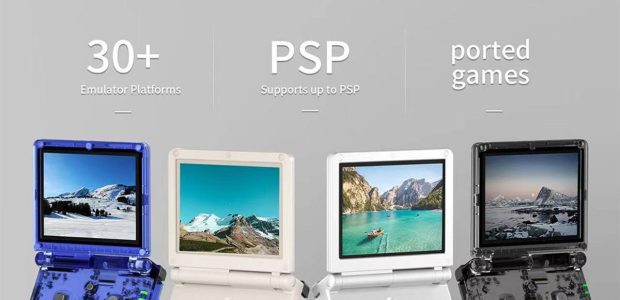

No brand owns retro handheld gaming like Anbernic. From the $63 RG35XXSP — a GBA SP reborn with a 3.5″ IPS screen and Dreamcast-capable internals — to the charming RG Rotate with its swivelling square display, the catalogue turns three decades of gaming history into pocketable, affordable hardware that reviewers from RetroDodo to Time Extension keep ranking category-best.
The formula: rapid releases, build quality above the price class, and form factors for every nostalgia — clamshells, verticals, horizontals, and the 5.4″ AMOLED RG556 for the modern-comfort crowd. The trade-offs are equally consistent: modest stock storage, software that wants community tinkering, and a release cadence that dares you to wait for next month's model.
Our verdict: Anbernic remains the retro-handheld default for value, variety and build — buy the form factor your childhood misses, budget an SD card, and expect the best hardware-per-dollar in emulation. Score: 8.8 / 10.
→ Shop Anbernic — see today’s best offer
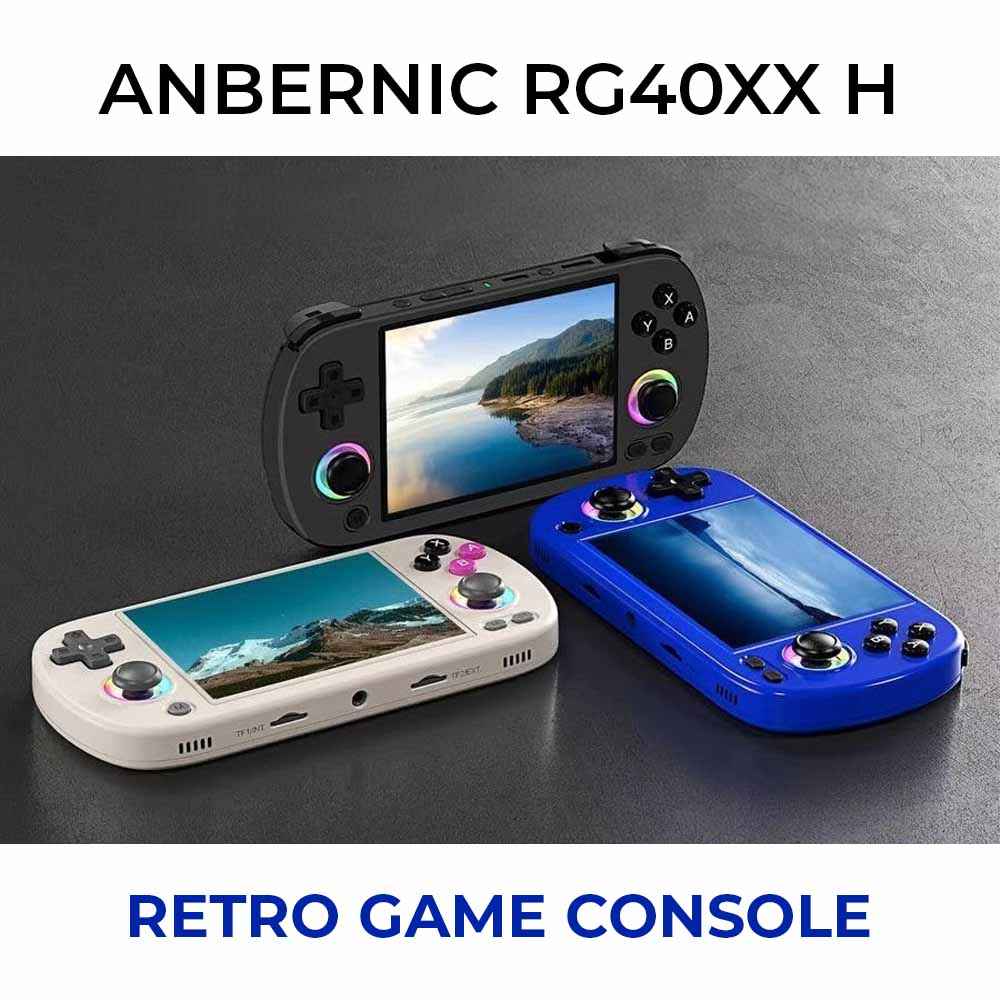
What makes Anbernic different
Velocity plus variety plus value. The release cadence outpaces every rival — new models monthly, each iterating screens, chips or forms. The catalogue spans genuine niches: clamshell nostalgia (RG35XXSP), square-screen charm (RG Rotate at $88, whose rotating 720×720 display hides a gamepad beneath), AMOLED luxury (RG556), and vertical Game-Boy purism. And the pricing undercuts boutique rivals while the metal-option builds (the Rotate's $107 aluminium) embarrass them.
The star: RG35XXSP
The $63 clamshell is the gateway drug: GBA SP looks, 640×480 3.5″ IPS, 3300mAh battery, and emulation reaching Dreamcast comfortably. It closes (screen protection, pocket peace), it charms (the hinge snap is pure 2003), and it runs the childhood library flawlessly. Reviewers call it the best value in retro — the review consensus this catalogue was built on.
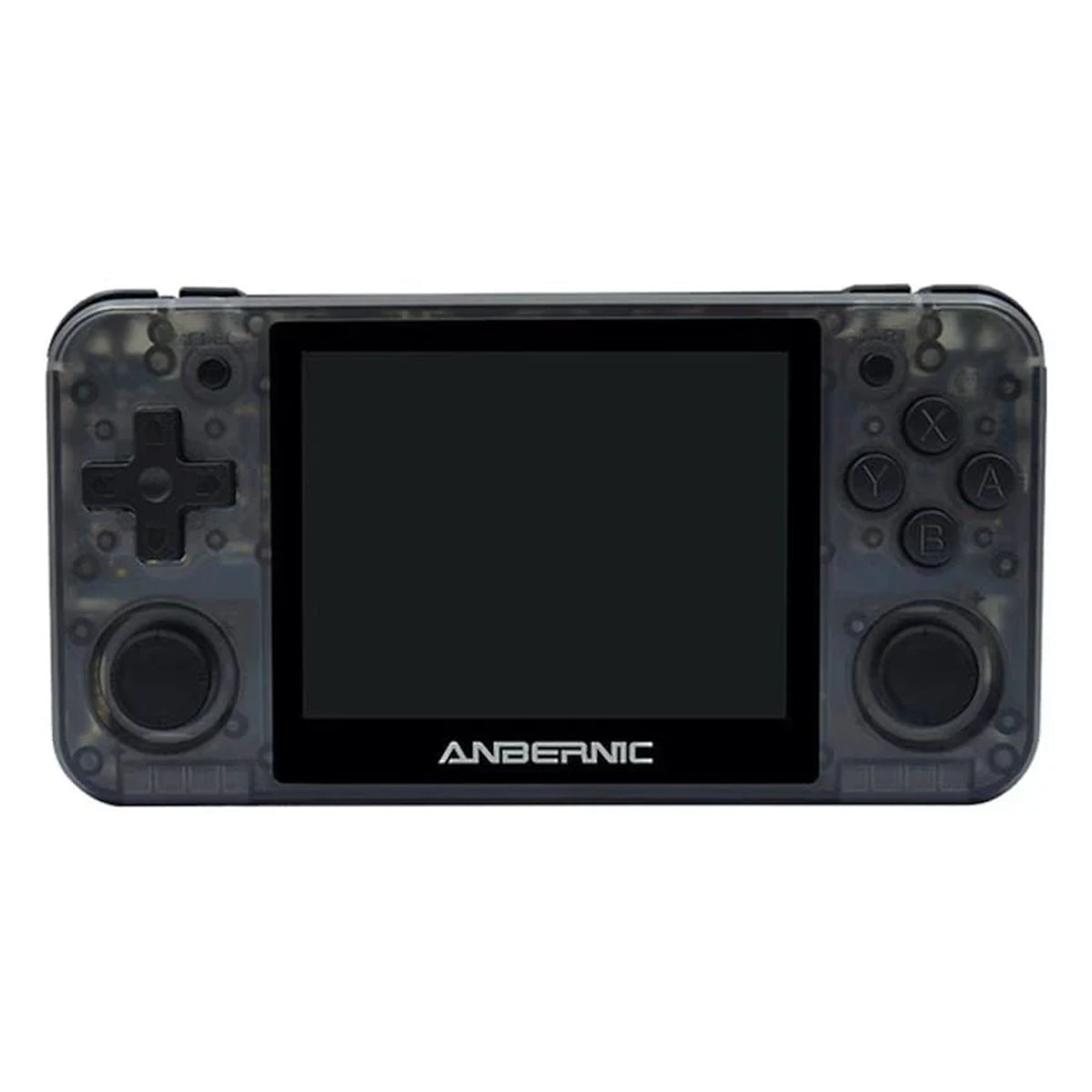
The range, mapped
RG Rotate ($88–107): the 1:1 square screen swivels to reveal controls — 3GB RAM and a Unisoc T618 stretching into GameCube/PS2 territory, “the most charming handheld in years” per Time Extension. RG556: 5.4″ AMOLED, ergonomic grips, the long-session flagship. Verticals and minis cover Game Boy DNA. The chip tiers map to console targets: entry chips own 8/16-bit through PS1; mid-tiers add N64/DC; the T618-class reaches into the sixth generation with settings patience.
Price & value
| Model | Price | Sweet spot |
|---|---|---|
| RG35XXSP | ~$63 | GBA-era through Dreamcast |
| RG Rotate | $88–107 | Square-screen + GC/PS2 dabbling |
| RG556 | Mid-premium | AMOLED long sessions |
→ Get the latest Anbernic deal
How to choose
Pick by the console you actually replay: GBA/SNES childhoods want the clamshell; PS1/N64 nostalgics need mid-tier chips; PS2 ambitions demand the T618-class and tempered expectations. Form factor beats specs for daily joy — the pocketable device gets used, the powerful one gets shelved. And always budget the SD upgrade: stock 32GB (the Rotate's anaemic ceiling) fills instantly; a quality 256GB card is the real storage plan.
Common mistakes
Waiting forever for the next release (the cadence never stops — buy the current fit); expecting stock software polish (the community firmware ecosystem is where these devices bloom); cheap SD cards corrupting libraries; PS2 dreams on entry chips; and ignoring the battery spec — the Rotate's 2000mAh is honest about being a home-and-commute device, not a transatlantic one.
Anbernic vs alternatives
Against Miyoo and TrimUI: comparable value, less variety, similar tinker-culture. Against Retroid: Retroid wins Android muscle per dollar; Anbernic wins build charm and form-factor breadth. Against Steam Deck-class: different sport entirely. The lane: dedicated retro at impulse prices, iterated relentlessly.
Quality, shipping & support
Build quality consistently reviews above the price class — hinges, buttons and screens surviving daily nostalgia. Global shipping from official channels runs standard import timelines; community support (firmware, guides, curated setups) dwarfs official docs, which is the category norm. Buy official for warranty; join the forums for the real manual.
What owners say
The pattern: childhood restored at pocket-money prices, libraries rediscovered on commutes, and the collector spiral (“my third Anbernic”) the cadence engineers. Critiques: stock OS quirks, storage stinginess, release-FOMO, and the AI software features the Rotate reviewers want revamped.
Who should buy — and who should not
Buy Anbernic if retro libraries are the goal — the value, variety and charm are unmatched, and the $63 entry makes the experiment trivial.
Skip if you want modern AAA portability (Deck territory), polished out-of-box software, or one device forever — this catalogue breeds collections.
Honest limits
Emulation legality lives with your own game backups; performance ceilings are real per chip tier; stock firmware is a starting point; and the release cadence guarantees your model is superseded within months — buy for the library, not the leaderboard.
Emulation tiers explained: matching chips to childhoods
The catalogue's spec sheets compress into one question — which console generation do you actually miss? 8-and-16-bit (NES through SNES/Genesis) runs flawlessly on everything Anbernic ships, including the cheapest verticals. The PS1/GBA tier is equally solved territory: any current model delivers full-speed with enhancement headroom (upscaling, texture filters) that makes childhood look better than memory. N64 and Dreamcast mark the first real fork — playable-to-excellent on the mid-tier chips with per-game settings patience. GameCube and PS2 remain the enthusiast frontier: the T618-class (RG Rotate) and above dabble genuinely, hitting the lighter libraries at full speed while the heavyweights demand compromises no pocket device escapes.
The honest chip-shopping rule: buy one tier above your target library and never chase the frontier. The Dreamcast childhood served perfectly by a $63 clamshell needs no $150 flagship; the PS2 dream needs honest expectations more than any purchase. Anbernic's tiered catalogue prices this taxonomy almost deliberately — pay for the generation you replay, not the one you might.
The firmware dimension: stock versus community
Anbernic's open secret is that the hardware outruns the stock software, and the community closes the gap. Custom firmware ecosystems (the muOS/Knulli/ArkOS family, per model) transform the experience: cleaner interfaces, better save-state handling, per-system optimisation, and the box-art-scraped libraries that turn an SD card into a museum. Installation is an evening's flash-and-copy project with excellent guides — the hobby's initiation ritual, and the point where the devices become what the reviews rave about.
The stock path remains viable for the tinker-averse: recent stock OSes boot, play and save competently, and the RG35XXSP's out-of-box experience in particular reviews as genuinely usable. But the buyer should know the map: the glowing setups on YouTube run community software, the AI-feature complaints (the Rotate's reviewers) target stock additions, and the SD-card reflash is always available as a fresh start. Hardware this cheap with software this moddable is the whole category's charm — Anbernic just ships more canvases than anyone.
Building the library legally and beautifully
The devices ship empty by design — your game backups are your responsibility and your legal homework, jurisdiction depending. The curation craft is where owners fall in love: a quality SD card structured by system, ROMs scraped with box art and metadata, favourites front-paged, and the childhood dozen — everyone has one — enshrined in a themed collection. The tooling (scrapers, playlist builders) runs from any laptop and turns an afternoon into a personal gaming archive that outlives any single device.
Save-state culture completes the conversion: suspend anywhere, resume decades-old campaigns across commutes, and blaspheme cheerfully against the memory-card scarcity that defined the originals. The devices also shine as couch companions — HDMI-out models feed TVs, Bluetooth pairs modern pads — making the pocket museum double as the party console. One SD card, one evening of curation, every Anbernic you ever buy inherits it: the library is the real purchase, and it appreciates.
Collector economics: the cadence game
Anbernic's monthly-release rhythm is a business model and a temptation engine, and veteran owners play it deliberately: buy on launch discounts (the standing pattern), skip generational half-steps, and resell or gift superseded units into the hobby's liquid secondary market. Depreciation is gentle — the $63 clamshell holds value because its job (GBA-era perfection) never expires — making the collection habit cheaper than its sticker totals suggest.
The rational portfolio, most owners converge on: one clamshell (pocket nostalgia), one horizontal mid-tier (N64/DC sessions), and — optionally — one flagship for the frontier itch. Three devices, one shared SD philosophy, every childhood covered. The cadence will tempt a fourth monthly; the library you built says no with increasing confidence.
Screen technology and the feel of the past
Display choice shapes nostalgia more than any spec: the RG35XXSP's 640×480 3.5″ IPS renders GBA-era pixels at integer-clean sharpness the originals never had; the Rotate's 720×720 square natively fits the Game Boy and arcade aspect ratios letterboxing ruins elsewhere; the RG556's 5.4″ AMOLED brings OLED blacks to PS1 skies that CRT kids remember glowing. Refresh handling, shader support (scanline and CRT filters on community firmware) and brightness headroom complete the authenticity toolkit — the past, upgraded exactly as much as you choose.
Ergonomics ride alongside: clamshells protect screens and pockets but cram shoulder buttons; horizontals spread hands for long sessions; verticals honour the Game Boy grip until wrists vote otherwise. The catalogue's breadth is precisely so the body, not just the memory, gets a say — and the demo consensus per form factor lives in the review channels this hobby documents obsessively.
Preservation culture: retro gaming as digital heritage
The handheld boom rides a larger preservation movement worth naming: as original hardware ages into failure (capacitor decay claims consoles yearly) and storefronts delist classics permanently, personal backup libraries and the devices that read them have become the medium's de facto archive. The legal frame stays jurisdiction-specific — own-your-backups is the community's ethical floor — and the practical frame is curation: metadata, box art and playlists transform a ROM folder into a browsable museum that outlives any single device's lifespan. Anbernic's role in the ecosystem is the reader hardware: affordable, iterated, replaceable — the microfiche machines of gaming's library age.
The community infrastructure completes it: the firmware projects, compatibility wikis and curation tools are volunteer heritage work at scale, and buying into the ecosystem funds its hardware half. The collection this review's year-one arc described is therefore more than nostalgia — it is a personal stake in the medium's memory, wearing a $63 clamshell's clothes. Score: 8.8 / 10.
Gifting retro: the handheld as present
The retro handheld has quietly become the millennial-and-up gift cheat code: the $63 clamshell wrapped for the sibling whose GBA SP defined 2004 delivers nostalgia's full payload at stocking-stuffer pricing. The gifting logistics: pre-load the SD card with the recipient's era (the setup evening is the giver's labour of love), charge it, and gift it ready-to-play — the difference between a gadget and a time machine. The pairing card — “your childhood, restored” — writes itself. December's launch-sale calendar cooperates, and the community's curated-setup guides make the pre-load project a pleasant evening rather than a technical chore. Score: 8.8 / 10.
Beyond solo play: the handheld's social lives
The retro device's second act is communal. HDMI-out models turn hotel rooms and living rooms into instant couch-multiplayer venues — the Mario Kart evening that needs no console setup; Bluetooth controller pairing scales it to guests; and the link-cable emulation features on modern firmware resurrect the trading-and-battling rituals the schoolyard invented. The family dimension runs deeper: parents curating their own childhood libraries for kids produces the rare screen time that is also inheritance — the platformer literacy passed down like the board games before it, save-states mercifully replacing the permadeath that scarred the original generation.
The community events layer rounds it: retro meetups, speedrun challenges and the online leagues that formed around exactly this hardware tier. The $63 device's social throughput, measured honestly, embarrasses consoles at ten times the price — nostalgia turns out to be a multiplayer resource, and the clamshell is its cheapest server. Score: 8.8 / 10.
The value-retention ledger: why the hobby holds its money
Retro hardware's secondary market rewards the careful owner: boxed devices with charged batteries and clean screens resell at gentle depreciation, superseded models gift onward into new collectors' hands, and the SD library — the real asset — transfers forward across every device generation for free. The ownership habits that protect it: box retention, screen protectors from day one, battery storage at half-charge for shelved units, and the firmware documentation that makes hand-me-downs turnkey. The collection this hobby builds is unusually liquid for consumer electronics — a courtesy the $63 entry price extends into the exit. Score: 8.8 / 10.
Anbernic discount codes & deals
Official-store launch discounts, seasonal sales and bundle pricing run continuously. Check the current PrimeVouch listing for active codes — launch-window plus code is the collector's entry.
FAQ
Which model first?
RG35XXSP for most: $63, protected screen, Dreamcast-capable, endless charm.
Can they really play PS2?
T618-class models dabble credibly with per-game settings; entry models do not. Match expectations to silicon.
Do games come included?
Devices ship as hardware; libraries are your responsibility (own backups). Community guides cover the setup hour.
Battery life?
Model-dependent: the SP's 3300mAh runs long sessions; the Rotate's 2000mAh is commute-class. Check per model.
What SD card?
Name-brand 256GB, A1-rated — the cheapest insurance in the hobby.
The first-week setup ritual
Day one: unbox, update firmware, resist the stock card. Day two: quality SD, community OS if the model's scene recommends (it usually does), library structured by console. Day three: box art scraped, favourites shelved, the childhood twelve front and centre. The weekend: the couch disappears into 2003, save states blaspheme beautifully, and the collection's first entry justifies itself completely. The second entry is already in the cart — the cadence saw to that, and honestly, at these prices, resistance was never the point. Score: 8.8 / 10.