
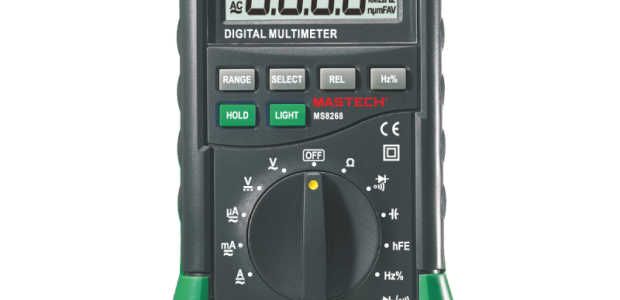

If you have ever stood in front of a wall of digital multimeters wondering whether you really need to spend Fluke money to get an honest, accurate reading, MASTECH is the brand that keeps coming up as the sensible middle ground. So here is the buyer question this review answers: is MASTECH good enough for real electrical and electronics work, or is it a “you get what you pay for” trap?
We dug through MASTECH’s published specifications, long-running owner reviews, teardown videos, and the reputation the brand has built among hobbyists and working technicians. What follows is an honest look at where MASTECH shines, where it falls short, and who should (and should not) put one in their toolbox.
PrimeVouch Score: 7.8 / 10
Best for: electronics hobbyists, students, makers, HVAC and appliance technicians, and DIYers who want a full-featured, auto-ranging meter for low-to-medium voltage work without paying premium-brand prices.
What we loved:
- Genuinely strong feature-per-dollar value across multimeters, clamp meters, and testers.
- Auto-ranging plus manual ranging, capacitance, frequency, duty cycle, temperature, and hFE on flagship models like the MS8268.
- 4000-count displays with backlight, data hold, and relative-measurement modes that used to be reserved for pricier meters.
- A broad catalogue: digital multimeters, clamp meters, insulation and earth testers, thermometers, and environmental instruments all under one brand.
- Widely available with published specs and downloadable manuals, so you know exactly what you are buying.
Watch out for:
- Reliability is inconsistent unit to unit; some owners report years of service, others report early failures.
- CAT safety ratings and internal protection do not match true premium brands, so mains and high-energy work deserves caution.
- Accuracy is good for the price but not lab-grade; it will not replace a calibrated bench reference.
- Included test leads are basic and are usually the first thing worth upgrading.
What makes MASTECH different
MASTECH sits in a very specific and useful place in the test-and-measurement market: it is a budget-to-mid brand that punches above its price on features. Where a bargain-bin meter gives you a rattly enclosure and three ranges, and a top-tier meter gives you bulletproof safety at a premium, MASTECH aims for the sweet spot where you get a legitimately capable instrument for a fraction of the flagship cost.
The brand has been around long enough to build a real reputation among electronics enthusiasts, students, and working technicians. On maker forums and teardown channels, MASTECH meters show up constantly as the “first good multimeter” people recommend to someone moving beyond a free harbor-freight giveaway. That reputation is earned by feature density: auto-ranging, capacitance, frequency, temperature, transistor testing, and a readable backlit display are commonly bundled in at a price point where competitors force you to choose.
It is important to be precise about what MASTECH is and is not. MASTECH is a specialist in electrical and environmental test tools, and the line-up includes digital multimeters, clamp meters, insulation testers, earth-resistance testers, thermometers, and a range of environmental instruments. If you are shopping specifically for a professional-grade multimeter or clamp meter for hobby, educational, or light-commercial use, that is exactly the lane MASTECH is built for.
The other thing that defines MASTECH is transparency. Full specification tables, accuracy figures, CAT ratings, and PDF manuals are published for the main models, which is not something every budget brand bothers with. That lets you match a meter to your actual needs instead of guessing, and it is a meaningful part of why the brand is trusted at its price point.
The star product
If MASTECH has a signature product, it is the MS8268 digital multimeter. It has become something of a hobbyist reference for “the affordable meter that does almost everything,” and it is the model most often compared head to head with far more expensive instruments in review videos.
The MS8268 is an auto-ranging 4000-count meter that also lets you switch to manual ranging when you want it. On the measurement side it covers AC and DC voltage, AC and DC current, resistance, capacitance, frequency, and duty cycle, plus a transistor hFE test and the usual diode and continuity checks. Published DC voltage accuracy sits around a respectable figure for the class, and the meter includes practical extras such as a backlit display, data hold, relative measurement, auto power off, and a low-battery indicator.
A standout usability feature is its sound-and-light warning that alerts you when the test leads are plugged into the wrong jacks, a genuinely helpful safeguard against the classic mistake of leaving leads in the current jacks and then probing a live voltage. Its published safety rating is CAT II 1000V and CAT III 600V, which frames the envelope you should work within. That is a perfectly sensible rating for benchwork, electronics, automotive, and general residential tasks, but it is not the same as a heavy-duty CAT IV industrial meter, and you should treat it accordingly.
In practical use, reviewers consistently describe the MS8268 as a lot of meter for the money, with a clear display, sensible ergonomics, and readings that track closely with far pricier references on everyday measurements. The honest caveat is that build tolerances and long-term reliability vary, so this is a great value meter rather than a lifetime heirloom. For most people that trade-off is exactly right.
The rest of the range
MASTECH is not a one-model brand. The catalogue spans several instrument families, and understanding the range helps you pick the right tool rather than defaulting to the most popular one.
Digital multimeters
The multimeter line is the backbone of the brand and ranges from pocket-sized basics to full-featured auto-ranging models. At the entry end sit compact meters in the MAS830 family, which are inexpensive, manual-range, 2000-count units aimed at simple voltage, resistance, and continuity checks for beginners and casual DIYers. Moving up, models like the MS8217 and the MS8268 add auto-ranging, higher counts, capacitance, frequency, temperature, and better displays. The rule of thumb is straightforward: the smaller and cheaper the meter, the more basic the feature set and the more you should stick to low-voltage, low-stakes work.
Clamp meters
MASTECH clamp meters let you measure current without breaking the circuit, which is essential for electricians, HVAC technicians, and anyone diagnosing motors, appliances, or panels. The range covers AC-only clamps at the budget end and AC/DC true-RMS models higher up. For the money, they are a popular way to add non-contact current measurement to a toolkit, though as with the multimeters you should match the model’s CAT rating and true-RMS capability to the job rather than assuming every clamp is equal.
Testers
Beyond general-purpose meters, MASTECH offers a spread of dedicated testers: electrical and voltage testers, socket and outlet testers, insulation resistance testers, and earth-resistance testers, alongside thermometers and environmental instruments such as light meters and anemometers. This is where the brand’s breadth shows. If you need a purpose-built tool rather than a do-everything meter, there is usually a MASTECH option, and the specialist testers are generally judged as solid value for non-critical, educational, and light-commercial use.
Accessories
Rounding out the range are the accessories: replacement test leads, temperature probes, alligator clips, carrying cases, and spare fuses. Two accessory notes matter most. First, the bundled leads are functional but basic, and upgrading to better-insulated leads with proper shrouded tips is a cheap, worthwhile improvement, especially if you work near mains voltage. Second, replaceable fuses are a real plus, because a meter you can re-fuse after an accidental overload is a meter you can keep using.
How to choose the right meter
Picking the right MASTECH instrument comes down to matching the tool to the work, not chasing the longest spec sheet. Here is a practical way to decide.
Start with what you actually measure. If you mostly check batteries, continuity, and low-voltage electronics, an inexpensive manual-range model does the job and keeps things simple. If you juggle a variety of tasks, an auto-ranging model like the MS8268 is worth the modest step up because it removes the guesswork of selecting ranges.
Next, look hard at the CAT safety rating relative to where you will use the meter. For bench electronics and low-voltage DIY, a CAT II or CAT III meter is appropriate. If you will be working on live mains panels, motors, or anything with high available fault current, prioritize the CAT rating and, honestly, consider whether a premium meter is the safer call for that specific work.
Then decide which features are must-haves. True-RMS matters if you measure non-sinusoidal signals such as motor drives or dimmers. Temperature and capacitance are handy for HVAC and electronics respectively. A backlight, data hold, and a wrong-jack warning are quality-of-life features that MASTECH tends to include, and they genuinely make daily use nicer.
Finally, weigh reliability expectations. MASTECH gives you a lot of capability per dollar, but it is a value brand, so buy it as a highly capable everyday tool rather than a calibrated lifetime instrument. If your livelihood depends on a meter surviving daily abuse for a decade, factor that in.
Watch: MASTECH in action
The video below puts a MASTECH meter side by side with a premium reference so you can see how the readings and handling actually compare in practice.
MASTECH vs alternatives
No brand exists in a vacuum. Here is how MASTECH stacks up against the two names it is most often compared with: Fluke at the premium end and UNI-T as another value-focused competitor.
| Factor | MASTECH | Fluke | UNI-T |
|---|---|---|---|
| Positioning | Budget-to-mid, feature-rich value | Premium, professional standard | Budget-to-mid value competitor |
| Price level | Low to moderate | High | Low to moderate |
| Features per dollar | Excellent | Good but you pay for it | Excellent, often flashy features |
| Safety and build | Adequate for its rating; verify per model | Rigorously certified and drop-rated | Adequate; verify CAT claims per model |
| Long-term reliability | Variable unit to unit | Excellent, often 10+ years | Variable, generally good for light use |
| Best fit | Hobby, education, light commercial | Daily professional and mains-critical work | Hobby, bench, light commercial |
The honest summary: Fluke is the benchmark for safety, durability, and calibrated confidence, and if your work involves serious mains hazards or daily professional use, it earns its premium. MASTECH and UNI-T occupy similar value territory, trading some ruggedness and reliability certainty for a dramatically lower price and generous feature sets. Between the two value brands, the choice often comes down to the specific model, the exact features you need, and which one is available at a better price where you shop.
Price & value
Value is where MASTECH makes its strongest case. The brand’s whole reason to exist is delivering an auto-ranging, multi-function, backlit meter with capacitance, frequency, and temperature at a price where competitors would sell you a stripped-down basic model. On a pure features-per-dollar basis, MASTECH is hard to beat.
That said, value is not only the sticker price. Because reliability varies from unit to unit, the smart way to think about MASTECH is as a low-risk, high-reward purchase: the outlay is small enough that even a shorter-than-hoped lifespan still represents good value, and many units serve faithfully for years. Buying from a reputable seller with a clear return policy protects you against the occasional dud and de-risks the purchase. For students, makers, and technicians who need capability without a premium budget, the math is compelling.
Who should buy — and who should not
MASTECH is an easy recommendation for a specific set of people. If you are an electronics hobbyist, a student learning the trade, a maker prototyping circuits, an appliance or HVAC technician doing light-commercial diagnostics, or a DIYer who wants a proper auto-ranging meter without spending premium money, MASTECH gives you genuinely more capability than you would expect at the price. The MS8268 in particular is a superb first serious multimeter.
It is also a smart pick as a second or backup meter for professionals who already own a premium instrument but want an inexpensive spare for the bench, the truck, or tasks where they would rather not risk their expensive tool.
Who should think twice? If you work daily on live mains panels, industrial switchgear, or anything with high available fault current, the safety headroom and certified durability of a premium brand are worth paying for, and MASTECH should at most be a secondary tool used within its rated envelope. Likewise, if you need calibrated, traceable, lab-grade accuracy for compliance or metrology work, a value meter is not the right instrument. And if you simply cannot tolerate any unit-to-unit variability, the predictability of a top-tier brand may justify the cost.
Honest limits
In the interest of a fair review, here are the limits worth stating plainly. First, reliability is the recurring theme in owner feedback: for every account of a MASTECH meter working flawlessly for years, there is another describing an early failure such as an unresponsive display or erratic readings. This is the nature of value-brand manufacturing tolerances, and it is the main reason we did not score the brand higher.
Second, safety and internal protection do not match true premium instruments. The CAT ratings printed on the meter define a real, sensible operating envelope, but the reinforced enclosures, high-energy fuses, and recessed input jacks that define top-tier safety are not fully replicated here. Respect the rating and do not push a value meter into work it was never built for.
Third, accuracy is good for the class but not reference-grade. For everyday troubleshooting the numbers are trustworthy; for precision or compliance measurements you will want a calibrated instrument. And finally, the bundled accessories, especially the test leads, are basic and worth upgrading. None of these limits are dealbreakers for the intended user, but pretending they do not exist would not be honest.
MASTECH discount codes & deals
If MASTECH sounds like the right fit for your bench or toolbox, the best move is to buy from a reputable seller with a clear return policy so you are protected against the occasional off unit. That combination, low price plus easy returns, is what makes a value-brand meter such a low-risk purchase.
We keep an eye on current MASTECH offers and bundle deals so you do not have to hunt around. Check the latest pricing and any available discounts before you buy, because a small saving on an already affordable meter makes the value proposition even stronger.
Shop MASTECH deals and grab the current price on the model that fits your work.
Frequently asked questions
Is MASTECH a good brand of multimeter?
Yes, for its intended use. MASTECH is a well-regarded budget-to-mid brand that delivers strong features per dollar. It is a great choice for hobby, educational, and light-commercial work. It is not positioned to replace premium instruments for daily mains-critical or calibrated metrology tasks.
What is the best MASTECH multimeter to start with?
The MS8268 is the most commonly recommended flagship. It is an auto-ranging 4000-count meter with capacitance, frequency, temperature, and a helpful wrong-jack warning, which makes it an excellent first serious multimeter. If you only need the basics, a simpler manual-range model such as one from the MAS830 family costs even less.
Are MASTECH meters safe to use on mains voltage?
Within their rated CAT category, yes. Many models carry CAT II 1000V and CAT III 600V ratings suitable for general residential and light-commercial work. For high-energy industrial panels or high available fault current, prioritize the CAT rating and consider a premium meter for that specific work. Always verify the rating printed on the meter itself.
How does MASTECH compare to Fluke?
Fluke is the premium benchmark for safety, durability, and certified reliability, and it costs accordingly. MASTECH offers much of the everyday functionality at a fraction of the price, trading some ruggedness and unit-to-unit consistency for value. For most hobby and light-commercial tasks MASTECH is plenty; for mains-critical professional use Fluke is worth the premium.
Is MASTECH accurate?
For its class, yes. Published accuracy figures are respectable and readings track closely with pricier meters on everyday measurements. It is not a calibrated reference instrument, so for precision or compliance work you should use a properly calibrated meter.
Do MASTECH multimeters come with a warranty?
MASTECH instruments are generally sold with a manufacturer warranty, and terms vary by model and region. Buying from a reputable, authorized seller is the best way to ensure warranty coverage and easy returns if you receive a defective unit.
Can I get replacement leads and fuses?
Yes. MASTECH offers accessories including replacement test leads, probes, and fuses. Because the bundled leads are basic, upgrading to better-insulated leads is a cheap and worthwhile improvement, and replaceable fuses mean an accidental overload does not necessarily end the meter’s life.
How to read multimeter specs and CAT safety ratings
Whether you buy MASTECH or anything else, knowing how to read a multimeter spec sheet turns a confusing list of numbers into a confident purchase. Here is a plain-English guide to the parts that matter most.
Count and resolution. The “count” tells you how many numbers the display can show before it has to jump to a higher range. A 4000-count meter can display up to 3999, which gives you finer resolution than a 2000-count meter. Higher counts mean you can see smaller changes in a reading, which is useful for precise work.
Accuracy. Accuracy is usually written as a percentage plus a number of digits, for example plus or minus 0.7% plus 2. The percentage applies to the reading and the digits refer to the least significant place on the display. A smaller percentage and fewer digits mean a more accurate meter. For everyday troubleshooting, figures in the sub-1% range for DC voltage are perfectly good; only metrology work demands tighter numbers.
Auto-ranging versus manual. Auto-ranging meters pick the correct range for you, which is convenient and beginner-friendly. Manual ranging lets you lock a range, which can be faster and steadier once you know what you are measuring. The best meters, including the MS8268, offer both.
True-RMS. True-RMS meters accurately measure the value of AC signals that are not clean sine waves, such as the output of variable-speed drives and dimmers. If you work with modern electronics or motor controls, true-RMS is worth prioritizing; for simple mains and battery work, an averaging meter is fine.
CAT safety ratings. This is the most safety-critical spec, so read it carefully. CAT ratings describe the level of transient overvoltage a meter is built to survive, and they climb from CAT I up to CAT IV. As a simplified guide: CAT I is for protected electronic circuits, CAT II covers single-phase receptacle-connected loads such as appliances, CAT III covers fixed installations like distribution panels and motors, and CAT IV covers the origin of the installation such as the service entrance and outdoor lines. Crucially, a CAT rating always comes paired with a voltage, for example CAT III 600V, and both numbers matter. A higher CAT number at a given voltage means more protection against dangerous energy spikes.
Why CAT ratings matter more than the voltage number alone. A dangerous misconception is that a meter rated for a high voltage is automatically safe for high-energy locations. It is not. The closer you get to the power source, the more energy is available to turn a fault into an arc flash, so the CAT category matters as much as the voltage. Always match the meter’s CAT rating to where you will actually use it, verify that the rating is printed on the meter itself, and when unsure, err toward a higher-rated instrument, because headroom is cheap insurance.
Armed with these fundamentals, you can read any meter’s spec sheet, MASTECH included, and choose a tool that matches both your measurements and your safety needs. For the model that fits your work, you can Shop MASTECH deals and compare the current options.