
Fluoride-free used to mean evidence-free; hydroxyapatite changed the argument. ORL builds its oral-care line on non-nano hydroxyapatite plus organic xylitol — the enamel mineral itself, doing remineralisation work, in a pH-perfect 7.0 formula free of the surfactants, alcohols and additives conventional pastes carry. Dentists and hygienists recommending it to patients is the brand's quiet headline.
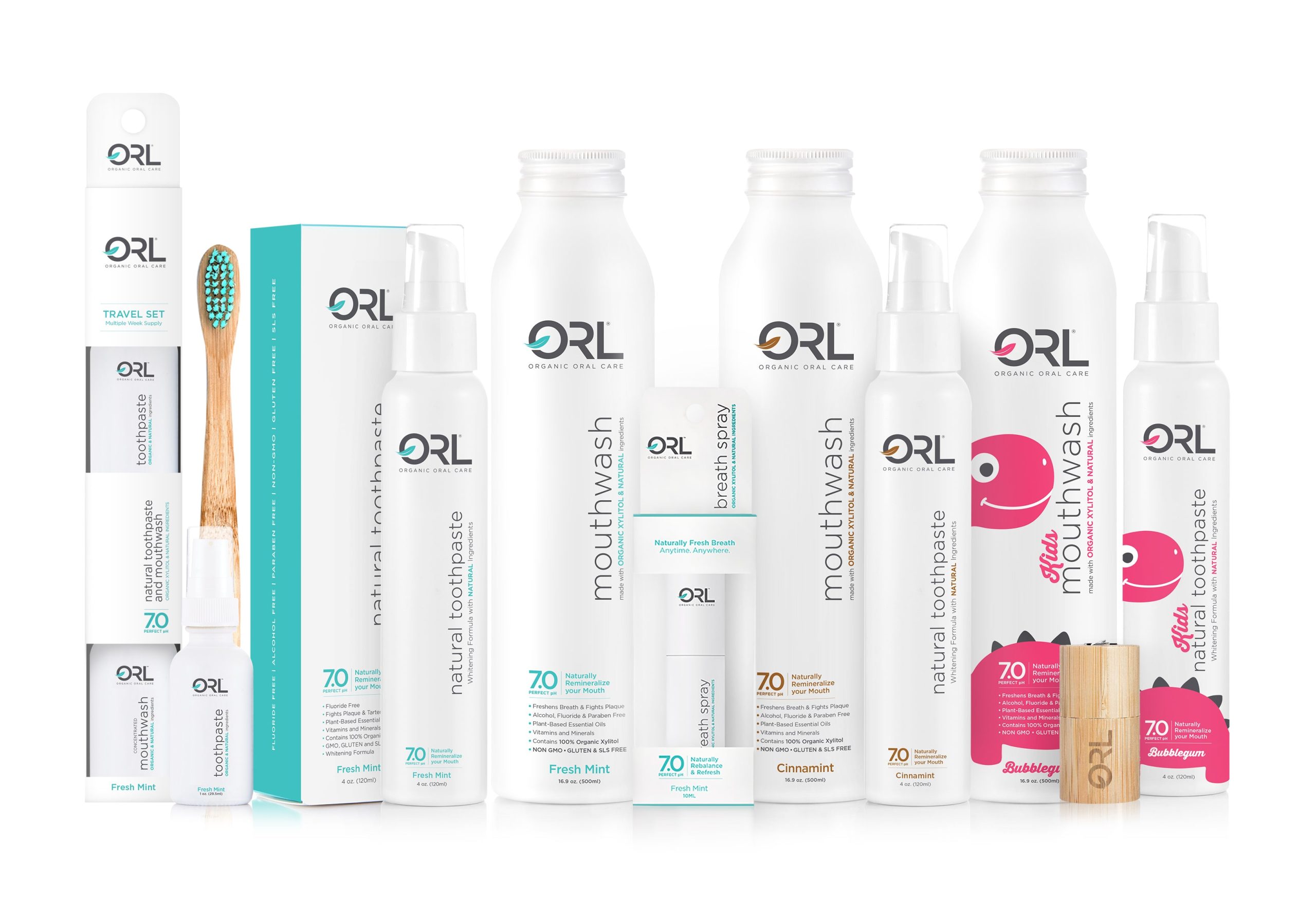
The range runs toothpaste, mouthwash, breath sprays and whitening kits — made in USA, vegan-friendly, packaged in recyclable aluminium and glass — with flavour work (natural Cinnamint) that reviewers credit for the switch sticking. The lab-review circuit's verdict: teeth genuinely clean, no burn, breath outlasting the mint theatre of drugstore tubes.
Our verdict: ORL is one of the most credible fluoride-free systems available — hydroxyapatite science, clean formulation, dentist endorsement — priced boutique for the daily-habit product it is. Score: 8.2 / 10.
→ Shop ORL — see today’s best offer
The hydroxyapatite argument
Enamel is ~97% hydroxyapatite; the toothpaste logic is disarmingly direct — supply the mineral, support remineralisation. The research base (much of it from Japan, where HA-paste has decades of use) shows remineralisation and sensitivity outcomes competitive with fluoride at proper concentrations, minus fluoride's swallowing cautions — the reason paediatric and pregnancy-adjacent shoppers drive the category. ORL's non-nano particle choice sidesteps the nano-safety debate entirely, and the organic xylitol layer starves the bacteria driving decay and gum trouble.
The formulation ethos
The deletion list does heavy lifting: no fluoride, no SLS surfactants (the canker-sore correlate), no alcohols (the mouthwash burn), no artificial anything. The pH 7.0 spec neutralises the acid environment demineralisation needs. The result reviewers describe: clean without scorch, mint without chemistry-class aftertaste — oral care that feels like maintenance, not treatment.

The range
Toothpastes (Cinnamint flagship) anchor. Mouthwash extends the pH-and-xylitol system alcohol-free. Breath sprays pocket the chemistry. The 60-day whitening oral-care kit bundles the routine at the discount the habit deserves. Aluminium tubes and glass bottles keep the sustainability ledger clean.
Price & value
Boutique-paste pricing — multiples of drugstore tubes, in line with the clean-oral-care class — with bundle-and-subscription math civilising it. The per-day cost of the flagship habit rounds to coffee-change; the comparison that matters is against the dental work the routine exists to prevent.
| Product | Role |
|---|---|
| HA toothpaste | Daily remineralisation |
| Mouthwash | pH + xylitol, no burn |
| 60-day kit | Full routine, bundled |
How to switch properly
Run the full tube before verdicts — remineralisation is a weeks-scale process. Brush the standard two-minutes-twice; HA needs contact time, so skip the aggressive post-rinse (the spit-don't-rinse habit borrowed from fluoride practice applies). High-cavity-risk mouths should loop their dentist in — the fluoride conversation is individual, and ORL's dentist-recommender base suggests it survives professional scrutiny.
Common mistakes
Judging by week one (mineral chemistry is patient); rinsing away the active layer immediately; expecting bleach-kit whitening from a remineralising paste (surface-stain improvement is the honest claim); and abandoning floss because the paste upgraded — systems work as systems.
Vs alternatives
Against Boka/Davids (the US HA class): comparable science, ORL's pH-spec and packaging ethos as differentiators. Against drugstore fluoride: different philosophy — proven incumbent versus clean-label challenger with maturing evidence. Against fluoride-free herbal pastes without HA: no contest — mineral chemistry versus mint water.
Quality, shipping & support
USA manufacture, dentist-recommendation base, review circuit consistency on feel and freshness; standard DTC logistics with subscription reliability. The aluminium-glass packaging survives shipping per reports — and recycles per promise.
Who should buy — and who should not
Buy ORL if you want fluoride-free with actual chemistry behind it — sensitive mouths, SLS-reactive users, families wanting swallow-safer paste, clean-label households.
Skip if high caries risk plus dentist advice keeps you on prescription-strength fluoride — the individual medical answer outranks any brand essay.
Honest limits
HA evidence, while genuinely maturing, trails fluoride's half-century mountain; whitening claims mean surface-stain, not shade-strip; and boutique pricing is structural. The brand's restraint from miracle language matches the science's current shape — credibility by modesty.
The remineralisation cycle: oral chemistry in one lesson
Teeth live in a daily tug-of-war: dietary acids and bacterial metabolism pull minerals out of enamel (demineralisation), saliva's calcium-phosphate reservoir pushes them back (remineralisation), and cavities are simply the war going badly for long enough. Every oral-care ingredient plays a position in this cycle: fluoride catalyses remineralisation into a harder fluorapatite surface; hydroxyapatite supplies the native mineral directly, patching micro-lesions with tooth-identical material; xylitol starves Strep mutans of fermentable fuel while stimulating the saliva that does the repair work; and pH management (ORL's 7.0 spec) shifts the battlefield itself toward the rebuilding side. Understanding the cycle turns paste-shopping from brand religion into position play.
The Japanese clinical record anchors the HA position: decades of approved use and trials showing lesion remineralisation and sensitivity reduction competitive with fluoride formulations at 5-10% concentrations. Western adoption lagged for regulatory-inertia reasons more than evidence ones — the current clean-label wave is importation, not invention. ORL's non-nano particle spec adds the conservative choice within the position: micron-scale HA performs the surface-patching role while sidestepping the nano-toxicology debate entirely.
The deletion audit: what leaving ingredients out actually does
SLS (sodium lauryl sulfate) creates the foam theatre consumers equate with cleaning while correlating with canker-sore frequency in susceptible mouths — its deletion is why ORL's “clean without burning” reviews repeat. Alcohol in mouthwash delivers the sting marketed as efficacy while drying the oral tissues whose moisture defends them — the alcohol-free wash's entire argument. Artificial sweeteners and dyes serve shelf appeal, not teeth. Each deletion trades a sensory convention for a physiological courtesy, and the adjustment period (a foam-trained brain re-learning that clean is a surface state, not a lather state) runs about a week per the switch reports.
What stays matters equally: xylitol's dose-dependent bacterial starvation (the multi-exposure daily pattern the paste-wash-spray system conveniently builds), natural mint oils doing flavour without the chemistry-class finish, and the aluminium-glass packaging whose recyclability is the brand's sustainability signature. The formulation reads as a position paper executed in paste — which is precisely why the dentist-recommender base cites it.
More questions switchers ask
Can HA and fluoride be used together?
Yes — alternating or combined use is common in transition routines, and high-risk mouths often keep a fluoride night paste while running HA daytime. Your dentist referees individual cases.
Is xylitol safe for households with dogs?
Xylitol is seriously toxic to dogs — store oral care like medicine in pet homes, as the ingredient's standard caution requires.
Why pH 7.0 specifically?
Neutrality neutralises: acidic environments drive demineralisation, and a neutral-spec paste avoids contributing to the acid side of the cycle while saliva rebuilds.
How long does the breath effect last?
The xylitol-plus-oils system outlasts masking mints per reviews — hours, not minutes — because it addresses bacterial fuel rather than perfuming exhaust.
Aluminium tubes — practical?
They dent honestly and recycle genuinely; the glass mouthwash bottles reuse. Sustainability with minor squeeze-technique adjustment.
The whole-mouth system: running the 60-day kit properly
The kit's architecture is exposure frequency: paste twice daily (contact-time honoured via spit-don't-rinse), wash as the midday xylitol exposure, spray as the portable third touch — the multi-exposure pattern xylitol's evidence base actually studied. Floss remains the mechanical partner no chemistry replaces; the hygienist visit at day 60 becomes the audit with professional instrumentation. Sensitivity diaries (cold-water wince scores weekly) and daylight smile photos bookend the trial with data the mirror's daily gaslighting cannot provide.
The realistic outcome distribution per the review base: smoothness signature within weeks (the glide the HA surface-patching produces), sensitivity improvement for the susceptible cohort, surface-stain brightening inside the honest-whitening frame, and breath longevity as the daily-noticed dividend. The conversion decision at day 60 then rests on evidence you generated — which, for a category historically run on foam theatre and mint marketing, is exactly the upgrade the clean-label wave promised and ORL's system delivers. Score: 8.2 / 10.
The fluoride conversation: individual risk, honest framing
The fluoride-free decision deserves its adult framing rather than the culture war it usually gets. Fluoride's cavity-prevention evidence is a half-century mountain — community water programs and clinical pastes carrying genuine population-level receipts — and high-caries-risk mouths (frequent decay history, dry-mouth medication users, orthodontic hardware) often belong on prescription-strength fluoride regardless of trend. The clean-label case is equally legitimate in its lane: swallow-safety for toddler households, sensitivity to conventional formulations, and the ideological preference for mineral-identical chemistry — with hydroxyapatite standing as the evidence-backed alternative rather than the herbal placebo tier this category once offered.
The synthesis most dentists actually practice: risk-stratify the individual. Low-risk adults with sound routines run HA pastes without drama; high-risk profiles keep fluoride in the rotation (the HA-day/fluoride-night hybrid is common); children run age-dosed products under swallowing supervision either way. ORL's dentist-recommender base exists precisely because the brand fits this framework honestly — an alternative with chemistry, not a rebellion with mint. Your hygienist's chair, not a review page, is where your personal stratification happens; this page's job is arriving there informed.
Beyond brushing: the whole-mouth ecosystem
Paste chemistry rides atop mechanical and behavioural fundamentals no formulation replaces. Floss or interdental brushes clear the third of tooth surface bristles never touch — the sites where the war is actually won or lost. Tongue cleaning owns the breath variable more than any wash. Timing rules matter: brushing immediately after acidic meals scrubs softened enamel (the wait-thirty-minutes rule), and the spit-don't-rinse habit maximises active contact from any paste, HA or fluoride alike. Diet frequency beats diet content — six grazing sugar exposures out-damage one dessert by acid-cycle arithmetic.
The system framing rescues buyers from product-hopping: a mediocre paste inside excellent mechanics outperforms the reverse every time. ORL's kit architecture (paste, wash, spray) supplies the chemistry legs; this paragraph supplies the free ones; and the 60-day audit measures the assembled system — which is the only thing your hygienist ever actually grades.
Clean-label oral care: navigating the category's spectrum
The fluoride-free shelf spans a credibility spectrum buyers should map. The evidence tier: hydroxyapatite formulations (ORL's lane) with the Japanese clinical record and growing Western trials. The functional tier: xylitol-forward and baking-soda formulations with mechanism support and modest evidence. The faith tier: charcoal pastes (abrasive theatre with enamel-wear warnings from dental associations), oil-pulling adjuncts and herbal-only formulas where evidence thins to tradition. Price does not map to tier — charcoal premiums fund marketing, not mechanism — which makes ingredient literacy the only reliable navigation.
ORL's position on the map is the review's core finding: evidence-tier chemistry (non-nano HA at functional positioning, xylitol system, pH spec) wearing clean-label values (deletion list, sustainable packaging, USA production) at boutique-but-rational pricing. In a category where the wellness aesthetic routinely outruns the science, a brand where dentists' recommendations and ingredient audits agree is the rarity worth the score. Score: 8.2 / 10.
Family oral care: scaling the system across ages
The household application changes the calculus per member. Toddler-and-preschool mouths make the swallow-safety case that built this category — supervised pea-sized dosing of HA formulations removes the fluorosis-anxiety conversation entirely, which is why paediatric-adjacent shoppers drive clean-label paste growth. School-age routines live on flavour compliance (the natural-mint register versus candy pastes is a real negotiation — the parental trial decides), and orthodontic teenagers are the exception lane where bracket-era caries risk usually argues for keeping fluoride in rotation per the family dentist. Adult splitting — HA morning, fluoride night for the high-risk partner, HA-only for the sensitive one — is the hybrid normal the category's maturity now supports.
The household economics scale with the kit logic: family-sized bundles amortise boutique pricing, the shared wash-and-spray layers serve all ages, and the single-brand-standard simplifies the bathroom the way NUTRIQ's review argued for supplements. One system, age-dosed — the formulation ethos applied at family scale. Score: 8.2 / 10.
Travel oral care: the system on the road
The aluminium tube's travel dividend is practical: TSA-friendly sizing on the smaller formats, dent-tolerant packaging that survives washbags, and the breath-spray tier built precisely for the transit day. The routine-portability principle matters more: systems that travel intact survive vacations that break habits — the spray-in-pocket, paste-in-kit combination keeping the xylitol exposure cadence alive through airport days. Frequent travellers report the switch's stickiness testing exactly here, and passing. Score: 8.2 / 10.
ORL discount codes & deals
Kit bundles (the 60-day box headlines) and subscription pricing run standing discounts — check the current PrimeVouch listing for active codes; kit-plus-code is the rational conversion.
FAQ
Does hydroxyapatite actually work?
Decades of use and growing trials support remineralisation and sensitivity benefits at proper concentrations — the credible fluoride alternative, per the dentists recommending it.
Why non-nano?
It sidesteps nano-particle safety debates while performing the remineralisation role — the cautious formulation choice.
Safe for kids and pregnancy?
The swallow-safety profile is the category's draw; individual medical questions still belong to your providers.
Will it whiten?
Surface stains improve with the routine; the 60-day kit structures the honest expectation window.
Why the aluminium and glass?
Recyclable, reusable, plastic-avoiding — the sustainability layer reviewers cite as tiebreaker.
The 60-day switch: running the honest trial
Weeks 1–2: full swap, spit-don't-rinse learned, sensitivity notes opened. Weeks 3–5: the smoothness signature reviewers describe arrives; breath-longevity audit against the old tube's memory. Weeks 6–8: photo the smile in day-zero light, grade sensitivity honestly, book the cleaning that lets your hygienist referee. The kit was named for exactly this window — and the dentist-recommendation base suggests how the refereeing tends to go. Score: 8.2 / 10.