
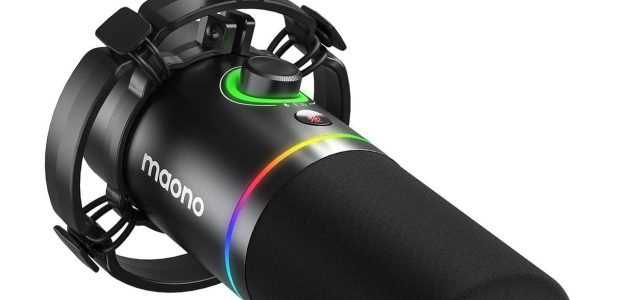

Podcast audio used to start at $100+ or sound like it started at $20. Maono broke that curve — the audio brand whose PD200X USB/XLR dynamic mic earned the review consensus “cheap price, professional sound”: an all-metal build, custom dynamic capsule (40Hz–16kHz, cardioid), dual USB-C and XLR outputs, and RGB that gamers forgave and podcasters disabled.
The catalogue has grown around that hit: dynamic and condenser mics across entry-to-enthusiast tiers, boom arms, interfaces and the creator-bundle kits that solve first-setup paralysis in one box. Reviewers from The Podcast Host to the tech circuit keep landing identical verdicts — beginner-priced hardware whose recordings pass professional ears.
Our verdict: Maono is the budget-audio brand that actually sounds like the upgrade — the PD200X remains the entry-podcast benchmark, and the ecosystem around it inherits the value DNA. Score: 8.4 / 10.
→ Shop Maono — see today’s best offer
What makes Maono different
The engineering choices explain the reviews. Dynamic capsules on the flagship line reject room noise the way condensers cannot — the untreated-bedroom reality of actual creators. Dual USB/XLR future-proofs: plug-and-play today, interface-upgrade tomorrow, same mic. Build quality runs all-metal where the price class runs plastic. And the software layer (gain, EQ, limiter via companion app on X-models) delivers the polish beginners cannot yet mix manually.
The star: PD200X
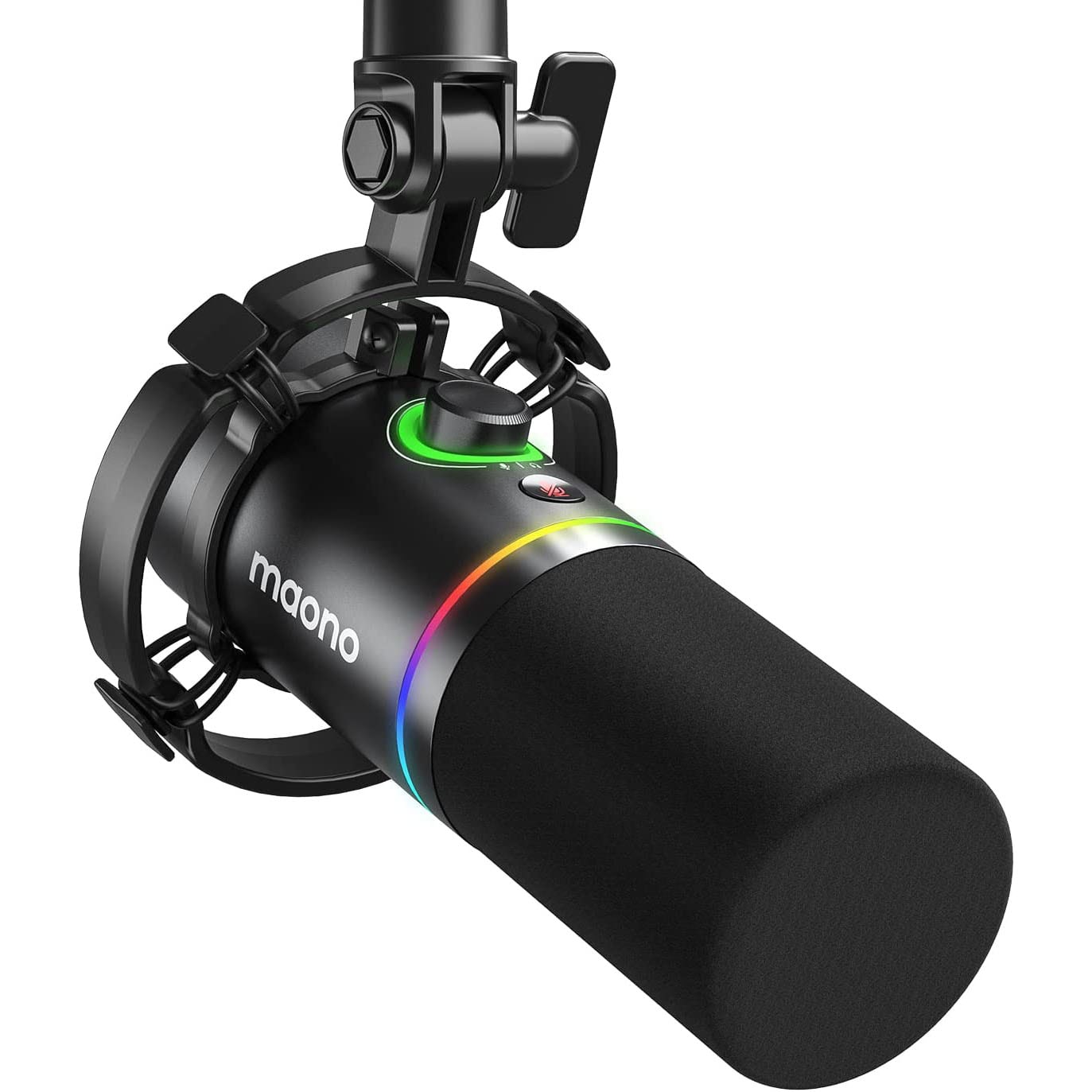
The reputation-maker: custom dynamic capsule tuned for voice richness, cardioid isolation for noisy rooms, USB-C simplicity plus XLR headroom, tap-mute and RGB (tasteful or off). Review verdicts converge — voices record “rich and clear” enough for professional podcast release, at a price that reads like a typo next to the Shure comparison the internet keeps making.
The rest of the range
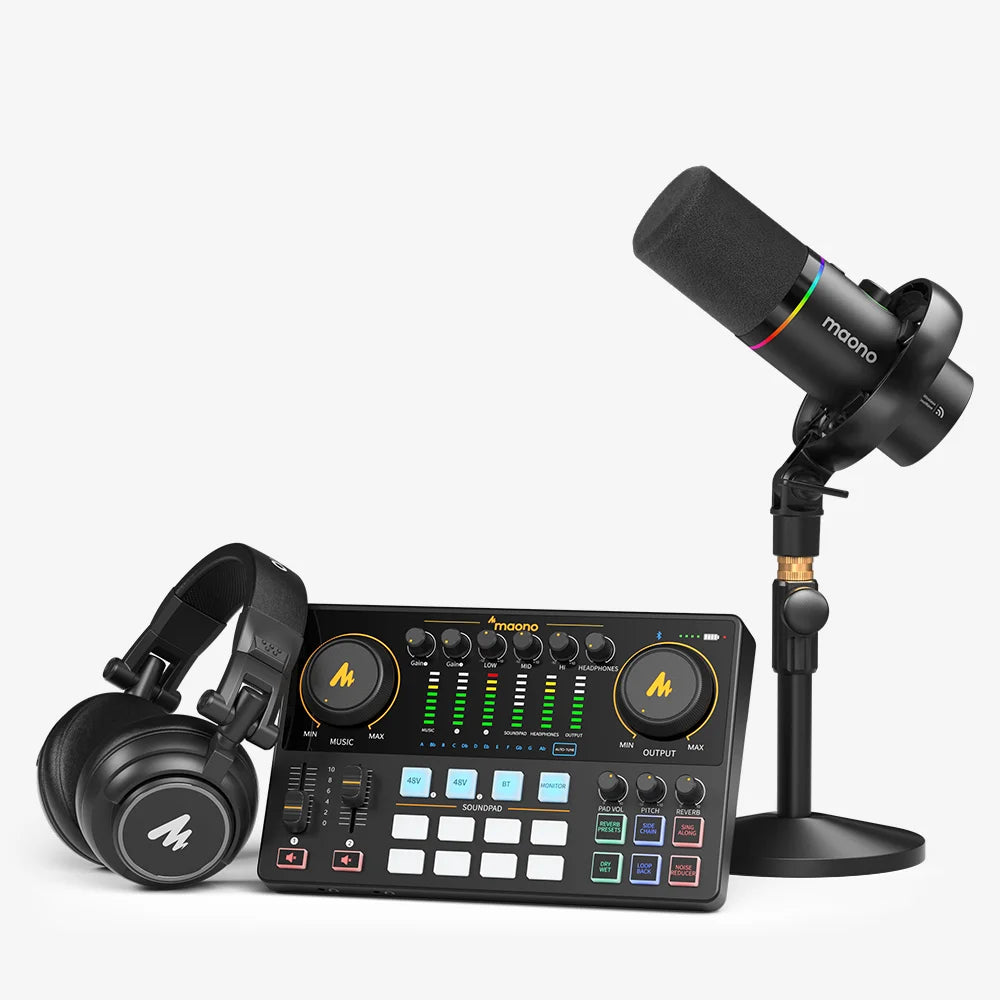
Condenser lines for treated-room detail work, wireless lav systems for video creators, boom arms and shock mounts sized to the mics, audio interfaces completing the XLR path, and the bundle kits — mic, arm, cables — that turn first-setup research into one checkout. The tiering stays honest: each step up buys audible, nameable improvements.
Price & value
The PD200X-class undercuts the podcast-standard incumbents by multiples while the blind-test gap narrows to preference — the entire brand thesis. Bundles compound it: complete starter rigs at single-competitor-mic prices. The honest ceiling: broadcast studios and voice professionals still climb to the incumbents for the last five percent.
| Line | Best for |
|---|---|
| PD dynamic series | Podcasts, streaming, untreated rooms |
| Condenser series | Treated rooms, detail work |
| Bundles | First setups, gift rigs |
How to choose and set up
Untreated room (most people): dynamic, always — the PD200X lane. USB for laptops-and-simplicity; the XLR jack waits for your interface era. Gain staging beats gear: mouth a fist-width off the capsule, gain until peaks kiss -12dB, limiter on. The app EQ's presets flatter voices out of the box; resist over-sculpting week one.
Common mistakes
Buying condenser for an echoey bedroom (the classic inversion); recording at whisper gain then boosting noise in post; skipping the boom arm that fixes distance discipline; and upgrading mics when the room is the problem — $30 of blankets outperforms $300 of capsule in bad spaces.
Vs alternatives
Against the Shure MV7/SM7 lineage: the incumbents win the last refinements and the brand badge; Maono wins price-to-parity — the blind-test story reviewers keep telling. Against fellow value brands (Fifine tier): Maono's build and software layer edge the class. The lane: the rational first serious mic, and increasingly the rational second one.
Quality, shipping & support
All-metal builds review durable; QC complaints run rare for the class; firmware/app updates arrive at a living-brand cadence. Standard e-commerce logistics globally; support handles warranty terms per listing without the horror-thread genre attached.
Who should buy — and who should not
Buy Maono if you are starting or upgrading podcast, stream or VO audio on real budgets — the value curve peaks exactly where most creators live.
Skip if broadcast-standard branding is contractually or psychologically required — the incumbents sell that certainty at incumbent prices.
Honest limits
The last five percent of refinement remains upstream; RGB is a taste crime some cannot pardon (it turns off); and no capsule fixes an untreated room's echo — physics invoices separately.
Dynamic versus condenser: the room-first decision
The microphone aisle's most consequential fork is capsule physics. Condensers hear everything — detail, air, and every untreated surface's echo, the neighbour's dog, the PC fan two feet away. Dynamics hear what is close and loud — the voice at fist distance — and physically reject the room's testimony. Studio marketing sold a generation of bedroom creators condensers built for treated spaces; the podcast renaissance corrected course toward dynamics, and the PD200X-class exists precisely at that correction. The rule that survives every forum war: treat the room or buy dynamic, and since blankets-on-walls loses to marriage negotiations, dynamic wins the domestic majority.
The technical corollaries: dynamics need more gain (the built-in preamp and app-side boost cover the PD200X's needs), reward close-mic technique (the fist-distance discipline this review drilled), and flatten room variance so recordings from different days actually match — the consistency that makes editing bearable. Condensers keep their crown in treated rooms and detail work, which is exactly where Maono's condenser line points instead.
The signal chain: from capsule to published episode
Audio quality is a chain with five links, and the mic is only the first. Gain staging (the -12dB peak discipline) prevents both noise-floor boosting and clipping — the two amateur signatures. Distance consistency (boom arm, fist rule) stabilises tone across sessions. The app-side processing (EQ presets, limiter) delivers competent polish; restraint delivers professional polish — one preset, frozen, beats weekly knob safaris. Recording software defaults (48kHz/24-bit) suffice for voice; the editing stage's noise reduction and loudness normalisation (-16 LUFS podcast standard) finish the chain. Nothing in that list costs money beyond the mic and arm — which is the entire budget-creator gospel the Maono value tier preaches.
The upgrade path when it genuinely calls: XLR into a modest interface unlocks preamp headroom and multi-mic sessions — the same PD200X riding along, which is what the dual-output future-proofing bought. Room treatment (the $30 blanket fort) upgrades everything simultaneously. The incumbent-brand mic upgrade comes last, if ever — the blind tests keep saying so, and the savings keep funding better content instead.
More questions creators ask
Why does my recording sound thin?
Distance, almost always — beyond a fist, dynamics lose proximity body. Re-mic at close discipline before touching EQ.
RGB — seriously?
The gamer-market tax; it disables in one tap and podcasters pretend it never existed. Judge the capsule, forgive the lighting.
Mac/iPad/console compatibility?
Class-compliant USB works across the ecosystem; app features live on desktop OSes. XLR is universal by definition.
Pop filter needed?
The internal screening handles moderate plosives; heavy-plosive voices add the $10 foam or angle off-axis slightly. Cheap fixes, big polish.
Two-person podcast on a budget?
Two PD-class mics into a small interface via XLR — the exact upgrade path the dual-output design anticipated, at a total still under one incumbent flagship.
The creator-audio economy: why this price tier changed everything
A decade ago, broadcast-adjacent voice quality cost a studio day or a four-figure chain; the PD200X-class collapsed that into lunch-money hardware plus technique. The democratisation shows in the content itself: the podcast long tail, the voiceover gig economy, the streamer middle class — all riding value-tier capsules whose blind-test parity with incumbents keeps embarrassing the price gap. Brands like Maono forced the correction by refusing the category's old margin structure, and the incumbents' response (their own budget lines) certified the shift. For the creator deciding today, the strategic read is simple: the microphone stopped being the barrier years ago — the consistency of publishing is the remaining moat, and every dollar the value tier saves is a dollar of runway toward it. That reallocation, more than any spec, is what this review's score actually measures. Score: 8.4 / 10.
Room acoustics on zero budget: the upgrade before every upgrade
The untreated-room reality deserves its practical playbook, because $0–30 of acoustic intervention outperforms $300 of capsule upgrade in bad spaces. The free tier: record facing into a corner-mounted closet (hanging clothes are broadband absorbers), throw the duvet over a chair-frame behind the mic (the blanket-fort standard), rug the floor between voice and walls, and close the curtains whose glass was flutter-echoing consonants. The $30 tier: moving-blanket panels on the first-reflection walls, a cheap mic-shield if the desk position is fixed. The measurement: record ten seconds of silence and a clap — the tail you hear is the reverb your dynamic mic is fighting, and each intervention audibly shortens it.
The dynamic-capsule synergy: because the PD200X-class rejects off-axis sound structurally, modest treatment plus close-mic discipline reaches broadcast-adjacent dryness in ordinary bedrooms — the exact combination the budget-creator economy runs on. Condenser owners need triple the treatment for the same dryness, which is the room-first decision restated as renovation mathematics.
Voice technique: the free half of professional sound
Microphone technique is the unbudgeted variable that separates identical hardware chains. Distance consistency: the fist rule, enforced by boom-arm positioning that makes drifting uncomfortable. Axis discipline: speaking across the capsule at slight angle tames plosives without filters. Level performance: projecting at conversational-plus energy (radio voice is mostly diaphragm, not equipment) gives the gain stage healthy signal to work with. Silence hygiene: pausing instead of um-ing creates the edit points that make post-production merciful. The warm-up minute — sirens, lip trills, the pledge read twice — audibly improves the first take everyone otherwise re-records.
The feedback loop that trains all of it: record, listen on headphones at honest volume, wince, adjust, repeat — the weekly ritual that improves faster than any purchase. Creators who run it report the strange discovery this tier's blind tests keep confirming: the voice was the instrument all along, and the affordable mic was already sufficient to carry it.
The creator stack: what surrounds the microphone
The complete budget chain, itemised for first-setup clarity. Capture: the PD-class dynamic plus boom arm and shock mount (vibration isolation the desk-thumper learns to love). Monitoring: closed-back headphones at the value tier (mixing on earbuds is how muddy episodes ship). Software: free DAWs (Audacity, GarageBand) or the podcast-host web editors cover voice entirely — paid software is workflow preference, not quality gate. Hosting and distribution: the platform layer where consistency, not audio spec, determines outcomes. Total stack cost lands under a single incumbent microphone — the reallocation thesis this review keeps proving.
The upgrade sequence when growth funds it: acoustic treatment first (permanent, transferable), interface-and-XLR second (the dual-output dividend), monitoring third, and the mic itself last — the inversion of every beginner's instinct and the consensus of every audio engineer's hindsight. Maono's catalogue happens to price each rung of that ladder, which is the ecosystem play behind the value positioning. Score: 8.4 / 10.
Multi-platform creator reality: one mic, five outputs
The modern creator's mic serves a portfolio: the podcast feed, the stream overlay, the YouTube voiceover, the client Zoom that pays the bills, and the voice-note economy in between. The PD-class dynamic's consistency across them is the underrated spec — the same close-mic discipline producing matching tone whether OBS, Riverside or Teams is listening, which makes the creator's voice a recognisable asset across platforms rather than a per-app lottery. The routing practicalities: USB into the daily driver, the app's preset frozen across software, and monitor-path checks per platform (the Zoom echo test, the OBS meter glance) as the thirty-second pre-flight.
The client-work dividend deserves its line: sounding professional on calls is billable-rate infrastructure in the freelance economy, and the lunch-money mic that upgrades every meeting is the cheapest positioning spend available. The creator stack's ROI was never just content — it is every conversation the capsule touches. Score: 8.4 / 10.
Longevity ownership: the mic across five years
The all-metal build's maintenance covenant is minimal: foam windscreen washes, XLR-and-USB port hygiene (the dust-cap habit), firmware currency via the app, and the boom-arm tension checks that prevent the slow-droop genre. The failure modes worth knowing: cables before capsules (the first suspect always), connector wear on heavy-travel units, and essentially nothing else — dynamics are the diesel engines of microphones. Five-year-old PD-class units resell into the starter market steadily, completing the value story: the mic that cost lunch money returns coffee money after half a decade of daily service. Score: 8.4 / 10.
Maono discount codes & deals
Launch discounts and bundle promotions cycle constantly — check the current PrimeVouch listing for active codes; bundle-plus-code is the complete-rig cheat code.
FAQ
PD200X vs the Shure MV7?
The recurring review answer: closer than the price gap has any right to allow. Voices-first creators on budgets pick Maono and bank the difference.
USB or XLR — which should I use?
USB today for simplicity; XLR when an interface enters your life. The dual jack is the future-proofing you paid pennies for.
Does it need a boom arm?
Strongly yes — distance discipline is half of dynamic-mic sound, and desk stands invite drift.
Is the software required?
No — class-compliant plug-and-play works everywhere; the app adds EQ/limiter polish X-models unlock.
Streaming and gaming too?
The cardioid dynamic profile was practically designed for keyboard-adjacent life — yes.
First-week studio: from box to broadcast
Day one: arm mounted, mic fist-distanced, gain staged to -12, test read recorded. Day two: app presets auditioned, one chosen, settings frozen. Days three-seven: real episodes, real calls, the listening-back ritual that trains the ear faster than any spec sheet. By Sunday the room is the only variable left — and the mic that cost lunch money has stopped being the excuse. That is the entire Maono proposition, delivered. Score: 8.4 / 10.