
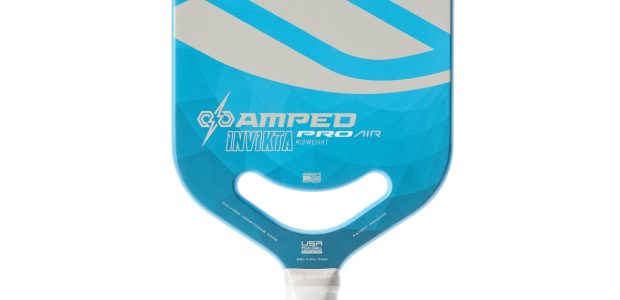

Since 1985, Courtside Tennis & Pickleball has been California's racquet-sports institution — three brick-and-mortar locations (Sacramento and Oakland among them) plus a full online store, carrying Babolat, Head, Wilson, Selkirk and the modern paddle wave. Forty years in, the Yelp pages still read like love letters to staff who actually play.
The differentiator no pure e-commerce rival matches: the demo program — $25 deposit, one month, three paddles at a time with unlimited swaps, deposit credited on purchase. In a pickleball market drowning in $200 paddle gambles, try-before-buy is the entire value revolution. Add 24-hour stringing turnaround and staff fitting advice, and the specialist-shop model earns its keep online too.
Our verdict: Courtside is what specialist retail should be — real expertise, demo-first buying, fair prices across budgets — with California-centric logistics as the only footnote for distant shoppers. Score: 8.5 / 10.
→ Shop Courtside — see today’s best offer
What makes Courtside different
Expertise with a return address: staff who string, play and fit — the Yelp record's recurring theme is advice that ended equipment confusion. The demo program converts paddle-buying from spec-sheet roulette to empirical decision. And the range spans genuinely all budgets — entry composites to pro-line Selkirk — with stringing services anchoring the tennis side's loyalty.
The star: the paddle demo program
$25 refundable-against-purchase deposit, thirty days, three paddles concurrently, swap freely. Play your actual games with candidate paddles — power builds versus control layups, 16mm versus 13mm cores, elongated versus standard shapes — and buy the one your third-game self prefers. Nothing in the category's online-review ecosystem replaces this loop, and Courtside prices it at the cost of two tubes of balls.
The range
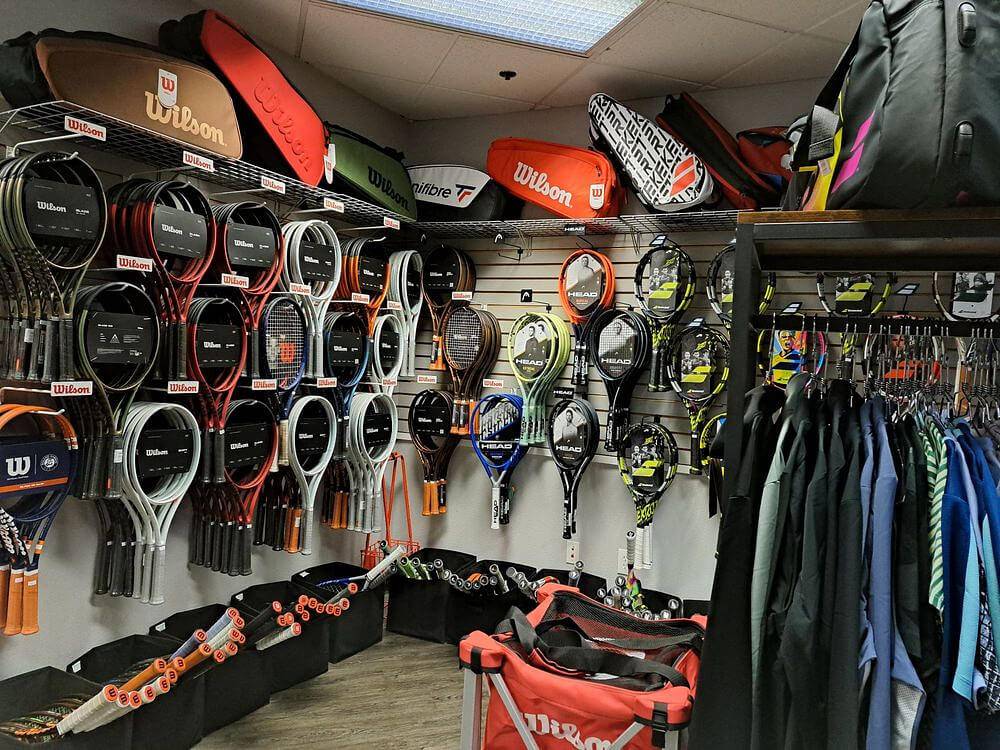
Pickleball: paddles across every construction trend (raw carbon, thermoformed, foam-injected), balls, bags, shoes and the accessory wall. Tennis: racquets from the big four, 24-hour stringing with real string-menu depth, grips and footwear. Specialist collections — long-handle paddles, spin-focused builds — signal a buyer who actually follows the meta.
Price & value
Street-competitive on hardware (“reasonably priced” recurs in reviews) with the services — demo, stringing, fitting — as the margin justification pure-online can't counter. The demo-credited $25 makes the effective paddle price identical to blind-buying, minus the regret risk.
| Service | Terms |
|---|---|
| Paddle demo | $25/month, 3 at a time, credited on purchase |
| Stringing | 24-hour turnaround |
| Fitting advice | Free with humans who play |
→ Get the latest Courtside deal
How to choose a paddle (the Courtside way)
Demo across categories, not within one: a power thermoform, a control raw-carbon, a middleweight hybrid — three archetypes, one month, your real drills. Weight and grip circumference come from feel, not forums. Skill-stage honesty beats meta-chasing: bangers' paddles punish developing soft games. And the staff conversation is the shortcut — describe your losses, they translate to specs.
Common mistakes
Buying the podcast paddle blind; chasing pro-line stiffness before soft hands develop; ignoring grip size (the tennis-elbow correlation is real); skipping the demo program to save a drive; and re-buying entire paddles when a $20 regrip-and-lead-tape session would have retuned the current one.
Courtside vs alternatives
Against big-box sporting goods: no contest on expertise or demo access. Against online paddle giants: they win pure selection breadth and shipping reach; Courtside wins certainty-before-spending and service afterlife. Against direct-from-brand: brand stores demo their brand; Courtside demos the market. California players have no excuse; distant buyers weigh shipping against certainty.
Quality, shipping & support
Four decades and three locations testify to operational health; Yelp's “excellent, caring, attentive” pattern covers the human layer. Online orders ship standard; stringing and demo remain the in-region superpowers. The specialist truth: the closer you live, the more this store is worth.
What players say
The reviews repeat three notes: staff advice that fixed buying paralysis, demo experiences that changed intended purchases (the program paying for itself in avoided mistakes), and stringing reliability that owns local loyalty. Critiques are geography and stock timing on hype paddles — the specialist-shop constants.
Who should buy — and who should not
Buy from Courtside if you are in California (demo + services = full value), or anywhere and want curated stock with humans answering fit questions before checkout.
Look elsewhere if you need overnight national shipping on the newest hype drop, or your buying religion is lowest-sticker-online regardless of fit risk.
Honest limits
The demo program's full magic requires proximity; online buyers get the curation and advice but not the loop. Hype-cycle paddles sell through everywhere, specialists included. And service businesses inherit human variance — forty years suggests they manage it.
Paddle science: what the construction wars actually mean
The 2026 paddle market is a materials arms race worth decoding before any demo. Raw carbon faces (the Selkirk-tier signature) grip the ball for spin generation — the textured surface's friction is measurable and tournament-legal within limits. Thermoformed construction — unibody edges, foam-injected perimeters — stiffens the frame for the power meta, trading some touch. Core thickness runs the control-power axis: 16mm cores dampen and forgive (the control player's cushion), 13-14mm cores trampoline (the banger's launchpad). Shape completes the geometry: elongated blades extend reach and leverage at the sweet-spot's expense; standard shapes forgive off-centre reality.
The demo program converts this taxonomy from theory to felt truth in a week: the same third-shot drop attempted with a 16mm raw-carbon control paddle and a 13mm thermoformed power frame teaches more than a season of spec-sheet scrolling. Courtside's three-at-a-time structure is built for exactly this triangulation — archetype against archetype against your actual hands.
Stringing culture: the tennis side's quiet superpower
The 24-hour stringing turnaround anchors a service most players under-exploit. String choice moves playability more than racquet upgrades: polyester mains for spin-heavy baseliners (with the tension-loss maintenance rhythm poly demands), multifilament for arm-friendly comfort, hybrids splitting the difference — and tension itself as the free tune-up, two pounds looser for power, tighter for control. A shop that strings daily develops the database: what holds up, what arms complain about, what the local courts' conditions do to string life.
The restring cadence rule — as many times yearly as you play weekly — is the habit that keeps racquets honest, and a 24-hour local loop removes its only excuse. Add grip sizing and regripping services and the tennis side of Courtside functions as equipment healthcare: small interventions, scheduled, that outperform new-gear spending almost every time.
The pickleball boom economy: navigating gear inflation
Pickleball's explosion built a $200-paddle culture almost overnight, and the buyer's defence is structural scepticism. The performance delta between a $90 established-brand paddle and the $220 hype release is real but marginal — far smaller than the delta between either paddle and three months of drilling. The demo program is the inflation antidote: empirical testing at deposit prices punctures marketing gravity reliably, and Courtside's across-budget stocking means the comparison set includes the value tier the influencer economy skips.
The upgrade decision tree that survives scrutiny: upgrade when your current paddle's limitation is nameable (spin ceiling, sweet-spot punishment, weight fatigue) — not when the feed says so. Mid-tier players upgrade too early; advanced players tune (lead tape, grip builds) before replacing. The shop's staff — players themselves, per every review — will say exactly this, which is the difference between retail and advice.
Community infrastructure: what a 40-year shop actually provides
Specialist shops function as sport infrastructure beyond transactions: demo bins that lower entry barriers, stringing that keeps gear alive, staff who route beginners to lessons and leagues, and the bulletin-board layer — clinics, club contacts, partner-finding — that no marketplace replicates. California's racquet scene has run through Courtside's locations for four decades; the Yelp love letters are describing civic infrastructure wearing a retail costume.
The reciprocity math for players: spending the marginal dollar locally versus online buys continued existence of the demo bin, the 24-hour stringer and the humans who answer paddle questions — the services whose absence online shoppers discover exactly when they need them. It is the specialist-retail bargain stated plainly, and at street-competitive prices it costs almost nothing to honour.
Skill-stage equipment: the progression map both sports share
Racquet-sport equipment rewards stage-matching more than budget-maxing. The beginner window (months one-to-six): forgiving mid-weights, standard shapes, comfort strings — equipment that tolerates technique's absence while it forms; premium stiffness here actively teaches bad habits by punishing off-centre reality. The improver window (the first competitive year): the demo program's prime audience — technique has stabilised enough that equipment differences register, and the archetype triangulation (power/control/hybrid) finally has data to bite on. The advanced window: specification tuning — lead-tape placement, grip builds, string-tension experiments — where the shop's service counter outperforms its sales floor. The map's honest core: players advance stages faster through lessons and court hours than through any purchase, and the shop's staff — players themselves — will say so, which is precisely why their equipment advice earns trust when it does recommend spending.
The junior dimension deserves its note: kids' progression through length-and-weight stages runs on the calendar, and the trade-in-culture conversations a physical shop hosts (what fits this season, what to hand down) are the parental navigation aid no dropdown menu replicates. Family racquet culture is built at counters like these — the community-infrastructure argument wearing its most practical clothes.
String theory for the rest of us: the tennis counter's deeper menu
The stringing service's full menu rewards literacy. Polyester mains: spin and control for fast swings, with the tension-loss reality that demands the restring cadence rule. Natural gut and multifilament: the arm-comfort tier where tennis elbow sufferers live, at premium pricing that beats physiotherapy's. Hybrid setups (poly mains, multi crosses): the compromise the counter recommends most. Tension as the free variable: two pounds down for power and comfort, up for control — the experiment every returning stringing customer eventually runs. Gauge: thinner bites spin, thicker survives string-breakers. The 24-hour turnaround makes iteration practical — the setup that felt wrong Saturday restrings by Sunday's match, which is the service's actual product: equipment responsiveness at the speed of a playing schedule.
The maintenance economics: fresh strings on last year's racquet outperform stale strings on this year's launch at a tenth of the spend — the counter-intuitive arithmetic that keeps the stringing bench the shop's quiet profit-and-loyalty engine, and the customer's cheapest upgrade path. Score: 8.5 / 10.
Pickleball's injury economics: equipment as prevention
The sport's explosive growth wrote a parallel injury boom — elbow tendinopathy, shoulder strain, the ankle rolls of converted tennis courts — and equipment choice sits squarely in the prevention ledger. Paddle weight and grip circumference drive elbow load: too heavy fatigues, too light transmits vibration, wrong grip size torques the tendon insertion — the trio behind most pickleball elbow, and the trio the demo month diagnoses free. Court shoes versus running shoes is the ankle conversation every convert needs (lateral support versus forward cushioning — different sports, different physics), and the shop's footwear wall plus staff fitting serves exactly it. The prevention arithmetic: a properly fitted $120 setup against a physiotherapy course's cost and a season's absence — specialist retail as sports medicine's cheapest wing.
The recovery-market dimension rounds it: grip rebuilds for arthritic hands, vibration-damping string setups for tennis elbow returners, lighter paddle transitions for aging shoulders — the accommodations a service counter engineers routinely and a checkout page never learns of. Forty years of that counter work is the injury-prevention archive Courtside's community actually runs on. Score: 8.5 / 10.
The demo-to-community pipeline
The $25 program's hidden output is social: demo-month players comparing notes courtside become hitting partners, the shop's recommendation threads become league introductions, and the equipment conversation — the sport's universal icebreaker — starts friendships the paddle merely subsidised. Specialist shops have always run this pipeline; the demo structure just formalises the entry. For newcomers to either sport, the practical advice doubles: demo for the paddle, linger for the people — the court community is the purchase that appreciates. Score: 8.5 / 10.
Courtside discount codes & deals
Seasonal sales, clearance racks and package deals run year-round — check the current PrimeVouch listing for active codes before ordering gear or booking services.
FAQ
How does the demo program work exactly?
$25 deposit opens a month with three paddles at a time and unlimited swaps; buy one and the $25 credits against it.
Do they ship nationally?
Yes — the online store serves beyond California; demo and stringing remain in-region services.
Which brands do they carry?
Babolat, Head, Wilson, Selkirk and the current paddle-market spread, entry to pro.
Is stringing really 24-hour?
That is the standing turnaround at the Sacramento operation per the store's own service pages.
I'm a beginner — where do I start?
The staff conversation plus a mid-weight composite demo trio; skip pro-stiffness until your soft game asks for it.
The one-month paddle decision: running the demo like a pro
Week one: three archetypes checked out, one drilling session each, notes on serves-returns-dinks per paddle. Week two: eliminate one, swap in a wildcard, repeat under match play. Week three: finalists alternate full games; your unforced-error count votes. Week four: purchase, deposit credited, and — the underrated ending — the regrip-and-weight session that tunes the winner to your exact hands. Total risk: $25 and some drives. Total avoided: the drawer of abandoned $180 gambles every pickleball garage accumulates. Specialist retail survives on exactly this math, and Courtside has run it since 1985. Score: 8.5 / 10.