
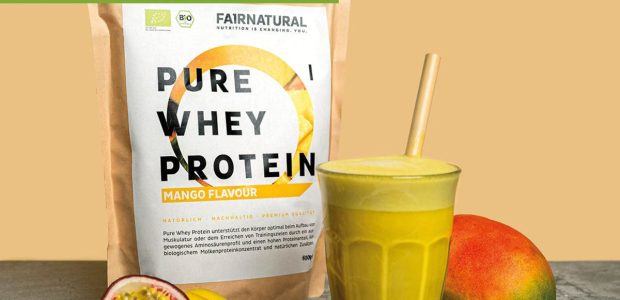

Most protein powders read like a chemistry exam: sweeteners, flow agents, flavour systems, gums. Fairnatural — a Heidelberg startup founded by Simon, Jessica and Sven — built its entire brand on deleting that list. Organic ingredients, German production, no artificial additives, and a customer base that keeps repeating one specific sentence: my stomach finally stopped hurting after shakes.
The receipts are unusually strong for a young brand: 7,400+ Trusted Shops ratings alongside solid Trustpilot scores, FSSC 22000 / ISO 22000-certified German manufacturing, and a tree planted for every order. In the crowded European supplement market, Fairnatural has carved the clean-label lane and owned it.
Our verdict: Fairnatural is the best choice we have covered for sensitive stomachs and clean-label buyers — genuinely additive-free organic protein with excellent digestibility reports — at prices that reflect organic sourcing rather than budget whey economics. Score: 8.4 / 10.
→ Shop Fairnatural — see today’s best offer
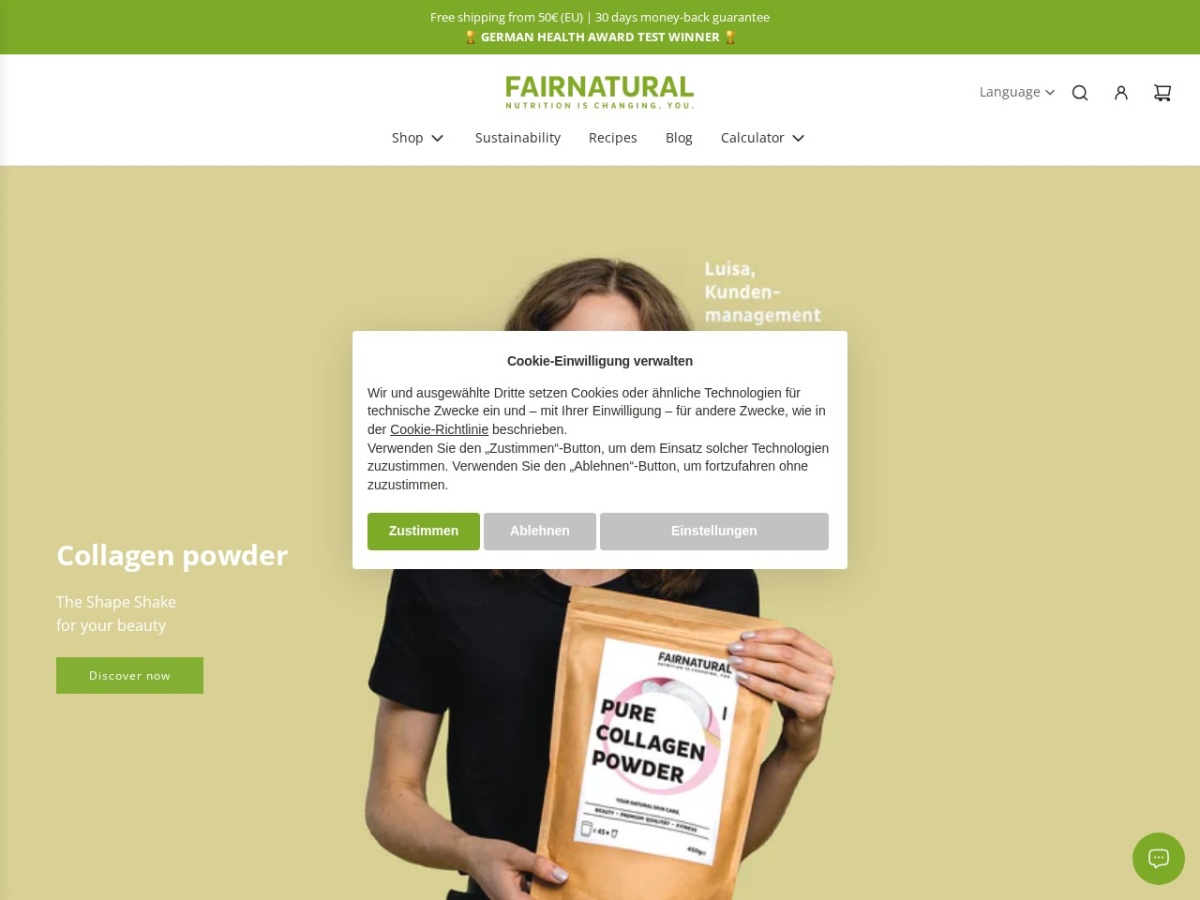
What makes Fairnatural different
The deletion list is the product: no artificial sweeteners, no flavourings, no colourants, no separating agents — just organic-certified ingredients processed under German food-safety certification (FSSC 22000 & DIN EN ISO 22000). The whey comes from milk from pasture-fed cows, and the digestibility difference is the single most repeated theme across thousands of reviews: people who quit protein shakes over bloating report tolerating these.
Sustainability is baked in rather than bolted on — one tree planted per order, minimal packaging — which for this customer base is part of the purchase logic, not decoration.
The star product: organic whey protein
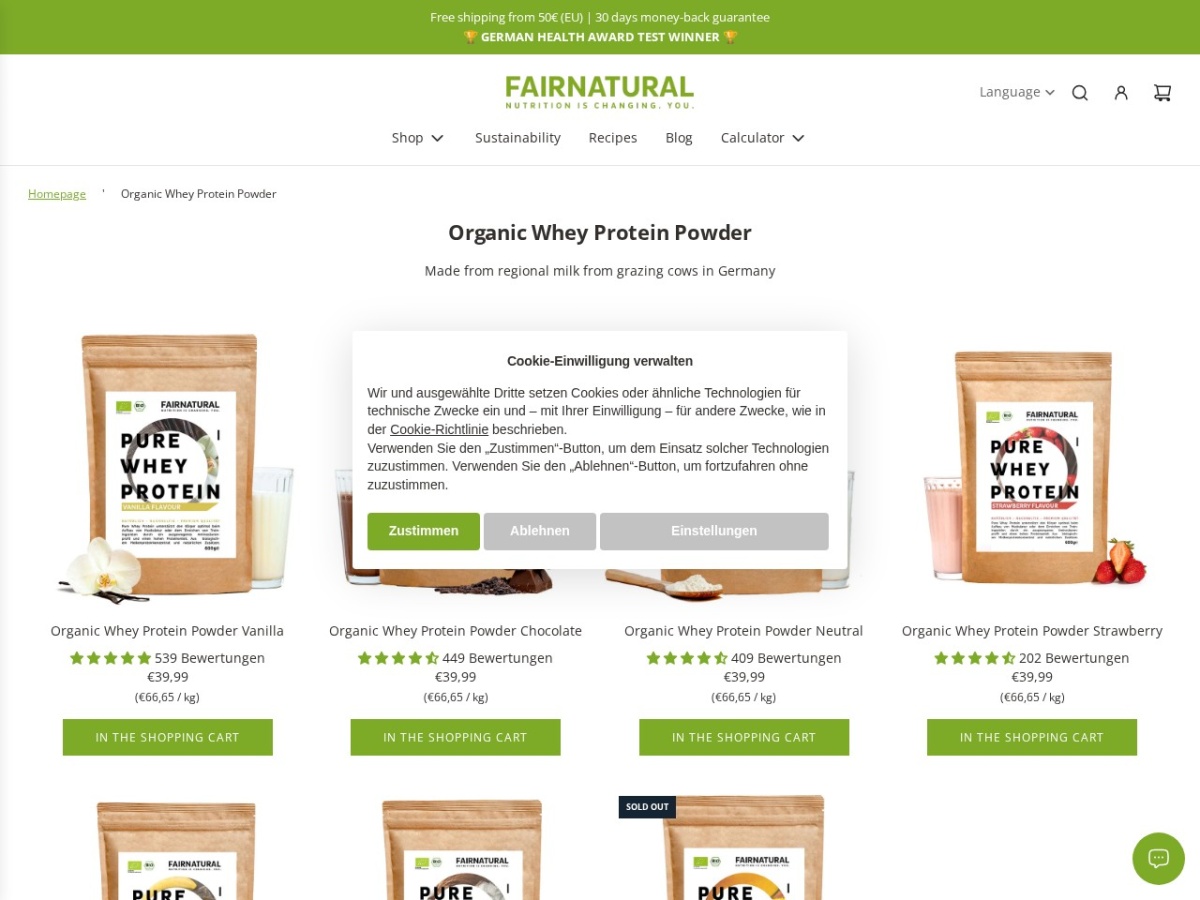
The Bio Whey line is the flagship: pasture-milk whey, organic-certified, naturally flavoured or plain, with a mild pleasant sweetness reviewers consistently praise as “actually tastes like food”. Because there is no additive stack, the powder behaves differently — subtler flavour, cleaner finish, and for sensitive users, shakes that finally sit right. That last point built the brand.
The rest of the range
Vegan proteins for the plant-based, creatine, daily-health basics (vitamins, minerals, omega), and functional foods — all under the same no-chemicals covenant. The catalogue stays disciplined: if it needs an artificial system to taste acceptable, it does not ship.
Price & value
Organic sourcing costs organic money: Fairnatural sits above commodity whey but comfortably below premium-boutique pricing. Per-serving math improves with bundle sizes and subscription options. You are paying for certification, pasture sourcing and the deletion list — the exact things its buyers shop for.
| Line | Positioning |
|---|---|
| Bio Whey | Flagship organic protein |
| Vegan proteins | Plant-based clean label |
| Basics (vitamins etc.) | Daily health, additive-free |
→ Get the latest Fairnatural deal
How to choose
Sensitive stomach? Start with plain Bio Whey — the shortest ingredient list wins. Prefer flavour? The naturally-flavoured variants stay subtle by design; expect tea-sweetness, not candy. Vegan? The plant line follows identical rules. And calibrate expectations: clean-label protein tastes like its ingredients, which is precisely the point.
Common buying mistakes to avoid
Expecting commodity-whey candy flavours from an additive-free powder; judging sweetness before trying it with milk versus water; skipping bundles when you already know you will reorder; and comparing pure price-per-kilo against non-organic whey — different products, different maths.
Fairnatural vs alternatives
Against ESN and mainstream German brands: cleaner labels, gentler digestion, higher price. Against other organic boutiques: stronger review base (7,400+ Trusted Shops) and certified own production. The lane is clear — if additives are your dealbreaker, this is the German benchmark.
| Option | Why choose |
|---|---|
| Fairnatural | Organic, additive-free, digestible |
| Mainstream brands | Flavour variety, lower price |
| Other bio boutiques | Compare certifications closely |
Quality, shipping & support
Production is German, certified (FSSC 22000, ISO 22000), and organic-audited. Shipping across Germany/EU is fast per thousands of reviews — “smooth ordering, quick delivery” is the standard report. Support earns warm marks for responsiveness, and the Trusted Shops guarantee layer adds buyer protection.
What real customers say
The dominant theme across 7,400+ ratings: digestive comfort at last — no bloating, no stomach pain — plus pleasant mild taste and good tolerance. Repeated warm recommendations from sensitive-stomach users are the brand's moat. Critiques: subtle flavours divide candy-palate expectations, and organic pricing is organic pricing.
Who should buy — and who should not
Buy Fairnatural if shakes upset your stomach, you shop clean-label on principle, or you want organic-certified German production with a real review base behind it.
Look elsewhere if you want maximum flavour spectacle per euro or bodybuilder-bulk pricing — commodity whey exists for exactly that.
Honest limits
Clean-label means subtle: flavours whisper. The catalogue skips exotic performance compounds by design. Pricing reflects sourcing. And individual digestion varies — the review pattern is overwhelmingly positive, but biology issues no guarantees.
The additive stack, itemised: what conventional whey actually contains
Flip a mainstream whey tub and count: sucralose or acesulfame-K for sweetness, artificial flavour systems for the candy profiles, soy or sunflower lecithin plus anti-caking silicates for mixability, gums (xanthan, guar) for mouthfeel, dyes for the strawberry that was never near a strawberry. Each ingredient is individually approved and collectively the reason a subset of users bloat, cramp or quit shakes entirely — sweeteners and gums in particular feed the gut-sensitivity literature. Fairnatural's deletion of the entire list is not aesthetic minimalism; it is the mechanical explanation for its signature review sentence: my stomach finally stopped hurting.
What deletion costs is equally honest: without lecithin, expect ten more seconds of shaking; without flavour systems, expect protein that tastes like its milk source; without sweetener load, expect subtlety your candy-trained palate must recalibrate to. Roughly two weeks of drinking clean resets expectations — after which conventional whey tastes like melted dessert, which reviewers report as the point of no return.
Pasture milk and the Bio certification chain
The organic story starts before the cow: EU-Bio certification audits feed (organic, GMO-free), pasture access, veterinary practice and every processing step to the tub. Pasture-fed milk brings measurably different fat profiles and, more practically for whey, a supply chain where each batch traces to certified dairies rather than commodity pools. German production under FSSC 22000 and ISO 22000 then layers food-safety audit on top of the organic audit — dual certification most flavour-first brands never attempt because their ingredient lists could not survive it.
For the buyer this cashes out as three practical guarantees: no pesticide-residue roulette, no anonymous milk-pool sourcing, and a paper trail an allergy-sensitive household can actually interrogate. The tree-per-order program rides the same ethic — sustainability as operating cost, not campaign.
Making clean protein taste like dessert anyway: the kitchen playbook
Subtle whey is a canvas, and the fixes cost cents: frozen banana plus cocoa turns neutral Bio Whey into legitimate chocolate shake; espresso shots build proper mocha; berries and oats make breakfast; a date and cinnamon out-vanilla any lab vanilla. Blend with milk for body or water for macros — the absence of gums means texture comes from your ingredients, which is to say from food.
Beyond the shaker: clean whey bakes without the sweetener-metallic aftertaste artificial tubs impose — pancakes, protein oats and yoghurt bowls absorb a scoop invisibly. The porridge trick (stir into cooked oats off-heat) delivers 30g breakfasts the additive-sensitive previously abandoned. One tub, one week of experiments, and the flavour objection usually dissolves into recipe collection.
Sensitive-gut protocol: reintroducing protein without the fear
For the shake-burned: week one, half-scoop of plain Bio Whey in water with a meal — the meal buffers, the half-dose calibrates. Week two, full scoop, note the non-events your old brand never granted. Week three, experiment lanes open: milk-based, fruit-blended, pre- or post-training. The controlled ramp isolates the variable that matters — if comfort holds where conventional whey failed, the additive stack stands convicted, and you have your answer at the cost of one tub.
Vegans run the identical protocol on the plant line; the no-chemicals covenant holds across both, which keeps mixed households on one brand standard and one shelf.
More questions clean-label buyers ask
Is organic whey worth the premium over clean-ish conventional?
If your stomach already tolerates conventional, the premium buys certification ethics and sourcing traceability. If it does not, the premium buys protein you can actually drink — which is the cheapest protein there is.
How does the protein content compare?
Competitive per serving with standard concentrates; check the label per product. You sacrifice additive bulk, not protein.
Does no preservatives mean fast spoilage?
Sealed, the powder keeps like any whey; opened, cool-dry storage and the scoop-dry-hands rule see the tub through its months comfortably.
Trusted Shops vs Trustpilot — which rating counts?
Trusted Shops verifies purchases through checkout integration, making its 7,400+ ratings the harder signal; Trustpilot adds colour. Both trend the same direction here.
Can I get samples before committing?
Watch for starter sizes and bundle promos — the newsletter and deal listings surface them, and one small tub answers the only question that matters.
Thirty days of clean supplementation: the switch, documented
Days one-seven: the calibration week — plain whey, simple shakes, digestion diary replacing flavour reviews. Days eight-fifteen: the kitchen phase — banana-cocoa discovery, the espresso mocha, first baking experiment; subtlety stops feeling like absence. Days sixteen-twenty-three: the body audit — training recovery unchanged or better, the bloat column of the diary conspicuously empty, grocery sugar cravings oddly quieter without daily sucralose. Days twenty-four-thirty: the verdict — reorder sized by the bundle math, old tub relegated to emergency shelf, and the realisation reviewers keep reporting: comfort was the feature, everything else was packaging. A Heidelberg startup built 7,400 ratings on exactly that thirty-day arc; the tub just gets you started.
The German supplement landscape: why startups like Fairnatural exist
Germany's supplement market splits between pharma-adjacent giants optimising cost and a new generation of transparency startups answering a consumer trust deficit the giants created. Heidelberg's Fairnatural is the archetype: founders with names and faces (Simon, Jessica, Sven), production you can geolocate, certifications you can audit, and a Trusted Shops footprint growing order by verified order. The bet is that European consumers — burned by amino-spiking scandals and mystery imports — will pay a fair premium for provenance they can interrogate. Seven thousand four hundred ratings later, the bet reads settled.
For buyers outside Germany the practical note is shipping tiers and EU delivery windows: order in bundle sizes that amortise the logistics, and the per-serving math lands surprisingly close to domestic clean-label options that certify less. The English storefront (en.fairnatural.de) removes the language friction that once kept these brands regional — German production discipline now ships continent-wide with a checkout in your language.
Where this maturing lane goes next — protein diversity, functional foods, the vegan line's expansion — Fairnatural's catalogue discipline suggests the covenant travels with it: if it needs artificial help to taste acceptable, it does not ship. That single sentence, held for years, is the moat.
Protein across the day: building meals around the clean scoop
The tub earns its price fastest when it stops being a shake and starts being an ingredient. Breakfast is the highest-leverage slot: Bio Whey stirred into overnight oats or off-heat porridge converts the day's weakest protein meal into its strongest, and the additive-free profile means no sweetener aftertaste fighting the cinnamon. The afternoon slump slot suits the espresso-mocha blend — caffeine and 25 grams in one glass, replacing the pastry that usually wins that hour. Evening baking absorbs scoops invisibly: banana bread, pancake batter and yoghurt bowls all carry protein loads their recipes never advertise, which is how households quietly double their intake without a single deliberate shake.
Portioning follows training reality rather than tub instructions: heavier sessions justify the full scoop windows, rest days ride comfortably on food-first intake with the powder as gap insurance. The 1.6–2.2g/kg daily target stays the north star; the clean tub is simply the most convenient road there for the additive-sensitive, and the German certification stack is what lets sensitive users travel that road at all.
The sustainability of the habit — the metric that actually decides results — favours exactly this ingredient-first pattern: shakes bore people out of protein routines within months, while recipes renew them. Fairnatural's subtle-flavour design, initially read as a limitation, turns out to be the feature that makes the ingredient strategy work: powder that tastes like food cooks like food, and food habits are the only ones that survive years.
Fairnatural discount codes & deals
Fairnatural runs newsletter discounts, bundle pricing and seasonal promotions, with 10% codes circulating regularly. Check the current PrimeVouch listing before checkout — on organic pricing, a working code meaningfully moves the per-serving math.
Frequently asked questions
Is Fairnatural really additive-free?
Yes — no artificial sweeteners, flavourings, colourants or separating agents; organic ingredients under German FSSC 22000/ISO 22000 production.
Why do sensitive stomachs tolerate it better?
The absent additive stack (sweeteners, gums, flavour systems) is the usual culprit list; thousands of reviewers report exactly this difference.
Where is it made?
In Germany, under certified hygiene standards, by the Heidelberg-founded company itself.
Does it taste sweet?
Mildly and naturally — pleasant per reviews, but nothing like artificially-sweetened commodity whey. Plain variants taste plain.
What is the tree thing?
One tree planted per order — part of the sustainability commitment reviewers cite as rare among supplement makers.
What does the tree-per-order actually plant?
Partner reforestation programs handle the planting; the order confirmation carries the count. Across thousands of monthly orders the arithmetic compounds into real acreage — sustainability as a running total rather than a slogan, which reviewers cite unprompted often enough to call it part of the product.
Is the vegan line nutritionally equivalent to the whey?
Different amino profiles by nature — plant blends are combined to complete them — with the same additive covenant. Athletes chasing leucine thresholds may portion slightly larger; sensitive stomachs report the same comfort story that built the whey's reputation.
Switching to clean-label protein: a practical guide
Week one: replace your current shake one-for-one with plain Bio Whey in milk; note digestion daily. Week two: if comfort improved, you found your culprit — the additive stack, not protein itself. Then tune flavour: cocoa, banana, coffee blend better with subtle whey than any lab system. Most converts never look back, which is why a three-person Heidelberg startup now carries 7,400 ratings — comfort, it turns out, is the killer feature.