
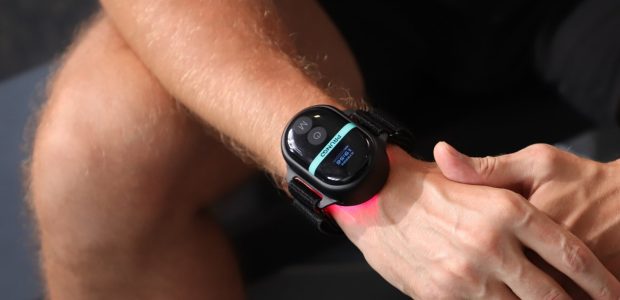

If you have spent any time chasing a nagging knee, a cranky lower back, or shoulders that never quite loosen up, you have probably asked the same question we hear constantly: can an at-home red light therapy device actually do what a clinic does, or is it just an expensive glow? Prungo is one of the brands answering that with a genuinely different form factor, so we dug into the product line, the specs, the real customer feedback, and the honest trade-offs.
Below is our full, no-hype breakdown of Prungo (Shop Prungo deals) — what it is, where it shines, and where it frustrates people. This is an informational review, not medical advice: Prungo makes wellness devices, not cures, so we frame benefits as commonly reported experiences or manufacturer claims, and we suggest consulting a qualified professional before starting any new therapy if you have a health condition.
PrimeVouch Score: 8.2 / 10
Best for: Active adults, athletes, and older users who want portable, wearable, hands-free red light and infrared therapy targeted at specific joints and muscles — and who value a modular design over a big fixed panel.
What we loved:
- Truly wearable, modular pods you can strap to a knee, elbow, back, or wrist — no lying in front of a panel.
- Dual-wavelength system pairing 660nm red LEDs with 850nm infrared laser diodes for surface and deeper tissue coverage.
- Three simple pre-timed modes (Mild, Mid, Strong) that make sessions genuinely one-button easy.
- Cordless, rechargeable, with a portable charging case — you can treat yourself in the car, at your desk, or traveling.
- Strong reassurance package: 30-day risk-free trial, 2-year warranty, and free worldwide shipping.
Watch out for:
- The strap-and-connector system is the single most common complaint — several buyers find it fiddly and prone to popping apart.
- It is a premium purchase; the full FluxGo sits at a price where you should be confident you will use it.
- Red light therapy results are gradual and vary a lot person to person — this is not an instant fix.
- Marketing leans hard on “medical-grade” and clinical language; treat benefit claims as commonly reported rather than guaranteed outcomes.
What makes Prungo different
Most red light therapy falls into two camps. On one end are big wall-mounted or standing panels — powerful, but you sit in front of them, tethered to an outlet, treating a broad flat area. On the other end are cheap flexible wraps and wands that are easy to use but often underpowered and vague about output. Prungo carves out a middle path that solves the biggest frustration with panels: they do not conform to your body and keep you stuck in one place.
Prungo’s answer is a modular, wearable system built from small light pods. Each pod straps onto the body part you care about, and you combine one, two, or three to cover anything from a fingertip to a full lower back. The pitch is “carry the clinic” — targeted, hands-free therapy that goes where you go. In practice you can put a pod on your knee while you work, or wrap your lumbar spine on the drive home from a ride.
The other differentiator is its dual-light approach: each module combines 660nm red LEDs with 850nm infrared laser diodes (VCSEL). Prungo frames the red LEDs as building energy in surface and mid-level tissue, while the polarized infrared lasers are marketed as a concentrated beam reaching deeper into joints and tendons. Whether that combination beats a good LED-only device is genuinely debated in the photobiomodulation community, but it is a real design distinction, not spec-sheet padding. If the go-anywhere angle appeals, it is worth checking current Prungo deals.
The star product
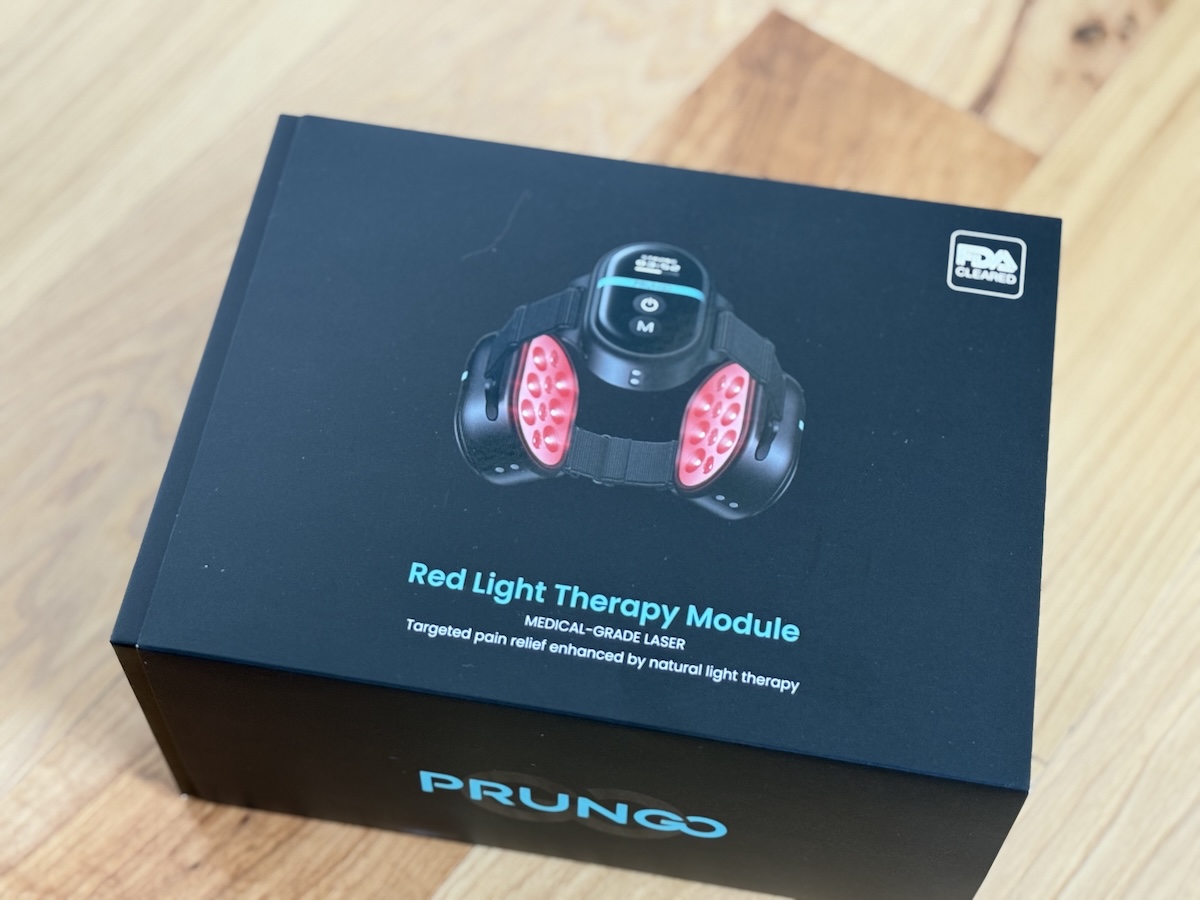
The headline product is the PRUNGO FluxGo, a three-module kit at $399 — the full system, and clearly what the brand wants most buyers to land on. Each unit includes three modules, a charging case, six connection straps, charging cables, and manuals. Each module is small and light (about 115 grams) and rated IP65 for water and dust resistance, a nice touch for sweaty post-workout use.
Inside each FluxGo module are 18 red 660nm LEDs and 12 infrared 850nm VCSEL laser diodes. It runs three pre-timed modes: Mild (8 minutes) for daily comfort and warm-ups, Mid (15 minutes) for post-workout recovery, and Strong (20 minutes) for deep, stubborn discomfort. Prungo lists a treatment depth of roughly 3–5 cm and a “joint-level” penetration target, with strong-mode irradiance around 80mW/cm² for the LEDs and 100mW/cm² for the laser — respectable for a wearable, though not directly comparable to a large panel.
You lay out one, two, or three pods depending on the target: one suits pinpoint areas like an elbow, wrist, or ankle; two cover mid-size zones like a forearm, calf, or IT band; all three chain together for a knee, shoulder, neck, or back. Battery life is about 75 minutes per charge, with a 5000mAh case that tops the modules up on the go. For most people, the FluxGo is the version that makes the modular concept actually sing — see the full kit at the official Prungo store.
The rest of the range
PRUNGO FluxGo Lite ($199)
The FluxGo Lite is a single-module version of the same technology at $199. It carries the same 660nm and 850nm dual-light design (6 LEDs and 4 laser diodes), the same three modes, IP65 rating, and 75-minute battery, in a one-pod package. It is the natural entry point if your needs are focused — a single trouble spot like a wrist, ankle, elbow, or patch of lower back — or if you want to try the platform before committing to the full kit. It ships with four connection straps, a charging cable, and manuals.
Straps and accessories
Prungo also sells replacement adjustable strap sets (for example, a six-pack for the FluxGo). Since the strap system is the most frequently criticized part of the product, the fact that spares are cheap and available is genuinely useful to know before you buy.
A note on other configurations
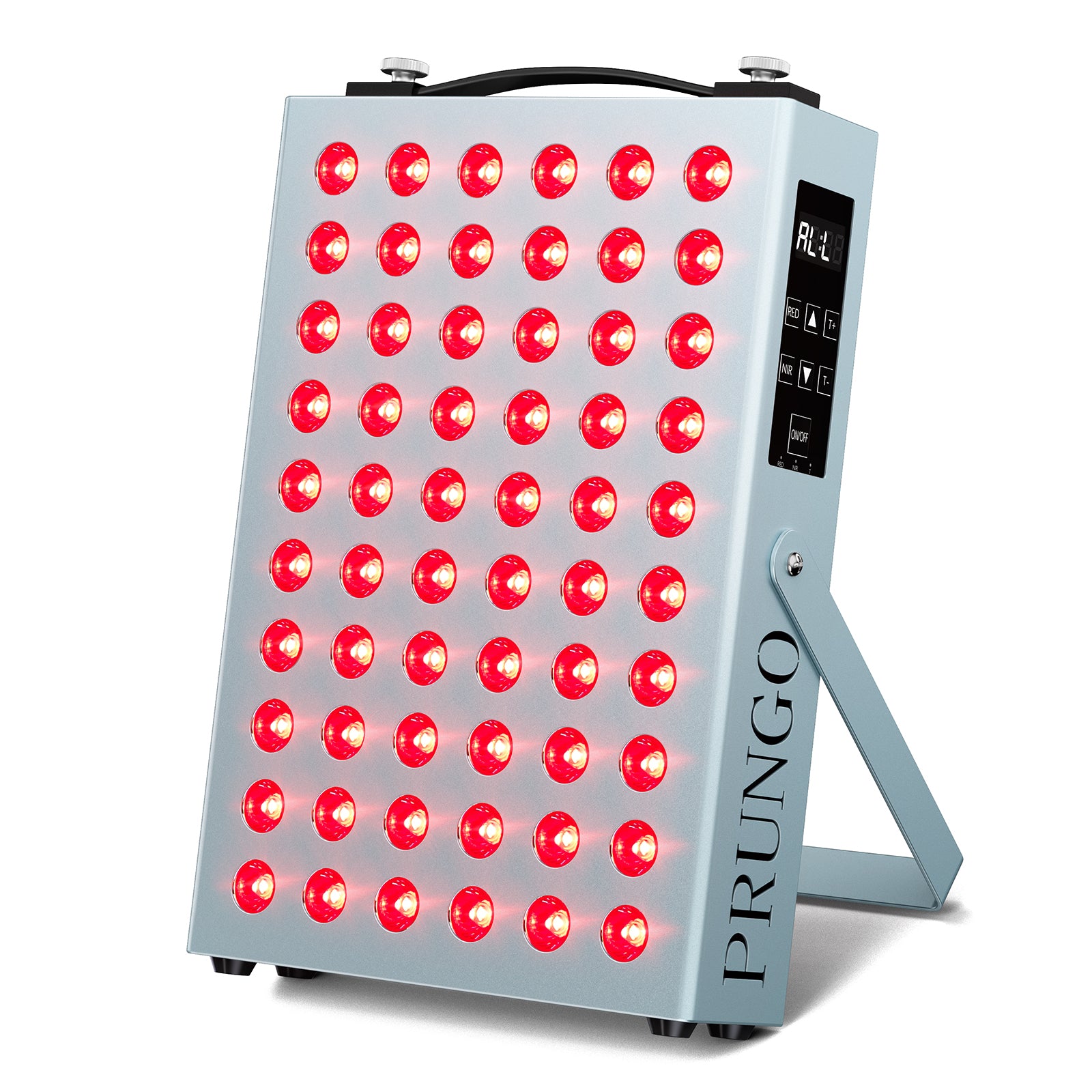
You may see mentions of larger Prungo panels in some third-party reviews. As of this writing, the two products Prungo actively sells on its own store are the FluxGo and FluxGo Lite, so those are what we base this review on. Always confirm the current lineup on the Prungo site before ordering.
How to choose / use it safely
Choosing between the two is mostly about coverage. With a single, well-defined problem area and a tighter budget, the FluxGo Lite is the sensible start. For multiple areas, larger zones like the full lower back, or the flexibility to reconfigure your setup, the three-module FluxGo is the better long-term value despite the higher upfront cost.
On usage, Prungo’s guidance is straightforward: strap the module(s) onto the target area, press and hold to power on, short-press to select Mild, Mid, or Strong, then start the pre-timed session. The company suggests one session per area, one to two times daily — Mild before activity, Mid for post-workout soreness, Strong for deep or chronic discomfort.
A few safety notes worth taking seriously. Red light therapy is generally considered low-risk and non-invasive, and Prungo says its devices emit no UV; the most commonly reported sensation is a gentle warmth. That said, this is a wellness device, not a substitute for medical care. Do not point the infrared lasers at your eyes, follow the manual, and if you are pregnant, take photosensitizing medication, have an active skin condition, or are managing a diagnosed injury or illness, talk to a qualified healthcare professional first. Treat it as a complement to good recovery habits — sleep, movement, and load management — not a replacement. If it fits your routine, you can grab the current Prungo deal here.
Watch: Prungo in action
To see the FluxGo used in a real recovery routine rather than a studio ad, this hands-on review from a cyclist walks through the strap-on modules, the modes, and how the system holds up for pain and soreness.
Prungo vs alternatives
Red light therapy is a crowded category, and the right pick depends on whether you want targeted, wearable therapy or broad, whole-body exposure. Here is how Prungo stacks up against the two most common alternatives.
| Option | Form factor | Best for | Trade-off |
|---|---|---|---|
| Prungo FluxGo | Wearable modular pods (660nm + 850nm) | Targeted joints/muscles, hands-free, portable use | Fiddly straps; premium price; small treatment footprint |
| Large RLT panel (e.g. wall/stand panels) | Fixed panel you sit or stand in front of | Whole-body and large-area coverage, high total output | Not portable, tethered to an outlet, does not conform to the body |
| Budget flexible wrap/wand | Cheap marketplace LED wrap or handheld | Low-cost experimentation, casual users | Often underpowered and vague on specs; build quality varies widely |
The honest summary: a big panel likely delivers more total light energy, but you have to go to it. A cheap wrap costs little but often disappoints on power and durability. Prungo sits in between — more capable than bargain wraps, more convenient and targeted than a panel, but with a smaller coverage area and a higher price than the cheap stuff.
Price & value
Prungo is priced as a premium recovery tool: the FluxGo Lite is $199 and the three-module FluxGo is $399. That is clearly more than a generic marketplace wrap, and for some buyers it is in the same ballpark as a mid-range panel. So is it worth it?
The value case rests on three things. First, convenience: the wearable, cordless design means you are far more likely to use it consistently, and consistency is what matters most with red light therapy. Second, the reassurance package: a 30-day risk-free trial, a 2-year warranty, and free worldwide shipping lower the risk of an expensive mistake — you can test it and send it back if it does nothing for you. Third, spec transparency: Prungo publishes detailed output figures per mode, which is more than many competitors bother to do.
The value against it: the per-pod treatment area is small, so covering large regions efficiently wants the full three-pod kit, pushing you toward the $399 tier. And the strap gripes mean part of what you pay for — easy hands-free wear — can be undercut by the very accessory meant to enable it. Our take: if you will use it regularly for targeted areas, the FluxGo earns its price, especially with the trial as a safety net. Compare both tiers and current offers at the Prungo store.
Who should buy — and who should not
You should consider Prungo if you are an active person or athlete who wants recovery therapy you can wear while doing something else; you have specific, recurring trouble spots (knee, back, shoulder, wrist, ankle) rather than a desire for whole-body treatment; you travel and want something portable; or you have wanted to try red light therapy without being tied to a big panel. Older adults managing everyday aches also come up often in Prungo’s user stories, and the one-button simplicity genuinely helps there.
You should probably skip it if your main goal is broad, whole-body exposure — a panel fits that better. Skip it too if you are on a tight budget and just want to dabble, since a cheap wrap lets you experiment for far less. And if you are hoping for a guaranteed medical outcome for a diagnosed condition, this is the wrong frame: Prungo is a wellness device, the evidence is promising but still evolving, and you should work with a clinician on anything serious.
Honest limits
We want to be square about the limits. Red light therapy is an area with encouraging but still-maturing research; real-world results vary widely, and some people simply do not notice much. Prungo’s marketing uses phrases like “medical-grade” and “clinical” and cites large numbers of trials for the underlying technology — but that is the science of photobiomodulation broadly, not proof this specific device will resolve your specific issue. Treat the glowing testimonials, the percentage-relief figures, and the professional endorsements as marketing inputs, not clinical guarantees.
On the hardware, the recurring, verifiable weak point is the strap and connector system. Enough buyers describe it as awkward or prone to separating that we would call it a genuine design shortcoming rather than one-off bad luck. The small per-pod coverage area is a physical limit too: this is precision therapy, not blanket coverage. And like all such devices, it rewards patience and consistency — expect a single session to erase chronic pain and you will be disappointed. None of this makes Prungo a bad product; it makes it a specific tool for a specific job, and the 30-day trial exists precisely so you can find out if that job is yours.
Prungo discount codes & deals
Prungo runs its promotions directly through its own store rather than scattering codes across the web, and the standing offer already bundles in a lot: a 30-day risk-free trial, a 2-year warranty, and free worldwide shipping. There is also a refer-a-friend program that rewards both people (a discount for your friend and cash back for you) — the most reliable way to shave the price if you know someone else buying.
Because pricing, bundles, and seasonal promotions change, the smartest move is to check the live offer before you order rather than trusting a stale coupon. We keep our link pointed at the current best available deal, so you always see what is on right now.
Shop the latest Prungo deals here → and compare the FluxGo and FluxGo Lite side by side with the trial and warranty applied.
Frequently asked questions
Is Prungo red light therapy safe?
Red light therapy is widely considered non-invasive and low-risk, and Prungo states its devices emit no UV. The most commonly reported sensation is gentle warmth. Still, it is a wellness device, not medical treatment — avoid shining the lasers into your eyes, follow the manual, and consult a healthcare professional first if you are pregnant, on photosensitizing medication, or managing a diagnosed condition.
What is the difference between the FluxGo and FluxGo Lite?
The FluxGo is a three-module kit ($399) with a charging case, built for larger or multiple areas. The FluxGo Lite is a single-module version ($199) for one focused spot. Both use the same 660nm LED and 850nm infrared laser technology and the same three modes.
How long until I see results?
It varies. Some users report immediate soothing warmth and short-term soreness relief, but Prungo itself frames meaningful change for chronic issues as typically taking around four to six weeks of consistent daily use. Red light therapy rewards patience and regular sessions rather than one-off use.
How do I use it?
Strap the module onto the target area, press and hold to power on, short-press to pick Mild (8 min), Mid (15 min), or Strong (20 min), then start the pre-timed session. Prungo suggests one session per area, one to two times a day.
What is the return policy and warranty?
Prungo offers a 30-day risk-free trial with a money-back guarantee, plus a 2-year warranty and free worldwide shipping. That trial window is the safest way to test whether the device works for your body before fully committing.
Is the strap system really that bad?
It is the most common complaint. Some users find the connectors fiddly and prone to separating. Prungo does sell inexpensive replacement strap sets, and many users still rate the device highly overall — but go in aware that the fit-and-strap experience may take some patience.
Can I use it on any body part?
Largely yes. Single modules suit hands, wrists, ankles, and elbows; combined modules cover knees, shoulders, the neck, and the lower back. The modular design is the whole point — you build the layout around the area you want to treat.
How red light therapy works and what the evidence shows
Red light therapy — more formally photobiomodulation — is based on the idea that specific wavelengths of red and near-infrared light are absorbed by components inside your cells, particularly in the mitochondria that produce cellular energy. The commonly proposed mechanism is that this exposure supports mitochondrial function and ATP production, which may in turn help modulate inflammation and support the body’s own tissue-repair processes. Red light around 660nm is absorbed more in surface and mid-level tissue, while near-infrared around 850nm penetrates deeper — which is why devices like Prungo’s pair the two.
What does the research support? This is an active, growing field. A reasonable and expanding body of studies explores red and near-infrared light for muscle recovery, joint discomfort, skin, and localized pain, and some findings are encouraging. But study quality, dosing, and wavelengths vary a lot, and photobiomodulation is not a settled, one-size-fits-all science — results depend on the right dose, wavelength, consistent use, and the individual. That is why we frame Prungo’s benefits as commonly reported experiences and manufacturer claims rather than guaranteed medical outcomes: the honest position is “promising and worth trying for many people,” not “clinically proven to fix your problem.”
The practical takeaway: approach a device like Prungo with realistic expectations — as a convenient, well-specified tool to support recovery and comfort, used consistently alongside good sleep, movement, and load management. Use the 30-day trial to judge it on your own body, keep a clinician in the loop for anything medical, and let the results speak for themselves. If that sounds like the right experiment for you, you can start with the current Prungo offer here.