


If you have ever bought a beautiful planner in January and abandoned it by March, MiGoals wants a word. This Melbourne-born stationery brand has spent over a decade building planners, diaries, journals and notebooks around a single idea: paper helps you think, and structure helps you follow through. Founded in 2010 by Adam Jelic, MiGoals has grown from a single homemade diary into an internationally stocked range that has been featured in Forbes, New York Magazine’s Strategist and Time Out. But awards and press mentions do not tell you whether a planner will actually work for your brain, your habits and your budget.
In this review we dig into the full MiGoals lineup, the flagship Goal Digger Planner, the “Get Shit Done” notebooks, the desk pads and the journal collection. We look at design, paper quality, price and the honest trade-offs, so you can decide whether MiGoals is the productivity partner you have been looking for. No hype, no manufactured countdown timers, just a clear-eyed look at what you are paying for.
PrimeVouch Score: 8.6 / 10
Best for: Goal-oriented people who like writing by hand, want a structured system rather than blank pages, and appreciate clean minimal design over decorative planners.
What we loved:
- Genuinely thoughtful goal-setting framework baked into the pages, not just a calendar with pretty covers.
- Quality 100gsm fountain-pen-friendly paper in the flagship planners with minimal show-through.
- Clean, minimalist aesthetic with soft-touch PU leather covers and two divider ribbons.
- Broad range spanning premium planners down to sub-$10 notebooks, so there is an entry point at most budgets.
- Undated options that let you start any time of year without wasting money on skipped months.
Watch out for:
- The flagship Goal Digger is B5 size, better as a desk companion than a bag carry.
- Sewn binding means it does not always lie perfectly flat and cannot be reconfigured like a ring or disc system.
- International shipping and possible customs fees can add up outside Australia.
- The heavy goal-setting structure can feel like homework if you just want a simple diary.
What makes MiGoals different
Plenty of brands sell planners. What sets MiGoals apart is that the product is really a goal-setting system that happens to be printed on nice paper. Where a typical diary hands you dated boxes and leaves the rest to you, a MiGoals planner walks you through purpose and vision planning, short-term and long-term goal templates, mind-mapping space, monthly reviews and progress trackers. The company’s whole philosophy, summed up in its cheeky “Get Shit Done” tagline, is that writing goals down and revisiting them regularly is what turns intention into action.
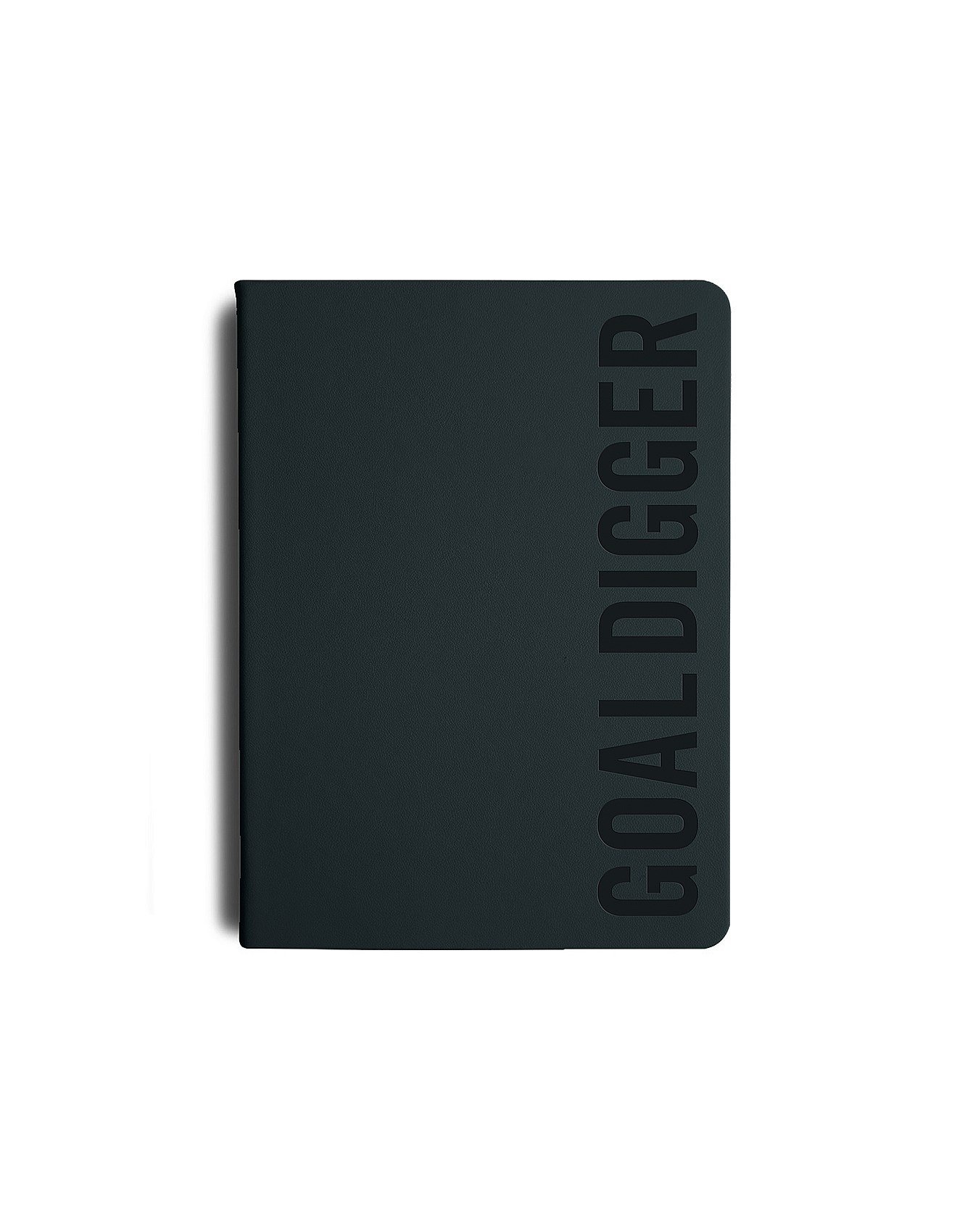
The design language is consistently minimal. Covers are soft-touch PU leather (faux leather) in muted, grown-up colourways, with the branding blind-debossed rather than shouted in foil. This is a deliberate contrast to the sticker-heavy, floral planner aesthetic that dominates a lot of the market. If you find most planners too busy, MiGoals will feel like a relief. If you love decoration and colour, you may find it a touch austere.
The brand is also Australian through and through, designed in Melbourne, with pre-printed holidays from multiple countries on the weekly spreads so it works for an international audience. That heritage shows up in the little things: worldly-wisdom quotes from achievers scattered through the pages, and a tone that is motivational without tipping into cheesy. It is a distinctive point of view, and it is a big part of why the brand has such a loyal following.
The star product
The Goal Digger Planner is the original MiGoals product and still its most popular. It is a B5 book, roughly 16.5cm wide by 23.5cm tall and around 2.2cm thick, which makes it a couple of centimetres larger than A5. That size is a deliberate choice: it is designed to sit on your desk, always in view, holding you accountable rather than hiding in a bag.
Inside you get around 304 pages of 100gsm paper that MiGoals describes as fountain-pen friendly, and in practice it handles most pens with minimal bleed or ghosting. The core layout is a weekly spread across a double page: the left side for your schedule, the right side for habits, goals, notes and brainstorming. But the real value is in everything wrapped around that diary section. You get monthly planning spreads, purpose and vision planning, dedicated short-term and long-term goal templates, space to mind-map your goals, monthly reviews, a progress tracker, a budget section, and both blank and lined notes pages. Two ribbon bookmarks help you jump between the sections you use most.
There are two cover treatments: Bold, with large debossed “Goal Digger” lettering across the front, and Classic, with subtle lettering debossed lengthways along the edge. Both come in a rotating palette of colours. For anyone who wants an even more granular approach, MiGoals also makes a Daily Goal Digger in the same B5 format with a day-per-page layout, around 488 pages on lighter 80gsm stock, adding hour-by-hour agendas, morning routine prompts, top priorities, daily wins and a “rate my day” section. It is the choice for people juggling several planning tools who want to consolidate into one book.
The rest of the range
Weekly Spread and Weekly Notes diaries
If the B5 Goal Digger feels like too much, the A5 Weekly Spread and Weekly Notes diaries are the friendlier entry points. Both run around 224 pages on 100gsm paper and keep the core goal-setting DNA, purpose and vision sections, several short and long-term goal templates, quarterly reviews, monthly calendars, a budget section and a habit tracker, in a slimmer, more portable body. The Weekly Spread lays each week out Monday to Sunday across two pages, while the Weekly Notes format dedicates one page to the week and the facing page to free notes, sketching and habits. These are the ones to pick if you are new to goal-setting planners or want something that slips into a bag.
Undated Goal Digger planners
MiGoals offers non-dated versions of the Goal Digger, which is a genuinely useful option. You can start whenever you like, pause without wasting printed months, and avoid the January rush. The trade-off is that undated planners tend to sit at a similar price to their dated counterparts, so you are paying for flexibility rather than a discount.
Get Shit Done notebooks
The “Get Shit Done” (GSD) notebooks are the brand’s cult budget hero. They are half to-do list, half notebook, printed on FSC-certified paper, and come in Minimal and Classic styles across A6, A5 and larger Manifesto formats. The compact A6 is an easy grab-and-go and one of the most affordable items in the catalogue. If you want the MiGoals ethos without committing to a full planner, this is where to start.
Desk pads and productivity tools
The desk pad range, including monthly, daily, focus and time-block pads, is aimed at people who plan at a desk and like a tear-off surface in front of the keyboard. They sit at a lower price point and pair naturally with a planner for people who want both a big-picture book and a daily working surface.
Journals
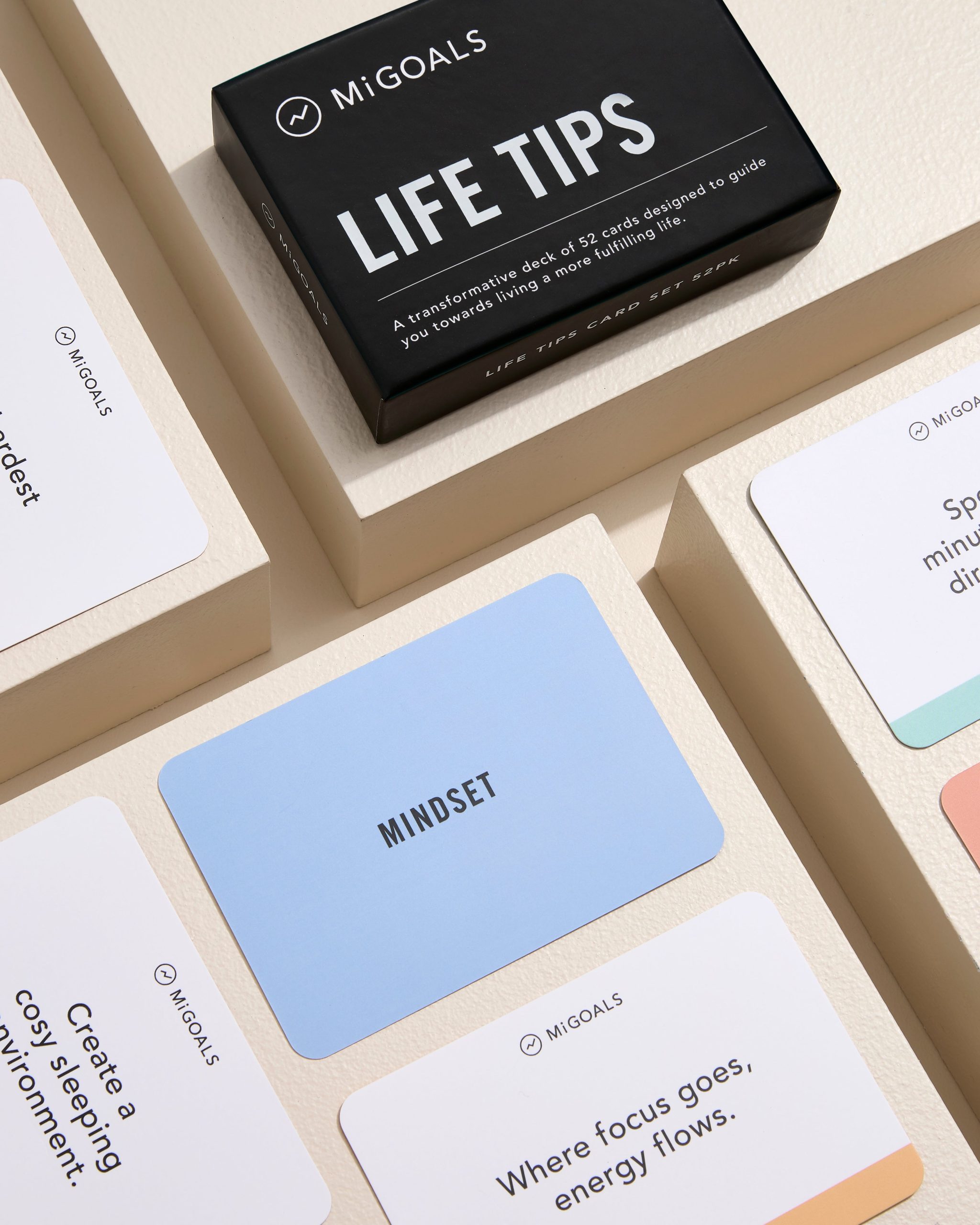
Beyond planning, MiGoals has expanded into guided journals: a 90 Day Progress Journal, a Goals Journal, a Wellness Journal, a Gratitude Journal and a Notes Journal, among others. These carry strong customer ratings and target specific habits, quarterly goal sprints, wellbeing, daily gratitude, rather than general scheduling.
How to choose the right planner
With this many formats, choosing can feel overwhelming, so here is a simple way to narrow it down. First, decide where you will use it. If it lives on your desk, the B5 Goal Digger’s larger canvas is a strength. If it travels in your bag, go A5 with the Weekly Spread or Weekly Notes.
Second, decide how granular you want to be. If you think in weeks and like a bird’s-eye view, a weekly format is ideal. If you want to time-block every hour and track daily routines, the Daily Goal Digger is built for that, just accept the extra bulk. Third, decide when you want to start. If it is not near the new year, an undated Goal Digger removes the pressure to wait or waste pages. Finally, be honest about how much structure you actually want. The full goal-setting apparatus is fantastic if you will use it, but if you suspect you will skip the vision and review pages, a GSD notebook or a Weekly Notes diary gives you the aesthetic and quality without the guilt.
Watch: MiGoals in action
Sometimes you just need to see the pages flip. The walkthrough below tours the Goal Digger Planner layout so you can judge the spreads, paper and goal-setting sections for yourself before buying.
MiGoals vs alternatives
MiGoals sits in an interesting middle ground: more structured than a plain notebook, more affordable and less rigid than a full productivity ecosystem. Here is how it compares to two common alternatives.
| Feature | MiGoals Goal Digger | Classic dot-grid notebook | Premium goal-system planner |
|---|---|---|---|
| Goal-setting framework | Built in (vision, short and long-term, reviews) | None, you build your own | Extensive, often course-linked |
| Paper quality | 100gsm, fountain-pen friendly | Varies, often 80-100gsm | Usually high quality |
| Design | Minimal, PU leather, muted tones | Minimal to plain | Often bold and branded |
| Flexibility to start any time | Yes, with undated option | Yes, always undated | Sometimes fixed to a cohort |
| Relative price | Mid-range | Low to mid | High to premium |
The takeaway: if a plain notebook leaves you rudderless but a pricey coaching-planner feels like overkill, MiGoals is the sensible middle path.
Price & value
MiGoals is priced as a mid-range brand, and that feels fair for what you get. At the top end, a full-year dated Goal Digger Planner carries a recommended price around the mid-$50s AUD, which is more than a supermarket diary but reasonable given the paper stock, PU leather cover, ribbons and the substantial goal-setting content. The guided journals typically land in the $24.99 to $32.99 AUD range, and desk pads sit lower, roughly in the mid-teens to high-teens AUD. The GSD notebooks are the value stars, with the compact A6 available for under $10 AUD.
Where MiGoals earns its price is longevity and use. A well-structured planner you actually open every day is better value than a cheap one that gets abandoned. The paper quality means your writing looks good and does not bleed through, and the covers hold up to a year of daily handling. The main value caveat is for international buyers: shipping and potential customs charges can meaningfully change the effective price, so factor that in before comparing against a locally stocked brand. Keep an eye out for the brand’s first-order discounts and periodic clearance pricing, which can bring standout deals on previous-season stock.
Who should buy — and who should not
You should buy MiGoals if: you genuinely enjoy planning by hand, you respond well to structure and prompts, you want a minimal aesthetic, and you like the idea of a system that nudges you to set goals and review progress rather than just record appointments. It is also a strong gift for anyone starting a new job, a new year or a fresh chapter who wants to get organised.
You should probably skip it if: you live entirely in a digital calendar and rarely write things down, you find guided prompts constraining and prefer blank pages, or you need a truly pocketable planner for constant travel, in which case the B5 flagship is the wrong pick (though the A5 diaries or A6 notebooks may still suit you). If lay-flat, reconfigurable binding is a dealbreaker, the sewn binding will frustrate you.
Honest limits
No brand is perfect, and it is only fair to be straight about the trade-offs. The binding is sewn, which is durable and premium-feeling but does not offer the lie-flat convenience or page-swapping flexibility of ring or disc-bound systems. The flagship size is deliberately large; that is great on a desk and awkward in a small bag. The Daily Goal Digger uses lighter 80gsm paper than the 100gsm in the weekly books, a reasonable choice given its higher page count, but worth knowing if you use heavy inks.
There is also the matter of fit. The extensive goal-setting sections are the whole point for some buyers and dead weight for others; if you never touch the vision or review pages, you are paying for content you do not use. And for buyers outside Australia, shipping times and customs are a real consideration. None of these are dealbreakers for the target user, but they are the honest edges of an otherwise polished product.
MiGoals discount codes & deals
MiGoals regularly runs a first-order discount for new customers, and its clearance section frequently features previous-year planners and journals at steep markdowns, ideal if you are happy to buy an undated format or last season’s colourway. Because deals rotate and stock on popular colours sells through, the best move is to check the current live offers before you buy rather than paying full RRP by default. To see the latest MiGoals pricing, bundles and any active discount codes in one place, Shop MiGoals deals and compare before you commit.
Frequently asked questions
Is MiGoals paper good for fountain pens?
Yes. The flagship weekly planners use 100gsm paper that MiGoals describes as fountain-pen friendly, and in real-world use it handles most inks with minimal bleed or ghosting. The Daily Goal Digger uses lighter 80gsm stock, which is still capable but less forgiving with very wet inks.
Are MiGoals planners dated or undated?
Both. MiGoals sells dated full-year planners as well as non-dated Goal Digger versions, so you can start any time of year without wasting printed months. Pick the undated option if you are buying mid-year.
What size is the Goal Digger Planner?
The Goal Digger is B5, roughly 16.5cm wide by 23.5cm tall and about 2.2cm thick, a little larger than A5. It is designed to be a desk companion. For a more portable option, the Weekly Spread and Weekly Notes diaries come in A5.
Does MiGoals ship internationally?
Yes, MiGoals ships to many countries and even pre-prints holidays from around the world on its weekly spreads. Just factor in international shipping costs and possible customs fees, which can add to the total outside Australia.
What is the difference between the Weekly Spread and Weekly Notes diaries?
Both are A5 and share the same goal-setting features. The Weekly Spread lays the week out across two pages, Monday to Sunday, while the Weekly Notes puts the week on one page and dedicates the facing page to free notes, sketching and habits. Choose Notes if you brainstorm a lot; choose Spread if you want more scheduling room.
Is MiGoals worth the price?
For someone who plans by hand and will actually use the structure, yes. The paper, covers and built-in goal-setting content justify the mid-range price, and a planner you use daily beats a cheap one you abandon. Just check current deals and clearance pricing before paying full RRP.
What are the Get Shit Done notebooks?
They are MiGoals’ budget-friendly to-do-list notebooks, half checklist and half blank notebook, printed on FSC-certified paper in A6, A5 and larger Manifesto sizes. They are the cheapest way to try the brand’s approach.
Bonus: how to actually stick to goals with a planner
Buying a great planner is the easy part; using it in July with the same energy you had in January is the real challenge. Here is what actually works, drawn from the way MiGoals structures its pages and from basic behaviour-change principles.
1. Make it visible. This is why the B5 Goal Digger lives on a desk. A planner you can see is a planner you will open. Keep it beside your laptop, not buried in a drawer.
2. Start with vision, then work backwards. Use the purpose and vision pages first. Vague goals (“get fit”) fail; specific ones tied to a reason (“walk 8,000 steps daily so I have energy for my kids”) stick. The short and long-term goal templates exist to force this specificity, so do not skip them.
3. Break big goals into weekly actions. A quarter is too abstract to act on. Each week, translate one long-term goal into one or two concrete tasks and write them on the weekly spread. Progress compounds from small, repeated actions.
4. Track habits, not just tasks. The habit trackers are there for a reason. Ticking a box daily creates a visible streak, and streaks are motivating. Pick two or three keystone habits rather than ten; consistency beats ambition.
5. Do the monthly review. This is the step most people skip and the one that matters most. Spend fifteen minutes at each month’s end using the review pages: what worked, what stalled, what to adjust. Planning without reviewing is just wishful writing.
6. Forgive missed days. The fastest way to abandon a planner is to feel guilty about a blank week. Skipped a few days? Just start again on today’s page. The undated formats are perfect for this mindset because there are no accusing empty dated boxes staring back at you.
Used this way, a MiGoals planner stops being a pretty object and becomes a genuine engine for progress. That is the whole promise of the brand, and when you lean into the system rather than just the aesthetic, it largely delivers. Ready to find your format? Shop MiGoals deals and get the one that fits how you actually work.