
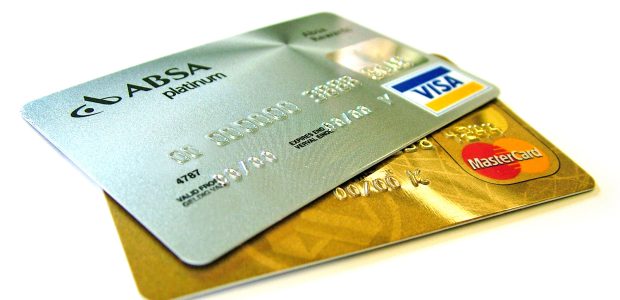

Best Cash-Back Credit Cards (2026): the right cash-back card quietly pays you a few hundred dollars a year for spending you’d do anyway. We compared the top no-annual-fee and category cards on real earn rates, welcome bonuses, and fine print. Here’s how to pick the one that fits your spending.
Heads up: this is general information, not financial advice — PrimeVouch isn’t a financial advisor. Rates, bonuses, and terms change constantly and vary by applicant; always confirm current details on the issuer’s site before applying. Only use credit you can pay off in full each month.
Quick picks
🥇 Best overall flat-rate: Wells Fargo Active Cash — 2% on everything, welcome bonus, 0% intro APR. 👉 See details →
🍽️ Best for everyday spending: Chase Freedom Unlimited — 3% dining/drugstores + 1.5% everything. 👉 See details →
🛒 Best for groceries: Amex Blue Cash Preferred — 6% at U.S. supermarkets. 👉 See details →
The only cash-back strategy that actually matters
Before a single card recommendation, here’s the rule that beats every rewards trick: pay your balance in full every month. Cash-back cards typically carry high interest rates, and carrying a balance wipes out any rewards several times over — a 2% cash-back card earning you $200 a year is a terrible deal if you’re paying $600 in interest. Cash back is free money only for people who treat the card like a debit card that happens to pay a rebate. If you can’t pay in full, the best card is the one with the lowest interest, not the most rewards.
With that non-negotiable out of the way, the second rule is simple: match the card to how you actually spend. Most people do best with one no-fuss flat-rate card (2% on everything) and, optionally, one category card for wherever they spend the most — groceries, dining, whatever. You don’t need a wallet full of cards and a spreadsheet; for most people, one or two well-chosen cards capture the vast majority of the rewards with almost none of the hassle. Below, we’ve sorted the best options by the spending they reward, so you can pick the one (or two) that fit your life.
How we compared them
Earn rate (35%): real cash back on the spending each card targets. Simplicity & fit (25%): how easy it is to actually earn the rewards without hoops. Welcome bonus & intro APR (20%): upfront value and any 0% intro period. Fees & fine print (20%): annual fee, redemption flexibility, and gotchas like spending caps. Every card on our main list has no annual fee except where a fee is clearly outweighed by category rewards (we flag it). We also only include cards with straightforward, genuinely valuable cash back — not inflated “points” math.
| Card | Best for | Rewards | Annual fee |
|---|---|---|---|
| Wells Fargo Active Cash | Flat-rate overall | 2% on everything | $0 |
| Citi Double Cash | Simple 2% | 2% (1% buy + 1% pay) | $0 |
| Chase Freedom Unlimited | Everyday spending | 3% dining/drugstore, 5% Chase travel, 1.5% rest | $0 |
| Amex Blue Cash Preferred | Groceries / families | 6% U.S. supermarkets (cap), 3% gas | Has fee |
| Discover it Cash Back | Rotating 5% + first year | 5% rotating categories, first-year match | $0 |
| Capital One SavorOne | Dining & entertainment | 3% dining, entertainment, groceries | $0 |
1. Wells Fargo Active Cash — Best overall flat-rate
For most people who want one card that just works, the Active Cash is the pick. It pays an unlimited 2% cash back on everything with no annual fee and no categories to track — the simplest possible way to earn a solid return on all your spending. What pushes it just ahead of other 2% cards is the extras: a welcome bonus for new cardholders and a 0% intro APR period, which adds real upfront value.
There’s genuinely nothing to manage — swipe it for everything and collect 2%. For anyone who wants maximum rewards with zero effort and no fee, it’s the safe, smart default and the one card most people should own.
Pros: 2% flat, no fee, welcome bonus, 0% intro APR. Cons: no boosted categories for heavy spenders.
👉 See Wells Fargo Active Cash details →
2. Citi Double Cash — Best simple 2% alternative
The Citi Double Cash is the original flat-rate 2% workhorse and remains a top choice. It pays 1% when you buy and another 1% when you pay it off — a subtle nudge toward the good habit of paying your bill — for a total of 2% on everything, with no annual fee. It’s the classic “keep it simple” card, and a great alternative if you prefer Citi’s ecosystem or want to pair it with other Citi cards.
The Active Cash edges it out mainly on the welcome bonus and intro APR, but functionally they’re twins. If you already bank with Citi or value the option to later convert rewards to transferable points, this is the one.
Pros: reliable 2% flat, no fee, rewards good payment habits. Cons: earn structure splits across buy + pay; bonus trails rivals.
👉 See Citi Double Cash details →
3. Chase Freedom Unlimited — Best for everyday spending
If a flat 2% feels like it’s leaving money on the table for your dining and drugstore runs, the Freedom Unlimited is the upgrade. It pays 3% on dining and drugstores, 5% on travel booked through Chase, and 1.5% on everything else, all with no annual fee. For someone who eats out, orders in, and picks up the occasional pharmacy run, those boosted categories add up to more than a flat 2% while still covering all your other spending.
Its secret weapon is pairing: hold it alongside a Chase card that earns transferable points, and your “cash back” can convert into more valuable travel points. Even used solo for cash back, it’s one of the best no-fee everyday cards. For most people’s real spending mix, it quietly out-earns a pure 2% card.
Pros: 3% dining/drugstore + 1.5% everything, no fee, pairs with Chase points. Cons: base rate is 1.5%, not 2%.
👉 See Chase Freedom Unlimited details →
Not sure whether to go flat-rate or category? Jump to how to choose below.
4. Amex Blue Cash Preferred — Best for groceries & families
If your biggest expense is feeding a household, this card can genuinely pay for itself. It earns a category-leading 6% cash back at U.S. supermarkets (up to an annual cap), plus 6% on select streaming and 3% on transit and gas. It does carry an annual fee — the one exception on our list — but for a family with a big grocery bill, the 6% rate more than covers the fee and then some. Run the math on your actual supermarket spending and the fee often looks trivial.
It’s not the card for someone with a small grocery bill or who wants zero fees on principle — a no-fee flat-rate card is simpler there. But for grocery-heavy households, the rewards are the best in the business.
Pros: 6% at U.S. supermarkets, strong for families, streaming + gas rewards. Cons: annual fee; grocery reward is capped.
👉 See Amex Blue Cash Preferred details →
5. Discover it Cash Back — Best rotating categories & first-year value
The Discover it is the card for people who don’t mind a little activation in exchange for high rewards. It earns 5% cash back on rotating quarterly categories (things like groceries, gas, restaurants, and Amazon, up to a cap, when you activate) and 1% on everything else. Its standout feature is the first-year Cashback Match: Discover doubles all the cash back you earn in your first year, effectively turning that 5% into 10% and the 1% into 2% for twelve months — an unusually generous welcome deal with no annual fee.
The catch is the quarterly activation and the shifting categories, which take a bit of attention to maximize. But for an engaged user, especially in year one, the value is excellent. It’s a great first card or a strong complement to a flat-rate everyday card.
Pros: 5% rotating categories, first-year match doubles rewards, no fee. Cons: categories rotate and need activation; caps apply.
👉 See Discover it Cash Back details →
6. Capital One SavorOne — Best for dining & entertainment
For social spenders, the SavorOne is a no-fee gem. It earns 3% on dining, entertainment, popular streaming, and grocery stores, plus 1% on everything else — a great fit for anyone whose budget skews toward restaurants, concerts, and nights out. It covers several of the categories people actually enjoy spending in, with no annual fee to erode the rewards.
If your life revolves around eating out and going out, it out-earns a flat 2% card in exactly the places you spend most. Pair it with a flat-rate card for everything else and you’ve got a strong, simple two-card setup.
Pros: 3% dining/entertainment/grocery/streaming, no fee. Cons: only 1% outside its categories.
👉 See Capital One SavorOne details →
Watch: top cash-back cards compared
How to choose a cash-back card (the buying guide)
Four questions get you to the right card fast.
1. Will you pay in full every month?
If yes, chase rewards freely. If no, ignore rewards entirely and get a low-interest card — the interest will dwarf any cash back. This is the most important question, full stop.
2. Flat-rate or category?
Want zero effort? A 2% flat-rate card (Active Cash, Citi Double Cash) is the whole answer. Willing to do a little to earn more? Add one category card for your biggest spending area — groceries (Amex), dining (SavorOne), or rotating (Discover).
3. Where does your money actually go?
Pull up last month’s statement. If groceries dominate, the 6% Amex likely wins despite its fee. If it’s dining and going out, SavorOne or Freedom. If spending is spread evenly, a flat 2% card captures it all with no thinking.
4. Do welcome bonus and intro APR matter to you?
A sign-up bonus is instant value if you’ll hit the spending requirement with normal spending (never overspend to chase it). A 0% intro APR is useful only for a planned large purchase you’ll pay off during the promo — not an excuse to carry debt.
Mistakes that cost you money
Carrying a balance for rewards — the cardinal sin; interest always beats cash back. Overspending to earn more — spending $100 to get $2 back is losing $98. Chasing a welcome bonus you can’t meet naturally — only worth it if normal spending qualifies. Ignoring category caps and activations — 6% and 5% rates often have limits; know them. Having too many cards to manage — for most people, one flat-rate plus one category card is the sweet spot.
Frequently asked questions
Is cash back really free money?
Only if you pay your balance in full every month. Then it’s a genuine rebate on spending you’d do anyway. Carry a balance and the interest erases the rewards many times over.
Flat-rate or category cards — which earns more?
It depends on your spending. A flat 2% card is best if your spending is spread out or you want zero effort. Category cards earn more if a lot of your spending is concentrated (groceries, dining) and you don’t mind a little management. Many people use one of each.
Do cash-back rewards expire?
With most major cash-back cards, rewards don’t expire as long as your account is open and in good standing — but policies vary, so check your card’s terms. Redeem periodically to be safe.
Will applying hurt my credit score?
A new application usually causes a small, temporary dip from the hard inquiry, but responsible use (paying on time, low utilization) builds your score over time. Don’t apply for many cards at once.
How many cash-back cards should I have?
For most people, one or two is ideal: a flat-rate card for everything, plus optionally one category card for your biggest spending area. More than that adds complexity for diminishing returns.
How to actually maximize cash back: the simple 2-card system
You don’t need ten cards and a spreadsheet to earn strong rewards — you need two cards used deliberately. The setup that captures the vast majority of the value for minimal effort is this: one flat-rate 2% card as your default (Wells Fargo Active Cash or Citi Double Cash), and one category card for wherever you spend the most. Then the rule is simple: use the category card only in its bonus categories, and put literally everything else on the 2% card.
Here’s how it plays out. If groceries are your big expense, pair the 2% card with the Amex Blue Cash Preferred and earn 6% on supermarkets, 2% on the rest. If you’re a dining-and-going-out spender, pair it with the SavorOne or Freedom for 3% on restaurants, 2% elsewhere. A grocery-heavy family spending $800 a month on food earns roughly $48/month at 6% instead of $16 at 2% — real money, from two swipes’ worth of thought. That’s the whole game: a reliable base card plus one targeted booster. Anything beyond that is optimization for hobbyists, and the extra rewards rarely justify the mental overhead for most people.
Cash back vs travel points vs no rewards: which is right for you?
Cash back isn’t automatically the best rewards type — it’s the best for a certain person. Cash back wins on simplicity and flexibility: you get straightforward money back, redeemable as a statement credit with no blackout dates or transfer charts to study. It’s the right choice for the majority of people who want rewards without a hobby attached. Travel points (from cards like the Chase Sapphire or Amex Gold) can be worth more per dollar if you travel and are willing to learn how to redeem them well — but they come with annual fees and complexity, and their value evaporates if you don’t use them for travel.
And for some people, the honest answer is no rewards card at all: if you carry a balance, a plain low-interest card saves you far more than any rewards card earns. So the decision tree is short. Carry a balance? Prioritize low interest. Pay in full and want simple value? Cash back. Pay in full, travel often, and enjoy optimizing? Consider points. There’s no universally “best” — there’s the one that fits your habits, and for most readers of a cash-back guide, cash back is exactly right.
Building credit responsibly with a cash-back card
A cash-back card is also one of the easiest tools for building a strong credit score — if you use it right. The two biggest factors in your score are paying on time and keeping your utilization low (ideally using well under 30% of your limit). A rewards card used lightly and paid in full every month checks both boxes automatically, and over time that builds the score that gets you better loan rates on far bigger things — a car, a mortgage — where the savings dwarf any cash back.
The practical habits: set up autopay for at least the statement balance so you never miss a payment, keep your spending well below your limit, and don’t close your oldest card (length of credit history helps your score). Treat the card as a payment tool that happens to pay you back and quietly builds your financial reputation — not as a source of extra spending money. Used that way, a good cash-back card earns you rewards today and cheaper borrowing tomorrow. Used carelessly, it does the opposite, fast.
A couple more questions
Is it worth paying an annual fee for a cash-back card?
Only if the boosted rewards clearly exceed the fee for your spending. For a grocery-heavy family, the 6% Amex Blue Cash Preferred often pays for its fee several times over; for a light spender, a no-fee flat-rate card is the better math. Run the numbers on your actual spending before paying a fee.
Should I get a cash-back card if I’m new to credit?
A simple no-fee cash-back card (or a starter/secured version) can be a great first card — it builds credit while earning rewards. Just start with one card, use it lightly, pay in full every month, and let your score grow before adding more.
The verdict
For most people, the Wells Fargo Active Cash (or Citi Double Cash) is the best single cash-back card — 2% on everything, no fee, no thinking. Add one category card only if your spending is concentrated: Amex Blue Cash Preferred for groceries, Chase Freedom Unlimited or Capital One SavorOne for dining, or Discover it for rotating categories and a big first-year bonus. Whatever you choose, the golden rule stands: pay in full every month, and cash back is free money. Carry a balance, and no card is worth it.
Affiliate disclosure: PrimeVouch may earn a commission if you’re approved through links on this page, at no extra cost to you. This article is general information, not financial advice — we are not financial advisors, and card terms, rates, and bonuses change frequently and depend on your creditworthiness. Confirm all current details on the issuer’s site before applying, and borrow only what you can repay in full.
Image credits: featured photo by Lotus Head from Johannesburg, Gauteng, South (CC BY-SA 2.5); in-article photo by Bartholomew, Charles Lewis ‘Bart’, 1869-1949 (Public domain); via Wikimedia Commons.