


Somewhere in every home is a job that has been quietly ignored for months because it lives fifteen feet off the ground: the cobwebbed cathedral ceiling, the stairwell wall that needs painting, the second-storey windows that haven’t been cleaned since the last owners. Extend-A-Reach exists for exactly those jobs. The brand makes high-reach telescopic extension poles — long, lockable, multi-section poles that accept paint rollers, dusters, window-cleaning heads and a growing family of attachments — so that homeowners can handle high work with both feet on the floor.
We dug into the full Extend-A-Reach range: how the flagship telescopic poles are built, how the extendable duster kits and multi-use attachments round out the system, what the poles realistically cost against pro-grade rivals like Unger, and where the ladder-free promise meets its limits. Here’s our honest take on whether these poles deserve a spot in your garage.
PrimeVouch Score: 8.6/10
Best for: DIYers and homeowners with high ceilings, stairwells or two-storey exteriors who want to paint, dust and clean up high without climbing a ladder.
What we loved:
- Serious reach — the longer poles let an average-height adult work on surfaces well over twenty feet up, from the ground
- One pole, many jobs: standard threaded tips take paint rollers, dusters, squeegees, light-bulb changers and more
- It’s a genuine safety upgrade — every job done from the floor is a ladder fall that can’t happen
- Locking sections hold their length under real working pressure, which is where cheap poles give up
- The duster kits and attachment bundles make it a complete high-reach cleaning system, not just a painter’s stick
What could be better:
- Long poles have real physics — fully extended, any pole gets heavy at the far end and takes practice to control
- It’s priced above the bargain-bin hardware-store poles, which may surprise buyers who haven’t used one of those and regretted it
- Fine detail work (cutting in paint edges, spot cleaning) at full extension is inherently fiddly with any pole
- Storage is a consideration — even collapsed, the biggest poles are longer than a closet is tall
What makes Extend-A-Reach different
Telescopic poles are one of those categories where the cheap and the good look identical in photos and behave nothing alike in your hands. Bargain poles flex like fishing rods at extension, their twist-locks slip mid-stroke, and their plastic tips strip after a season. Extend-A-Reach built its name on solving exactly those failures: rigid multi-section construction that stays workable at long lengths, locks that hold under the sustained pressure of rolling paint on a ceiling, and standard threaded ends so the pole works with the attachments you already own as well as the brand’s own kits.
The other difference is focus. This isn’t a general hardware brand with a pole in the catalogue; high-reach is the whole business. That shows up in the details that matter at height — the balance of the sections, the grip zones, the way the attachment sets are curated around real household jobs (ceiling fans, skylights, gutters’ undersides, stairwell walls) rather than a random accessory grab-bag. For the DIY and home-maintenance audience, that focus is the pitch: buy the pole once, retire the ladder for most jobs.

The star product: the high-reach telescopic extension pole
The flagship is the telescopic extension pole itself, offered in multiple length classes — from compact models for standard high ceilings up to the long-reach versions that put well over twenty feet of working height within reach of someone standing on the floor. Each pole collapses to a manageable carrying length, extends section by section, and locks solidly at whatever length the job needs. The business end is the standard threaded tip used across the painting and cleaning industry, which is quietly the most important spec on the sheet: it means the pole drives a paint roller frame, a squeegee, a duster head or a light-bulb changer without adapters.
In use, the difference from a cheap pole is immediate. Rolling paint on a stairwell wall puts sustained, repeated pressure through every joint, and this is where budget poles telescope themselves shut mid-stroke. The locking design here holds, and the sections stay rigid enough that the roller goes where you point it rather than bouncing at the end of a wobbling shaft. There’s an unavoidable learning curve — every long pole is heavy at arm’s length and full extension — but the control ceiling is far higher than the category’s reputation suggests.
The honest framing: this pole is a safety purchase disguised as a convenience purchase. Ladder falls are among the most common serious DIY injuries, and the jobs this pole absorbs are precisely the jobs that put people on ladders. Every one done from the floor is risk removed from your year.
The rest of the range
Extendable feather duster kits
The duster kits pair poles with high-reach dusting heads for the jobs that get postponed longest: cobwebs in ceiling corners, fan blades, tops of cabinets and wardrobes, light fixtures and skylight surrounds. Flexible heads bend to angle around fixtures, and washable covers keep the running cost at zero. For anyone with vaulted ceilings, this kit alone justifies the brand’s existence.
Multi-use attachments
The attachment family covers the wider job list: window squeegees and washers for exterior glass, light-bulb changers for recessed and pendant fixtures out of reach, hooks and utility heads for hanging and retrieving. Because everything runs on the standard thread, you build the set your house actually needs, and third-party heads from the hardware store join the system without fuss.
Shorter poles & bundles
Below the headline long-reach models sit shorter poles for nine-to-twelve-foot ceilings and bundle kits that pair a pole with the most common heads at a modest saving over buying separately. For most single-storey homes, a mid-length pole plus duster and roller heads covers ninety percent of high jobs — the longest poles are for stairwells, foyers and exterior work.

Price & value
Prices shift with promotions and bundle configurations, so take the figures below as rough guidance at the time of writing rather than quotes. The pattern to understand: Extend-A-Reach sits above throwaway hardware-store poles and below (or level with) pro janitorial brands, with the long-reach models commanding the premium that their extra engineering demands.
| Product | Typical price range | Notes |
|---|---|---|
| Mid-length telescopic poles | Roughly $30–$60 | Covers most single-storey ceiling work |
| Long-reach poles (high class) | Roughly $60–$130 | Stairwells, foyers and exterior jobs |
| Duster kits | Roughly $30–$70 | Pole plus high-reach dusting heads |
| Attachment heads | Roughly $10–$40 each | Squeegees, bulb changers, utility heads |
The value calculation is best done against the alternatives, not the sticker. A decent multi-position ladder runs well north of the priciest pole here, is miserable to move through a furnished house, and still puts you at height. Hiring out a single interior repaint of a stairwell can cost more than the entire pole-and-attachment system. And the five-dollar hardware-store pole that slips shut mid-roll gets replaced — usually with exactly this kind of product. Buy once, buy the rigid one, is the honest economics of this category.
How to choose — and get the best results
- Measure your tallest job, not your average one: ceiling height minus your comfortable working height tells you the pole class you need, and reach quoted on the box includes your arms
- Don’t overbuy length — a pole longer than your jobs is heavier and floppier than it needs to be; match the pole to the house
- Extend from the thickest sections first and lock each one fully — rigidity comes from using the fewest, fattest sections the job allows
- Work with the pole at an angle to the surface rather than dead-vertical where possible; it improves leverage and keeps drips and dust off your face
- Pair the right head with the job — a proper roller frame for paint, a flexible duster for fixtures, a squeegee with a washer sleeve for glass — rather than forcing one head to do everything
One more habit worth building: clear the work area and plan your footing before extending. The point of a high-reach pole is keeping your attention on the work instead of your balance, and that only holds if you’re not stepping around furniture with sixteen feet of aluminium overhead.
Common buying mistakes to avoid
The recurring mistakes in this category are all avoidable at the checkout stage. Buying by price instead of rigidity is the big one — a pole that flexes or slips at extension isn’t a bargain, it’s a future repurchase. Second is misreading reach: quoted working heights typically assume your standing height and raised arms, so a “24-foot reach” pole is not a 24-foot pole, and buyers who don’t check the collapsed and extended lengths get surprised in both directions. Third is ignoring the thread standard — if you already own roller frames or cleaning heads, make sure everything speaks the same thread before assuming compatibility. And finally, planning to use a high-reach pole anywhere near overhead power lines: no pole job is worth that, full stop — exterior electrical clearance work is for professionals.
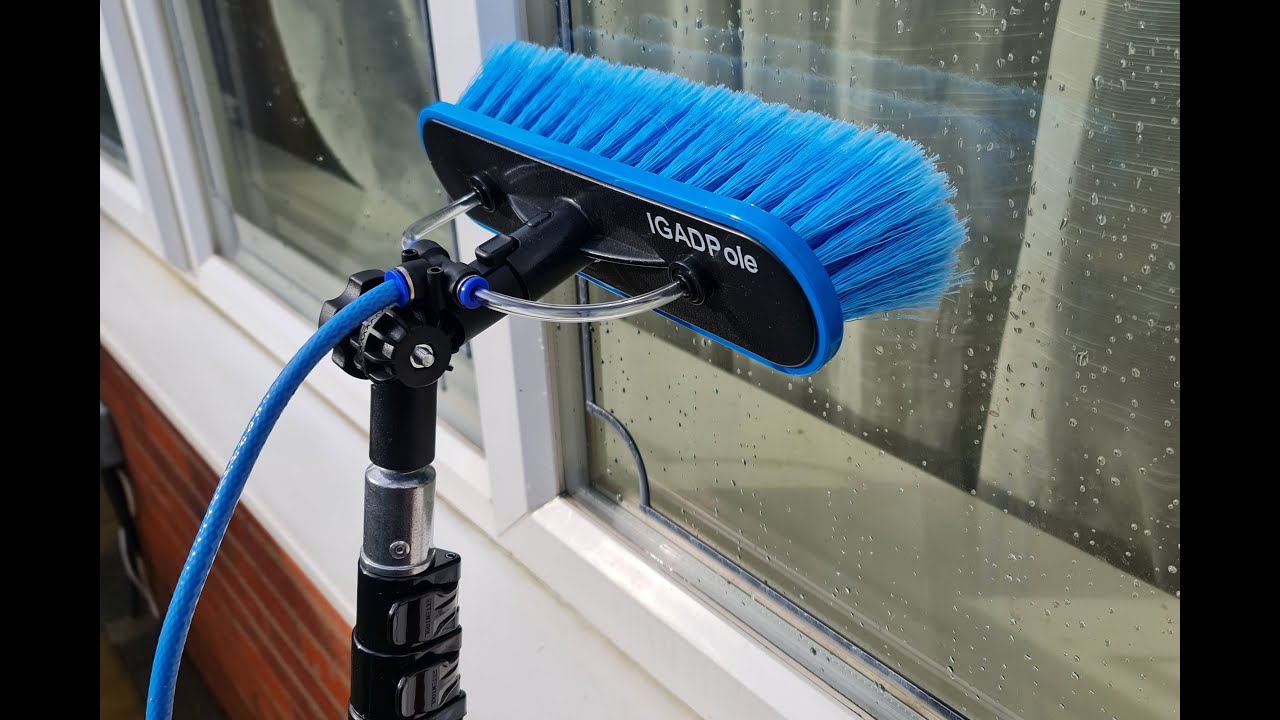
Watch: Telescopic pole cleaning made easy
Extend-A-Reach vs alternatives
The comparison set splits into three tiers. At the pro end sits Unger, the janitorial-supply standard whose poles and window-cleaning systems equip commercial crews worldwide: superb hardware, a deep ecosystem of heads, and pricing built for businesses that bill the pole out across a hundred jobs. Ettore and Mr. LongArm occupy similar professional-adjacent territory, the latter especially strong in painting. At the bottom sit the anonymous hardware-store and marketplace poles — fine for occasional light dusting, notorious for slipping locks and noodle-flex the first time they meet a loaded paint roller. Extend-A-Reach’s position is the serious-homeowner middle: engineering much closer to the pro tier than the price suggests, curated for household jobs rather than commercial routes, and sold with the duster kits and attachment bundles that pros don’t need but homeowners do. If you clean windows for a living, buy Unger; if you own a two-storey house and a to-do list, this is the tier built for you. The ladder remains cheaper only until you price in the risk of every climb.

Quality, shipping & support
Build quality is the brand’s reason for existing, and it largely delivers: multi-section construction that prioritises rigidity, locking mechanisms designed for sustained working pressure rather than just holding a duster aloft, and threaded tips that take real torque without stripping. The poles are engineered as tools rather than gadgets — the test is not how they feel in the hallway but whether the lock holds on the fortieth roller stroke of a ceiling, and that’s the scenario they’re clearly built around.
Orders ship through standard e-commerce channels, direct from the brand’s site and via major marketplaces, with typical delivery in the normal several-day window depending on your location and the length of the item — the longest poles ship in seriously long boxes, worth knowing if your parcels go to a locker or a small porch. Collapsed lengths are listed per model; check them against your storage plan before ordering the biggest pole in the range.
Support runs email-first, in line with direct-to-consumer norms, with warranty coverage against defects — verify the current terms at purchase. The consumable parts of the system (duster covers, roller sleeves, squeegee rubbers) are standard and cheap to replace, and because the thread is an industry standard, the system doesn’t orphan you: heads from any hardware store extend its life indefinitely. That open-standard choice is quietly one of the most consumer-friendly things about the brand.
What real customers say
Customer sentiment is unusually consistent for the category. The dominant theme is relief — buyers who put off a stairwell repaint or a cathedral-ceiling cobweb purge for years describe knocking the job out in an afternoon, and the phrase “should have bought this years ago” recurs across reviews. The locking rigidity draws specific praise from people who came from cheaper poles, and older homeowners and anyone with balance or mobility concerns describe the ladder-free angle as genuinely life-improving rather than merely convenient.
The critical minority make fair points: fully extended, the longest poles are a workout; detail control at maximum reach is limited, which is physics as much as product; and occasional reports mention attachments needing a firm hand to seat. Very few reviews call the poles flimsy — the failure mode that defines the cheap end of the category is notably absent. Weight recent reviews most heavily, as ranges evolve.

Who should buy — and who should not
Buy Extend-A-Reach if your home has the architecture that creates high jobs — two-storey foyers, stairwells, vaulted ceilings, skylights, tall exterior glass — and you intend to maintain it yourself. It’s equally right for anyone who should not be on a ladder: older DIYers, people with balance or mobility concerns, and frankly anyone who has ever wobbled on a top step and felt their stomach drop. Landlords and short-let hosts who handle their own turnovers will find the duster and window kits pay for themselves within a season.
Skip it if you live in a standard-eight-foot-ceiling apartment where a step stool covers every job — you’d be buying reach you don’t have anywhere to use. Professionals running daily commercial routes should look at the pro-tier systems from Unger or Ettore, whose ecosystems are built for that duty cycle. And be honest about the jobs that still need a ladder or a pro: anything requiring hands-on contact at height — gutter repairs, fixture wiring, roof work — is outside what any pole can do.
Honest limits
The standard disclosure: this review is built on the brand’s published range and specifications, category expertise, and aggregated customer sentiment rather than a multi-year destruction test of every pole and head. Prices, bundle contents and model line-ups move around, so confirm details on the product page before ordering. Our comparisons with pro brands reflect typical positioning, and reach figures should always be checked per model — quoted working heights involve assumptions about the user that may not match you.
Extend-A-Reach discount codes & deals
Poles and attachment bundles go on promotion regularly — seasonal sales around spring cleaning and painting season are the pattern to watch — and bundle pricing already beats buying pieces separately. Before you check out, take a moment to look at our deals hub for verified Extend-A-Reach codes and current offers. We test listings and remove expired codes regularly, so the deals you find there should work when you paste them.
Extend-A-Reach FAQ
How high can I actually reach with these poles? The long-reach models put working heights of well over twenty feet within range for an average adult standing on the floor — but note that quoted reach includes your height and raised arms, so check the extended pole length itself against your specific job.
Will the poles fit my existing paint roller and cleaning heads? The poles use the standard threaded tip common across painting and cleaning tools, so most roller frames, squeegees and heads from the hardware store screw straight on. Check your specific attachment’s thread if it’s unusual.
Can I really paint a ceiling or stairwell without a ladder? Yes — rolling broad surfaces is exactly what the poles are built for, and it’s where the rigid locking matters most. Cutting in crisp edges at full extension is harder; many DIYers pole-roll the field and ladder only the detail work, which still removes most of the time at height.
Are the poles heavy at full extension? Physics applies to every pole: leverage makes the far end feel heavier the longer you go. The design keeps weight reasonable, but expect a learning curve and some forearm work on the longest settings — and buy the shortest pole class that covers your jobs.
How do the poles collapse for storage? Sections telescope down to a fraction of working length — but the longest models are still substantial when collapsed, so check the listed collapsed length against your garage or closet before buying the biggest one.
Is a telescopic pole really safer than a ladder? For the jobs it can do, categorically yes: both feet stay on the floor, eliminating the fall risk entirely. The caveat is scope — jobs needing hands-on contact at height still need a ladder or a professional.
Can I use the pole near power lines or for electrical work? No. Keep any long pole well away from overhead lines and service drops, whatever it’s made of, and leave work near electrical infrastructure to professionals. That’s a universal high-reach rule, not a brand-specific one.
Safe high-reach home maintenance without a ladder: a quick guide
The smartest way to think about high work at home is to sort every job into three buckets before you start. Bucket one is pole work: dusting, cobwebs, washing glass, rolling paint, changing accessible bulbs — broad-contact jobs where a tool on a stick does everything your hand would. Do these from the floor, always: clear your footing, extend the fewest sections the job allows, lock each one fully, and work at a slight angle so debris and drips fall away from your face. Bucket two is unavoidable ladder work — jobs needing grip or close inspection — and the rules there are non-negotiable: a stable, fully opened ladder on firm level ground, three points of contact, hips between the rails, never the top two steps. Bucket three is professional work: roofing, gutters that need repair rather than a rinse, anything within a pole’s length of power lines, and any job your gut says is beyond you — the call-out fee is always cheaper than the fall. Most households find a good pole system moves the majority of their annual high jobs from bucket two into bucket one, which is precisely the point: the safest ladder is the one still hanging in the garage.